Summary
- Localized search connects small businesses with nearby customers who are actively searching with high intent to buy.
- Ignoring local search means losing visibility to competitors who appear in Google’s Local Pack and Maps results.
- Claiming and optimizing your Google Business Profile is one of the most powerful ways to improve local rankings.
- Advanced tools, review strategies, and consistent local signals help businesses dominate search results in their communities.
Have you ever grabbed your phone and typed “tacos near me”? Or maybe you needed a plumber, fast. You didn’t search for “plumbers in the world”; you wanted someone who could get to your house today.
That right there is the magic of localized search in action. It’s how modern customers find businesses like yours. For any small business with a physical location, understanding localized search is no longer optional.
It’s the direct line connecting you to the people in your community who are actively looking for your services. This isn’t about competing with giant online retailers; it’s about winning your neighborhood. You’ll learn exactly how to get your business found by the right people at the right time.
Table of Contents
What Exactly Is Localized Search?
Let’s break it down simply. Localized search is what happens when a search engine like Google uses your current location to give you more relevant results. It assumes that if you’re searching for a “bookstore,” you probably want one you can actually drive to, not one a thousand miles away. This process is a core part of search engine optimization for any brick-and-mortar business.
This happens thanks to signals your devices send out. Your phone’s GPS, your connection to Wi-Fi networks, or your computer’s IP address tells Google your approximate physical location. Google then matches that specific location with businesses in its index to serve up the most helpful local options.
This is why you and a friend in another state will see completely different results for the exact same search term. The search engine understands the user’s local intent, meaning it recognizes when people search for something they want nearby. These kinds of Google searches have become the standard way people search online for local services.
The most visible result of this process is what’s known as the “Local Pack” or “Map Pack.” This is the box that appears at the top of the local SERP (Search Engine Results Page), usually with a map and three local business listings from Google Maps. Getting your business into this prime real estate is the main goal of any local SEO effort to improve search rankings.
Why Your Business Can’t Afford to Ignore Localized Search
Think about the last time you performed a local search. You were probably looking to go somewhere or buy something pretty quickly. That’s the key: people making local searches often have a very high purchase intent because they’re ready to act.
Important search stats from Google back this up, showing a strong link between local searches and in-store visits. It’s a powerful way to drive traffic and attract customers. When someone in your city is looking for what you offer, you need to be one of the first options they see.
If your business isn’t visible, your competitor down the street will be. This is an opportunity you’re missing if you don’t focus on it. Local search rankings can make or break small businesses.
Localized search also levels the playing field. A single local coffee shop can’t compete with Starbucks on a national scale. But in its own neighborhood, it absolutely can. By focusing on local signals, you can outrank much larger companies for the customers who matter most: the ones who can actually walk through your door.
The massive shift to mobile has only made this more critical. Nearly everyone has a smartphone that they use for everything, including finding local information on the go. If your business isn’t optimized for these “near me” moments, you are essentially invisible to a huge portion of your potential customer base, hurting your conversion rate.
Local Customers Are Searching — Are They Finding You?
“Near me” searches lead directly to calls, visits, and purchases. If your business isn’t showing up, those customers are choosing competitors instead.
The Core Components of a Strong Local SEO Strategy
So, how do you make your business show up in these valuable searches? It’s not about some secret trick. It’s about sending clear, consistent signals that tell search engines who you are, where you are, and what you do.
This requires a well-thought-out set of local search strategies. Let’s look at the foundational pieces every business owner needs to have in place to build a strong online presence and rank higher.
Claiming Your Google Business Profile
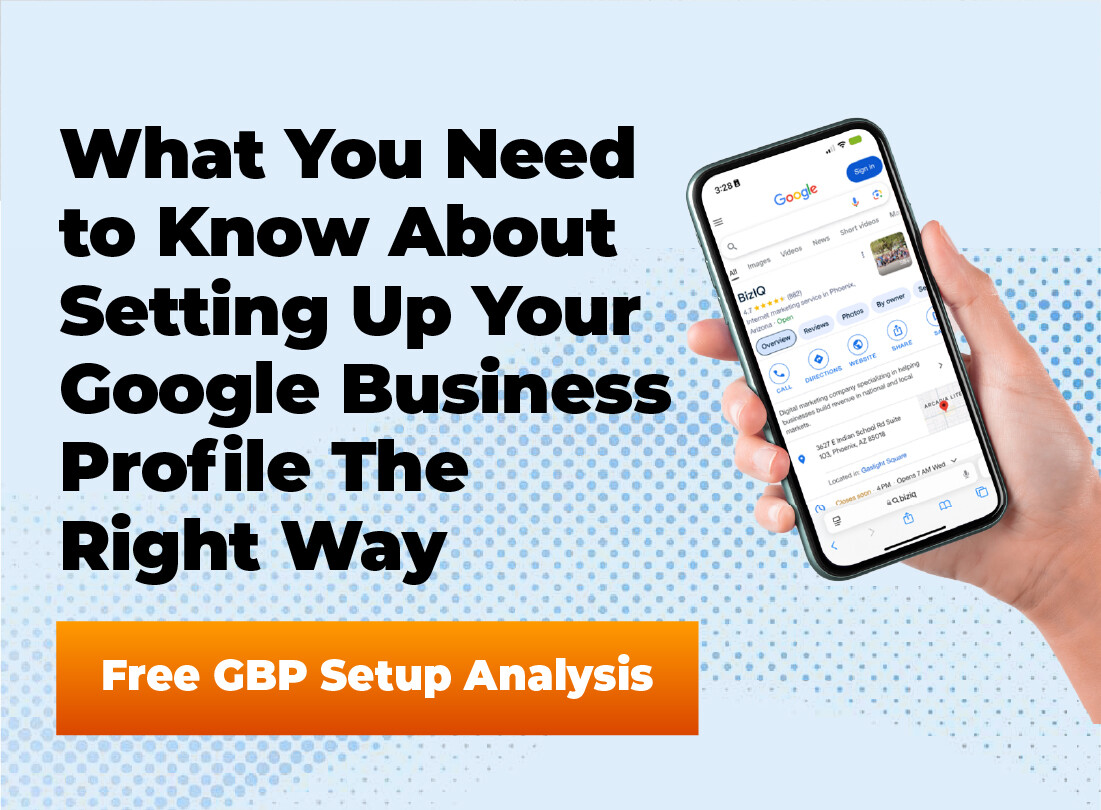
Think of your Google Business Profile (GBP) as your modern-day Yellow Pages ad, but much more powerful. A business profile on Google is a free listing that lets you manage how your business appears on Google Search and Maps. This is probably the single most important factor for success in localized search.
Getting it right starts with claiming and verifying your business profile. After that, you need to fill it out as completely as possible. This means your exact business name, address, and phone number, also known as your NAP.
Don’t just set it and forget it. A well-managed GBP includes high-quality photos of your business, your products, and your team. You can also use Google Posts to share updates, offers, and events, which keeps your profile fresh and engaging for potential customers. This management tool is one of the most effective free tools available.
Your Google Business Profile Is Prime Local Real Estate
Photos, reviews, services, and accurate details all influence whether customers call you or scroll past. A properly set up profile drives real local action.
On-Page Local SEO Signals
Your website is another crucial piece of the puzzle. Search engines read your site to understand more about your business, and proper engine optimization tells Google you’re relevant to a local audience. You need to make sure your pages clearly signal where you operate.
This starts with your site structure and targeting localized keywords. Include your city or neighborhood in important places like your page titles, headers, and body text. For example, instead of a page titled “Our Services,” try something like “Plumbing Services in Scottsdale, Arizona.” This is a clear signal to both users and search engines.
If you have more than one location, a great strategy is to build out separate pages for each one. Each page can feature the unique address, phone number, hours, and testimonials for that specific store. This prevents confusion and helps each location rank independently in its own area. You should also write blog posts with relevant content about local news or events to attract even more local interest.
The Power of Local Citations and Backlinks
What are citations? Simply put, they are online mentions of your business’s NAP (Name, Address, Phone Number). These can appear in online directories like Yelp, Angi, and industry-specific sites.
Citations help search engines verify that your business is legitimate and that your location data is correct. The most important rule with citations is consistency. Your NAP should appear exactly the same across every single platform.
A small difference, like using “St.” on one site and “Street” on another, can cause confusion for search engines and hurt your rankings. Using a tool to check your online listings for consistency is a good first step. Consistency tells Google it can trust your information.
| Citation Type | Description | Examples |
|---|---|---|
| Major Data Aggregators | These platforms distribute your business information to hundreds of other online directories and apps. | Data Axle, Neustar Localeze |
| Consumer Directories | Well-known platforms where customers find and review businesses. | Yelp, Yellow Pages, Foursquare |
| Industry-Specific Sites | Directories that focus on a particular niche or industry. | TripAdvisor (for travel), Zocdoc (for doctors), Avvo (for lawyers) |
| Local Directories | Sites focused on a specific city or region, such as the Chamber of Commerce. | Your local Chamber of Commerce site, local news websites, city-specific blogs |
Beyond citations, you should also look for local backlinks. A backlink is a link from another website to yours. When you get a link from a respected local source, like your city’s chamber of commerce or a local news blog, it’s a powerful vote of confidence in your business.
Gathering and Responding to Reviews
Online Google reviews have become a cornerstone of localized search. They act as social proof, showing potential customers that you are trustworthy and do good work. Search engines know this, and businesses with more positive reviews higher in search results.
A vast majority of consumers read online reviews for local businesses. You should have a simple process for asking your happy customers to leave a review on Google or other relevant sites. This could be a simple email follow-up or a small sign at your checkout counter.
It’s also vital to respond to your reviews, both the good and the bad. Thanking someone for a positive review is great customer service. Addressing a negative review professionally shows that you care about feedback and are committed to solving problems. This engagement is a positive signal to both customers and search engines.
Advanced Tools and Strategies to Dominate Local Search
Once you have the fundamentals in place, you can explore more advanced search strategies to get ahead of the competition. Using the right search tools can provide valuable insights. A local SERP checker, for instance, allows you to see search results as if you were physically in another city or neighborhood.
This is incredibly useful for businesses with multiple locations or those serving a large metro area. A SERP checker lets you view localized results to see how your business ranks in different zip codes. This data helps you identify areas where your visibility is weak and where you need to target localized keywords more effectively.
Ready to Outrank Local Competitors?
Local SERP tracking, citation consistency, reviews, and targeted content separate businesses that show up from those that dominate.
Don’t forget the power of social media. While Google doesn’t directly use social signals as a ranking factor, an active social media presence on platforms like Facebook and Instagram reinforces your connection to the local community. Sharing local news, promoting community events, and engaging with local followers helps build a brand that people search for by name.
Putting It All Together: A Simple Action Plan
This might seem like a lot, but you can get started with just a few focused steps. Breaking it down makes it much more manageable. Here’s a simple plan you can follow to improve your localized search presence and dominate local.
- Step 1: Fully Optimize Your Google Business Profile. This is your top priority. Go to your GBP dashboard and make sure every single section is filled out completely. Upload at least ten high-quality photos, write a detailed business description, and select all relevant service categories.
- Step 2: Audit Your NAP Consistency. Use free tools online to scan for your business listings across the web. Create a spreadsheet to track any inconsistencies you find. Start the process of correcting them, beginning with the most authoritative directories like Yelp and your local chamber of commerce.
- Step 3: Enhance Your Website’s Homepage. Go to your homepage and check your title tag (the text that appears in the browser tab). It should include your primary service and your city. For example: “Smith & Jones Law: Family Law Attorneys in Portland.”
- Step 4: Create a System for Reviews. Decide on one simple way you are going to start asking for reviews. Maybe it’s adding a link to your email signature or creating a small handout with a QR code to give to customers. The key is to start somewhere and be consistent.
- Step 5: Create Local Content. Begin a plan to create content specifically for your local audience. Write a blog post about a local charity event you’re sponsoring or a guide to the best parks in your neighborhood. This helps you rank for more specific keywords and shows you are an active member of the community.
Taking these five steps will put you on the right track. You’ll be well ahead of many of your competitors who haven’t made local SEO a priority. Just focus on being consistent and providing the best experience you can for your local customers.
Conclusion
Localized search isn’t some complex code you need to crack. It’s about being helpful and making it as easy as possible for people in your community to find you when they need you most. Your customers are already looking for you; you just need to make sure they can connect.
By focusing on the fundamentals like your Google Business Profile, on-page optimization, and customer reviews, you build a powerful foundation. This approach helps you connect with customers who are nearby and ready to make a purchase. It’s one of the most effective ways for small businesses to grow.
Mastering the basics of localized search can transform how customers discover your business. It turns your physical location into a digital advantage. By consistently applying these strategies, you can attract more local customers and build a stronger presence in your community.
Turn Local Searches Into Real Customers
Localized search isn’t about chasing trends—it’s about being visible when nearby customers are ready to act. A focused strategy makes that happen.
Frequently Asked Questions
What is localized search?
Localized search is when Google shows results based on a user’s location, helping people find nearby businesses for products or services they need right away.
Why is localized search important for small businesses?
Localized search connects businesses with high-intent customers who are ready to visit, call, or purchase, making it critical for local growth.
How does a Google Business Profile affect local search rankings?
A complete and active Google Business Profile helps Google understand your business and improves visibility in Maps and the Local Pack.
What tools help improve localized search performance?
Tools like local SERP checkers, citation audits, review management platforms, and keyword research tools help businesses refine and dominate local search results.