Summary
- Successful small business marketing starts with understanding your target audience and focusing on strategies that deliver consistent, long-term results.
- Optimizing your Google Business Profile is one of the most effective ways to increase local visibility and attract nearby customers.
- Email marketing remains one of the highest-ROI channels, allowing businesses to nurture relationships and drive repeat sales.
- Building a strong marketing foundation—not chasing quick wins—is the key to sustainable small business growth.
It feels like you’re trying to juggle a dozen balls at once. You’re the CEO, the accountant, and the head of HR. On top of all that, you’re also supposed to be a marketing genius. Trying to find successful small business marketing strategies can feel completely overwhelming.
But what if there are strategies that do not need a huge team or a massive budget? You just need a smart marketing plan. This is your guide to marketing that actually works, built for busy business owners like you.
Table of Contents:
- 1. Define Your Target Audience
- 2. Optimize Your Google Business Profile
- 3. Implement Local SEO Basics
- 4. Create High-Quality Content with a Blog
- 5. Engage Customers with Video Marketing
- 6. Build and Nurture an Email List
- 7. Leverage Social Media Marketing
- 8. Encourage Customer Reviews & Testimonials
- 9. Launch a Customer Referral Program
- Conclusion
1. Define Your Target Audience
Before you spend a single dollar on an ad, you need to know your potential customer. I mean you need to really understand them. It is not enough to guess who they are.
This is where creating a customer persona comes in. Think of it as an imaginary profile of your perfect customer. Give them a name, a job, and even some hobbies.
This simple exercise changes everything because it stops you from marketing to a faceless crowd. You start talking to a person, which is so much more powerful. You can get a great start on this with some free templates from HubSpot that help you build them out.
You might be thinking, where do I get this information? Start with what you already have. Look at your current customer base, check the demographics in your website’s Google Analytics, or just send a simple survey to your email list.
2. Optimize Your Google Business Profile
One of the most powerful marketing tactics for local businesses is completely free. Your Google Business Profile (GBP) is a goldmine for attracting nearby customers. This is the information box that appears in Google Maps and on the right side of search results.
Think of your business profile as your digital storefront. Getting this right is simple but very important for your local marketing efforts. You need to claim your Google Business account and complete every single section.
Add high-quality photos of your business, your team, and your products. List all of your services with descriptions. Make sure your hours of operation, address, and phone number are always correct.
Most importantly, use the Q&A feature to answer frequently asked questions proactively. You can also post updates, offers, and events directly to your profile to keep it active. This activity signals to Google that you are an engaged business owner.
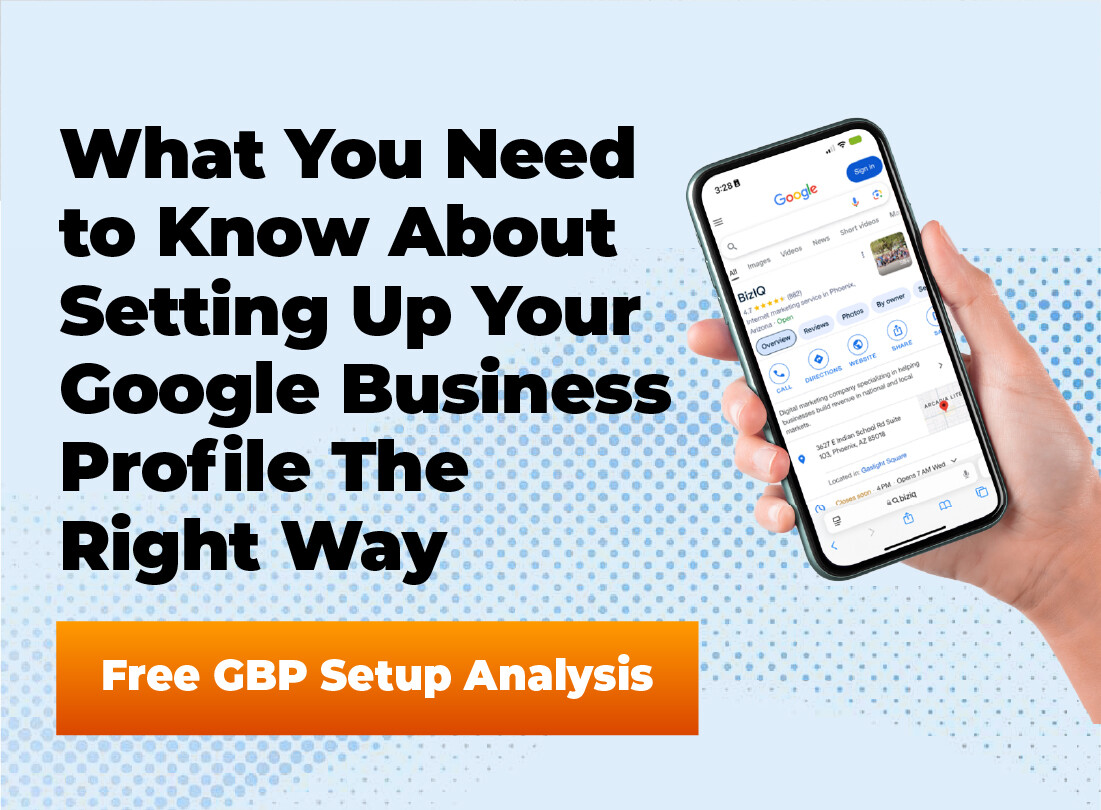
Get Found Faster With an Optimized Google Business Profile
Your Google Business Profile is often the first impression customers have of your business. We help small businesses fully optimize their profiles to increase visibility, calls, and local leads.
3. Implement Local SEO Basics
Did you know that nearly half of all Google searches are from people looking for local information? That is a huge opportunity you cannot afford to miss. This is where local search engine optimization (SEO) comes into play.
Beyond your GBP, you need to build local citations. A citation is just a mention of your business’s name, address, and phone number (NAP) on another website. These are signals to Google that you’re a legitimate, established local business.
Think about online directories like Yelp, the Better Business Bureau, and other sites specific to your industry. The key is to make sure your NAP is exactly the same everywhere. Consistency shows search engines they can trust your information, which boosts your local presence.
Finally, pay attention to your own website. Ensure it is a mobile-friendly website, as a large number of local searches happen on mobile devices. A poor user experience on a phone can cause a potential customer to leave your site immediately.
4. Create High-Quality Content with a Blog
Content marketing sounds like a big, fancy term for a business plan. But all it really means is giving helpful information to your audience for free. You’re building trust by showing you are an expert.
People do business with those they know, like, and trust. High-quality content is how you build that relationship before they ever pull out their credit card. It is about being a resource, not just a seller.
A blog is one of the best ways to execute this part of your online marketing strategy. You can’t just write about how great your products are. You need to write about your customers’ problems and cover topics they care about.
For example, a financial planner shouldn’t only blog about their planning services. They should write about “5 Simple Ways to Start Saving for Retirement.” This type of content solves a problem, proves expertise, and builds a solid brand identity over time.
5. Engage Customers with Video Marketing
Video can feel intimidating, but it does not have to be. Today, short-form videos on social media platforms like Instagram Reels, TikTok, and YouTube Shorts are very popular. This is good news for a small business owner with a limited budget.
People do not expect high-budget productions for this kind of media marketing. You already have all the equipment you need: your smartphone. Your marketing campaign can be built around simple, authentic video.
You can show behind-the-scenes footage, share a quick tip, or answer a common question from your customers. Video helps people feel connected to the real person behind the business. It is a fantastic tool for building community and brand awareness.
6. Build and Nurture an Email List
Some people might tell you that email is outdated, but they are wrong. Email marketing has one of the highest returns on investment out there. For every dollar you spend on an email campaign, you could get back an average of 36 dollars.
It is a direct line to people who have already said they want to hear from you. You are not fighting with social media algorithms. You are landing right in their inbox.
So how do you get people on your email list? Offer something valuable. A 10% off coupon, a helpful checklist, or a free guide are great ways to get people to sign up. Once they are on your list, you can launch email campaigns with useful newsletters, exclusive offers, and helpful tips. Do not just sell, sell, sell; focus on providing value.
Turn Subscribers Into Loyal Customers
Email marketing gives you direct access to your audience—without fighting algorithms. We help small businesses build email lists and campaigns that drive engagement and repeat business.
7. Leverage Social Media Marketing
The biggest mistake small businesses make with social media is trying to be everywhere at once. You do not need to be on Facebook, Instagram, Twitter, Pinterest, LinkedIn, and TikTok. You will just burn yourself out and dilute your marketing efforts.
Instead, figure out where your ideal target market spends their time online. Then, focus your social media marketing on one or two of those media platforms. This allows you to create better content and engage more deeply with your audience.
Here is a simple breakdown of a few platforms:
| Platform | Primary Audience | Best For |
|---|---|---|
| Gen X & Millennials | Building Community, Local Events, Ads | |
| Millennials & Gen Z | Visual Products, Lifestyle Brands, Influencers | |
| Professionals & B2B | Networking, Industry Leadership, B2B Sales | |
| TikTok | Gen Z & Young Millennials | Short-Form Video, Trends, Authentic Content |
| Predominantly Female | E-commerce, DIY, Visual Discovery |
Once you choose your platforms, focus on engaging with your audience. Ask them questions and respond to their comments to create a real conversation. That is how you build a following that cares about your business.
8. Encourage Customer Reviews & Testimonials
Marketing is about relationships. People are more likely to buy products from you based on a friend’s recommendation than from an ad. This is the power of social proof and community.
You want to turn your customers into your biggest fans. These are the people who will spread the word for you. That kind of marketing is priceless and improves the overall customer experience.
You should encourage reviews and testimonials everywhere. Add them to your website’s homepage and share them on social media. Positive reviews are a powerful signal of trust for new customers who are still deciding if they want to make a purchase. It provides an honest look at your customer service.
9. Launch a Customer Referral Program
One of the most overlooked marketing strategies is creating a referral program. This approach leverages your existing customers to bring in new ones. It is a powerful way to grow your customer base through word-of-mouth.
A referral program rewards your current customers for telling their friends and family about your business. The reward can be a discount on their next purchase, a small cash bonus, or free merchandise. The key is to offer something that provides real value.
This method is very cost-effective compared to paid advertising. Your happy customers become a trusted sales force. A recommendation from a friend is far more persuasive than a traditional advertisement because it comes with built-in trust.
Conclusion
It is easy to get lost in all the different marketing options out there. But remember, you do not have to do everything. The key is to start with the fundamentals that form a strong marketing strategy.
Understand your target audience, own your local area with your Google Business Profile, and create helpful content. Nurture an email list, be smart with social media, and build a real community. These successful small business marketing strategies are not about quick tricks; they are about building a solid foundation.
Choose one or two of these ideas from our list and commit to them consistently. That consistency is what will truly drive growth for your business over time.
Ready to Build a Marketing Strategy That Works?
You don’t need to do everything—just the right things. Our small business marketing experts can help you turn these strategies into real growth.
Frequently Asked Questions
Why is a Google Business Profile important for small businesses?
A Google Business Profile helps your business appear in local search results and Google Maps, making it easier for nearby customers to find, contact, and trust your business.
How often should I update my Google Business Profile?
You should update your profile anytime your hours, services, or contact information changes. Posting updates, photos, and offers regularly also helps keep your profile active and visible.
Is email marketing still effective for small businesses?
Yes. Email marketing consistently delivers one of the highest returns on investment and allows small businesses to build relationships, promote offers, and drive repeat sales.
What marketing strategy should small businesses focus on first?
Start with the fundamentals: understanding your audience, optimizing your Google Business Profile, and building an email list. These create a strong foundation for long-term growth.