Summary
- Research consistently shows that a large proportion of Google searches now end without a user clicking any website link, as features like AI Overviews, featured snippets, and the local map pack answer questions directly on the results page.
- For local businesses, zero-click searches are not always a loss — a customer who calls from the map pack or gets directions without visiting your website is still a real conversion.
- Winning in this environment means optimising your Google Business Profile, structuring your website content for direct answers, and building a strong review profile that stands out on the results page.
- Success metrics need to expand beyond website sessions to include Google Business Profile interactions such as calls, direction requests, and profile views.
Imagine searching for a nearby bakery’s operating hours on your mobile phone. You type the query, and the exact opening times appear immediately at the very top of the screen. You get your answer instantly without clicking a single website link or browsing a menu. This exact scenario happens millions of times every day across the United States, fundamentally changing what the search engine results page (SERP) is for. For business owners, adapting to this zero-click search environment requires a genuinely different approach to digital marketing — one that measures success by visibility and real-world conversions, not just website traffic.
The Rise of Direct Answers and Zero-Click Search
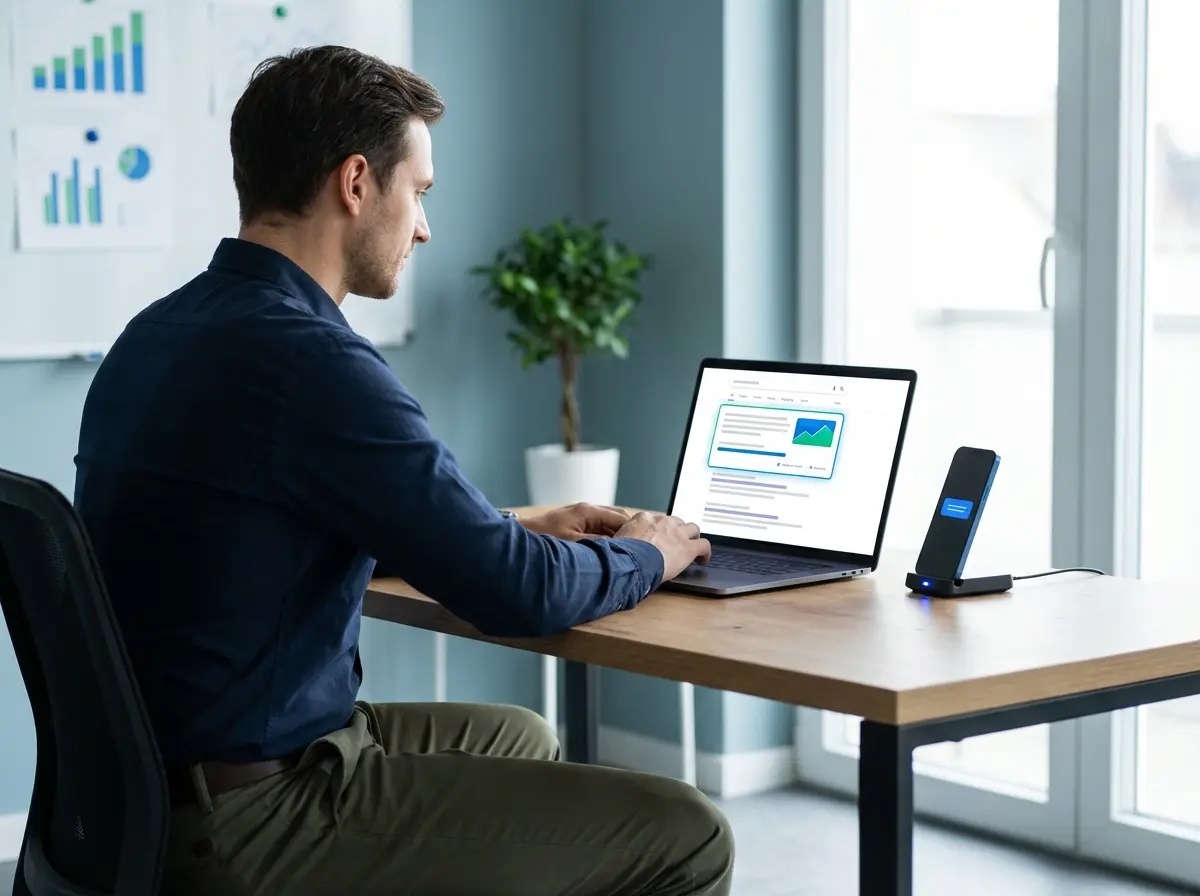
Search engines constantly evolve their algorithms to change how they deliver information to users. Today, Google prioritises keeping users on the main search engine results page by extracting answers directly from high-quality websites and displaying them prominently. Features like AI Overviews, featured snippets, knowledge panels, and the local map pack all contribute to this goal — satisfying search intent without requiring a click elsewhere. This evolution is driven largely by the growth of mobile and voice search, where users expect immediate answers rather than a list of pages to browse.
Research consistently shows that a large and growing proportion of Google searches now end without a traditional click to an organic website link. Users get their answer from whatever appears at the top of the page and move on. This major shift fundamentally alters how local businesses must approach their digital marketing efforts to maintain meaningful visibility on the SERP.
You might notice your website traffic declining despite maintaining strong search rankings. What is often happening is that customers are finding your business and getting what they need — your phone number, hours, address, or a direct answer to their question — straight from the results page without ever visiting your site. Understanding this distinction is the first step toward adapting your strategy correctly.
Key Takeaways
-
Search engines now act as final destinations, prioritising search intent over driving clicks to external websites. -
A growing proportion of searches end without a user clicking through, making SERP visibility more important than raw traffic volume. -
Declining website traffic may simply mean users are finding your answers directly on the results page — not that your SEO is failing.
How Zero-Click Search Affects Local Visibility
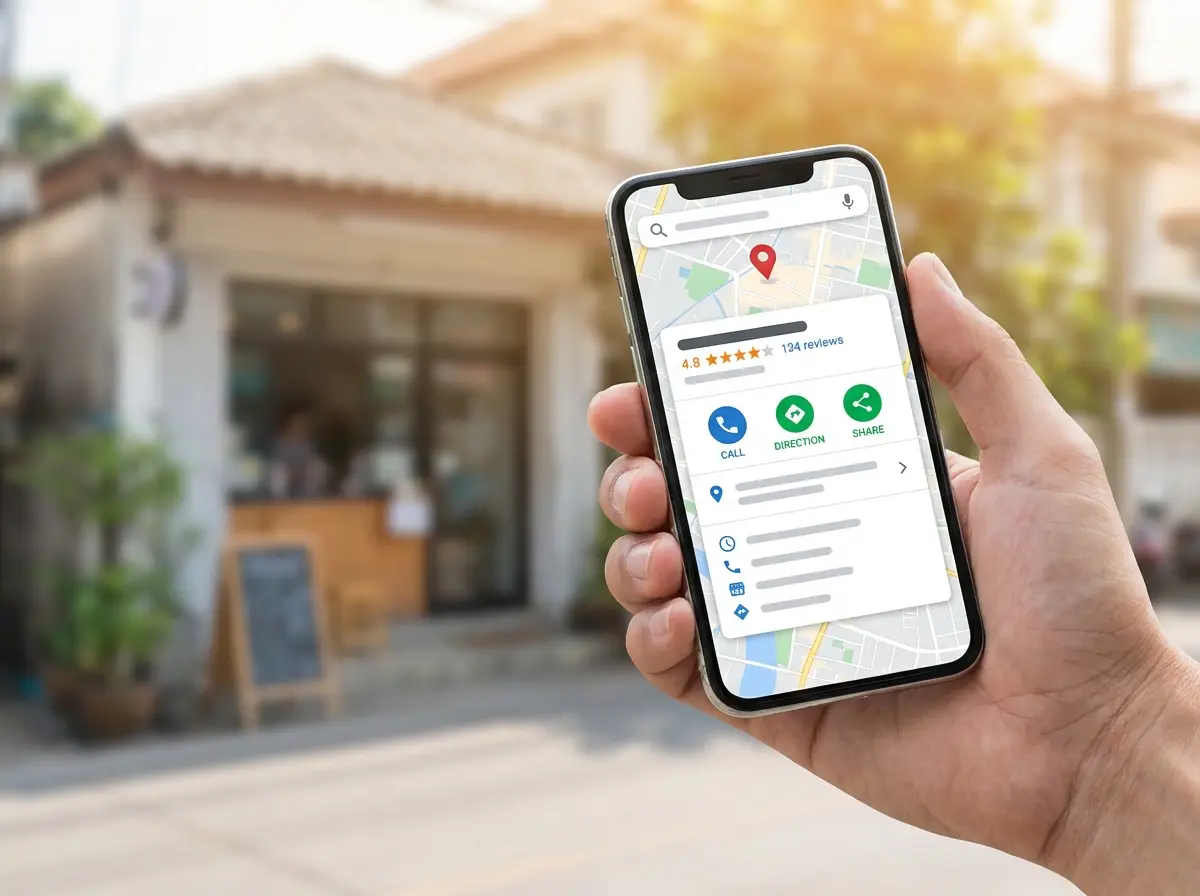
Many business owners feel anxious when they see their website analytics trending downward. A drop in organic click-through rate (CTR) usually triggers immediate concern about revenue loss. However, lower click-through rates do not automatically mean fewer customers walking through your front door.
Consider a user searching for an emergency plumber late at night. They see your business listing at the top of the local map pack — your name, star rating, phone number, and distance from their location all displayed together. They tap to call immediately, solving their problem without ever visiting your website. That is a real customer won without a single website session recorded in your analytics.
This is an increasingly common pattern for local service businesses. The transaction was facilitated entirely by the search results page, and the customer never needed to go further. Recognising these interactions as genuine conversions — rather than as missing data — is a critical mindset shift for any local business owner evaluating their marketing performance.
Warning
Do not abandon your website optimisation just because clicks are trending downward. Search engines rely entirely on your website content to generate the direct answers and featured snippets that users see — so a neglected site directly undermines your SERP visibility.
Is Your Google Business Profile Working Hard Enough?
In a zero-click world, your Google Business Profile is often the first — and only — thing a customer sees. BizIQ helps you optimise every field so your listing converts.
Local SEO Strategies to Capture Direct Search Attention
You must actively optimise your digital presence for immediate consumption by the end user. Winning the visible real estate at the top of the SERP requires providing clear, concise information that search algorithms can easily extract and display. The primary goal becomes being the trusted source Google chooses to show directly to potential customers — through your Business Profile, featured snippets, structured data, and the local map pack.
Start by identifying the specific questions your target audience asks most frequently about your services. Tools like Google Search Console, Google’s own autocomplete suggestions, and the “People also ask” boxes on results pages are all free starting points for uncovering the exact phrases and questions your customers are using. Once you know those questions, you can structure your content to provide immediate, definitive answers that satisfy search intent.
Local businesses have a distinct advantage with location-based queries compared to national brands. Google actively wants to surface nearby, relevant solutions to users searching on mobile devices. You simply need to organise your digital assets correctly to feed that local search algorithm and improve your overall SERP presence.
Maximise Your Google Business Profile for Local SEO
Your Google Business Profile is your most powerful asset for local search visibility. Treat it with the same level of care you give your primary website. Fill out every available field — specific services, operating hours, business attributes, a detailed description, and product or service listings — to give Google as much accurate information as possible to display.
Regularly upload high-quality photographs of your physical location, your team, and recent completed projects. Businesses with consistent, up-to-date photo libraries receive significantly more direction requests and phone calls than those without imagery. Keep all information strictly accurate at all times, and update your hours promptly for holidays or temporary closures to maintain customer trust and avoid negative reviews.
Format Website Content for Featured Snippets
Search algorithms prefer well-structured content that gets straight to the point. If you write a blog post or service page answering a customer question, put the direct answer in the very first paragraph and keep that initial summary under fifty words. This gives you the best possible chance of appearing in a featured snippet — the highlighted answer box that appears above traditional results for many informational queries.
Use clear heading tags (H2s and H3s) to break your content into logical sections, and use bulleted lists and numbered steps where appropriate. After providing the short answer at the top of the page, use the rest of the content to elaborate with deeper detail for readers who want to learn more. This structure serves both the user and the algorithm equally well.
How to Audit Your Direct Search Visibility
Test Your Mobile Search Results
Search for your core services using a mobile device in incognito mode so personalised results do not skew what you see. Note what information appears before you scroll — this is prime real estate that a potential customer sees first, and it tells you immediately whether your listing or a competitor’s is winning that space.
Rewrite Content Headings to Match Search Intent
Review your existing website pages and adjust subheadings to mirror the exact questions your customers type into Google. A heading like “Our Plumbing Services” is less likely to earn a featured snippet than “How Much Does Emergency Plumbing Cost?” — one matches the way people search, the other does not.
Monitor Impressions in Google Search Console
Open Google Search Console and focus on total impressions for your key pages rather than click-through rate alone. If impressions are growing while clicks stay flat or decline, that is a clear signal that your content is appearing prominently on the SERP but users are finding their answer without needing to click — which is exactly how zero-click search works.
Want to Know How Your Local SEO Is Really Performing?
BizIQ offers a free local SEO audit that goes beyond traffic numbers — we look at your full SERP visibility, map pack presence, and Business Profile health.
Shifting Performance Metrics: Measuring Zero-Click Success
Traditional marketing reports focus heavily on website sessions, page views, and bounce rates. A successful strategy in the zero-click era requires looking at a much broader set of performance indicators. You need to measure your brand’s visibility across the entire search results page interface — not just what happens after someone clicks through to your site.
The Google Business Profile performance dashboard gives you direct access to the metrics that matter most in this environment. Track the number of direct phone calls, requests for directions, messages, and profile views over a consistent time period. These numbers often paint a far more accurate picture of your actual local market performance than standard website analytics.
If your profile views are increasing and your phone is ringing more often, your strategy is working — regardless of what your website traffic report shows. The goal is not to maximise website sessions; it is to maximise the number of customers who find you, trust you, and contact you. In the zero-click world, those two things are no longer the same measurement.
Pro Tip
Add UTM tracking parameters to the website link in your Google Business Profile. This creates a distinct traffic source in your analytics platform so you can clearly separate visitors who came via your profile from those who arrived through standard organic search results.
Building Customer Trust and Local Authority Through Reviews
Search results prominently display star ratings and total review counts right next to your business name in the local map pack. Users make split-second decisions based almost entirely on these visual trust signals before they ever read a word of your website. A strong, consistent review profile is one of the most powerful tools available for converting zero-click searchers into actual customers.
Implement a systematic process for requesting reviews from satisfied customers after every transaction. Make it as frictionless as possible — send a direct link to your Google review page via text message or email immediately after a job is complete. The faster and simpler you make it, the more responses you will receive.
Respond professionally to every review, positive and negative. Potential customers read your responses to assess your customer service standards and how you handle problems. A thoughtful, respectful reply to a critical review often does more to build trust than a generic five-star rating without context.
Your public responses also provide a natural opportunity to include relevant service keywords. Mentioning the specific service you performed reinforces the association between your business and that term in Google’s understanding of your profile. Keep the language natural and focused on the customer — responses that read as keyword-stuffed do more harm than good.
Key Takeaways
-
Redefine marketing success by tracking Google Business Profile interactions — calls, directions, and views — not just website sessions. -
A strong, consistent review profile is one of the most effective ways to stand out in the local map pack and convert zero-click searchers. -
Structuring your website content to answer questions directly is what feeds the featured snippets and AI Overviews that users see first.
Is Your Business Information Accurate Everywhere Online?
Inconsistent listings confuse search engines and cost you zero-click visibility. BizIQ’s citation management service keeps your business data clean and consistent across the web.
Frequently Asked Questions
What exactly is a zero-click search?
A zero-click search happens when a user types a query into a search engine and finds the answer directly on the results page — without clicking any link to visit a third-party website. This can happen through featured snippets that display a direct answer at the top of the page, through the local map pack which shows your address, hours, and phone number, through knowledge panels, or through AI Overviews that synthesise information from multiple sources. For local businesses, zero-click searches often represent genuine customer interactions — such as a call made directly from the map pack — even though no website visit is recorded.
Does zero-click search hurt local SEO for small businesses?
It depends on your business model and the types of queries your customers use. For purely informational searches, zero-click results can reduce the traffic that would previously have landed on your blog or service pages. However, for local service businesses, the zero-click experience often works in your favour — a customer who calls you directly from the map pack is a conversion, regardless of whether your website analytics registered a visit. Businesses that keep their Google Business Profile fully optimised and maintain accurate information across directories are best positioned to benefit from this behaviour rather than lose out to it.
How can I optimise for featured snippets and direct answers?
The most reliable approach is to structure your content around the specific questions your customers ask, and answer those questions directly and concisely near the top of the relevant page. Aim for an initial answer of around fifty words or fewer, followed by more detailed explanation for readers who want depth. Use clear H2 and H3 heading tags formatted as questions where appropriate, and use bullet points and numbered lists for procedural or comparative content. Keeping your Google Business Profile complete and up to date is equally important for map pack and local-result featured snippets.
Why is my organic traffic dropping but my sales are staying steady?
This is one of the most common and reassuring patterns in local business analytics right now. Customers are likely finding your business name, reading your reviews, getting your phone number, and checking your hours directly from the search results page — all without visiting your website. They then call, visit your location, or make a purchase offline. Your website analytics platform has no way to record these interactions as sessions or conversions, which creates the impression of declining performance when your actual business results tell a different story. Cross-referencing your Google Business Profile interaction data with your sales figures will usually explain the gap.
Should I still invest in my website if most searchers don’t click through?
Yes — without question. Your website is the foundational data source that powers every direct answer, featured snippet, and AI Overview that appears on the results page. Search engines cannot generate those on-SERP answers without high-quality website content to draw from. A neglected or poorly structured website directly undermines your ability to appear in zero-click features. Beyond that, high-intent users — those comparing services, reading detailed reviews, or preparing to make a significant purchase — will still click through to your website, and you want that experience to be strong. Your website and your SERP presence work together, not as alternatives to each other.
Conclusion
Adapting to the zero-click search environment is not optional for local businesses that want to remain competitive — it is a practical necessity driven by how the vast majority of consumers now interact with search engines every day. The rise of direct answers has permanently changed what the search results page is for, and the businesses that understand this earliest will gain the clearest advantage over those still measuring success purely by website clicks.
The good news is that the strategies required to win in this environment are not radical departures from sound marketing. Keeping your business information accurate, maintaining a strong review profile, structuring your content to directly answer customer questions, and monitoring the right performance metrics are all fundamentally good business practices — they are simply more important now than they have ever been.
Stop measuring success exclusively by what your analytics dashboard shows in terms of sessions and page views. Start measuring it by how visible your business is across the full SERP, how many customers call or visit after finding you on a search page, and how your reviews and profile interactions trend over time. When those numbers are moving in the right direction, your zero-click strategy is working — and your business will reflect it.