
Summary
- Geo-targeted marketing helps franchise businesses capture nearby customers by aligning digital campaigns with real-time geographic intent and local search behavior.
- Consistent location data, optimized business listings, and localized content improve franchise visibility in Google Maps and neighborhood-level search results.
- Geo-fencing campaigns allow franchises to target high-intent consumers near competitor locations, event spaces, and retail districts with localized offers.
- Tracking localized conversions such as calls, direction requests, and store visits helps franchise brands improve ROI and allocate marketing budgets more effectively across regions.
Managing digital marketing for a multi-location franchise presents highly specific operational challenges that require a nuanced approach to regional visibility and multi-location SEO. You must maintain consistent brand messaging while simultaneously capturing high-intent traffic across dozens of different neighborhoods and local markets. Implementing effective geo-targeted marketing for franchises ensures a blanket national strategy doesn't miss local buyers who search for immediate solutions.
Do your individual locations capture nearby foot traffic effectively through optimized digital presence and local search visibility? Geo-targeted marketing solves this problem by aligning your promotional efforts with exact geographic coordinates and consumer intent. This approach uses local SEO tactics to serve hyper-relevant content to users based on their physical location.
Implementing a location-based strategy requires precise coordination between corporate offices and individual franchisees to ensure brand consistency. You need clean data, optimized local profiles, and content that speaks directly to the surrounding community and its needs. This guide explores proven methods for capturing neighborhood-level market share through targeted local SEO for franchises and spatial marketing.
Consumer behavior has shifted heavily to proximity search decisions over the past five years as mobile usage continues to dominate. People routinely add terms like "near me" or specific neighborhood names to their daily search queries to find immediate help. If your franchise locations fail to appear in these hyper-local results, competitors will quickly absorb that valuable foot traffic.
Search engines process these proximity queries by looking closely at the user's IP address and GPS data for accuracy. Google then ranks nearby businesses based on relevance, distance, and overall digital prominence within the specific geographic area. According to Think with Google, local searches drive high conversion rates because the user intent is inherently transactional.
Corporate marketing teams often struggle to balance broad brand awareness with neighborhood-level activation across multiple diverse territories. Geo-targeting bridges this gap by delivering location-based advertising and localized offers to mobile users standing just blocks away from a physical storefront. This precision targeting ultimately generates higher return on investment for individual franchise operators by reaching customers at the right moment.
- Proximity-based search queries indicate strong transactional intent from nearby consumers.
- Search engines prioritize local relevance, distance, and prominence for rankings.
- Precise geo-targeting helps franchises reduce wasted spend and boost local ROI.
Building a Solid Foundation for Geo-Targeted Marketing for Franchises
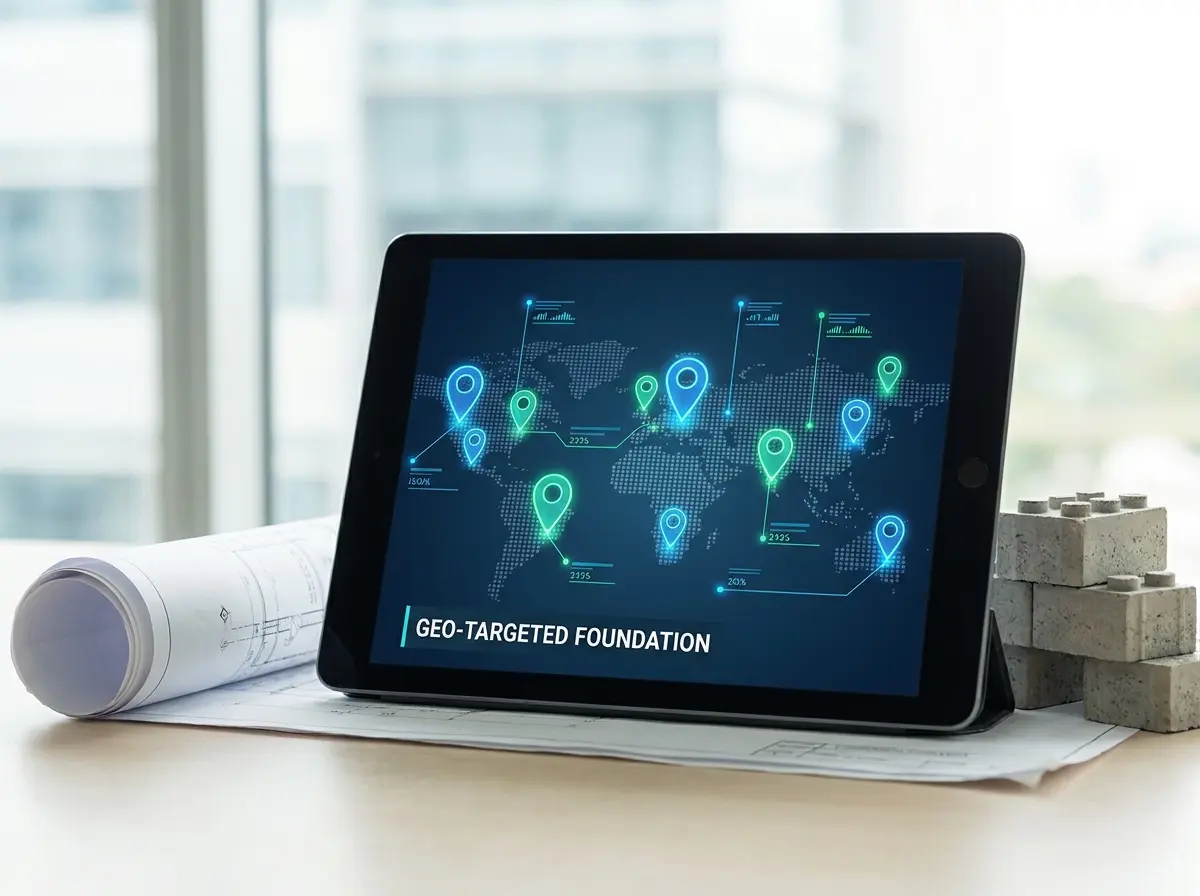
Before launching complex spatial targeting campaigns, your franchise needs a structurally sound local search presence across all platforms. Search algorithms rely on consistent directory citations and accurate business information to verify a location's legitimacy and authority in local SEO for franchises. Inconsistent business hours or incorrect addresses across different platforms will severely damage your local visibility and consumer trust.
Establishing a centralized system for data management prevents rogue franchisees from creating duplicate online profiles that confuse customers. Corporate teams should maintain administrative control over the primary data sources while allowing local managers to post updates. This hybrid approach protects the brand reputation while still encouraging authentic community engagement and real-time local communication.
Optimizing Google Business Profiles for Local SEO for Franchises
The Google Business Profile acts as the primary digital storefront for every single franchise location in your network. You must claim and verify each individual listing to control how the business appears in Google Maps results. A fully optimized profile provides searchers with immediate answers about operating hours, specific services, and authentic customer experiences, boosting your local search visibility.
Turn Your Google Business Profiles Into Local Traffic Drivers
Incomplete or inconsistent Google Business Profiles can cost franchise locations valuable visibility. BizIQ helps multi-location brands optimize listings, improve map pack rankings, and increase local customer engagement across every territory.
Populate every profile with high-quality photos showing the exterior and interior of that specific location to build trust. Accurate categorization helps Google match your business with appropriate non-branded search queries from local residents looking for solutions. According to data from Moz's Local Search Ranking Factors, profile completeness strongly influences your chances of appearing in the coveted Local Pack.
Always standardize the naming conventions for your franchise locations across all digital platforms. Using "Brand Name – City" consistently helps search engines accurately group your local citations together.
Localizing On-Page Content for Franchise Location Marketing
Each franchise location requires a dedicated landing page on the main corporate website to capture regional search traffic through hyper-local marketing. These pages should feature specific details about the neighborhood, local staff members, and active community involvement or sponsorships. Generic location pages that simply swap out the city name provide very little value to human readers or search crawlers.
Embed a dynamic Google Map on each location page to reinforce the geographic relevance for both users and bots. You should also include specific driving directions from major local landmarks or highway exits to assist mobile users. These hyper-local details signal to search engines that the page offers genuine value to nearby residents seeking your services.
How to Implement Geo-Fencing and Geo-Targeted Marketing for Franchises

Geo-fencing allows franchises to draw virtual perimeters around specific buildings, event spaces, or competitor locations to capture attention via location-based advertising. When a mobile device enters this defined area, you can trigger specific advertisements or push notifications to the user. This technology works exceptionally well for quick-service restaurants and retail franchises looking to intercept active shoppers in real-time.
Setting up these virtual boundaries requires thoughtful strategy rather than just blanketing an entire city with generic ads. You want to identify high-traffic zones where your target demographic naturally congregates during their daily routines and errands. The following steps outline a systematic approach to launching your first neighborhood-level perimeter campaign for your franchise network.
How to Launch a Geo-Fencing Campaign
Define Your Target Perimeters
Analyze customer data to identify locations where your target audience frequently spends time. Draw precise virtual boundaries around complementary businesses, college campuses, or competitor storefronts.
Craft Location-Specific Offers
Develop advertising creative that speaks directly to the people inside your newly defined perimeter. Offer a compelling incentive that encourages immediate foot traffic to your nearby franchise location.
Set Up Conversion Tracking
Implement tools to measure how many people saw your ad and subsequently walked into your store. This physical conversion tracking proves the actual return on investment for your localized campaigns.
Capturing Local Search Market Share Through Citations and Multi-Location SEO
Citations are online mentions of your franchise's name, address, and phone number across various digital directories and maps. These digital footprints validate your physical existence to search algorithms processing local queries and multi-location SEO signals. Building a robust citation profile requires submitting accurate data to platforms like Yelp, Apple Maps, and local chamber websites.
Franchise systems frequently struggle with inconsistent citation data due to ownership changes or store relocations over time. A single outdated address on a major aggregator site can push bad data out to dozens of smaller directories. You should utilize automated listing management software to lock your corporate data and prevent unauthorized edits.
Earning links from localized websites also significantly boosts your geographic authority in organic search results for specific regions. Sponsor local youth sports teams or partner with neighborhood charities to earn valuable backlinks from their community pages. As Search Engine Land notes, these localized digital connections prove your franchise actively participates in the community.
Never use virtual offices or P.O. boxes as the primary address for your local citations. Search engines actively penalize businesses that attempt to manipulate local rankings without a genuine physical storefront.
Tracking Geo-Targeted Marketing Performance and ROI
How do you measure success at the neighborhood level across a massive multi-location franchise network? Measuring the impact of geo-targeted marketing requires looking beyond traditional national website traffic metrics to find regional insights into franchise location marketing effectiveness. You must analyze user behavior at the local level to understand which franchise locations perform best in their markets. Identifying these localized trends helps corporate teams allocate marketing budgets more effectively across different regions and territories.
Focus heavily on tracking exact conversion actions that indicate real-world purchasing intent from nearby consumers. Monitor how many users request driving directions, click to call the store, or submit local contact forms for service. These specific engagement signals carry much more weight than simple page views or social media impressions when measuring success.
Implementing UTM parameters on all your local Google Business Profile links provides essential attribution data for your analytics. This tracking code separates organic website traffic from specific local search listing interactions and neighborhood-level campaigns. Reviewing this data regularly allows franchise owners to refine their promotional strategies based on actual neighborhood demand and behavior.
- Track physical conversion actions like driving directions and phone calls instead of vanity metrics.
- Use automated listing software to lock your franchise data and prevent citation inconsistencies.
- Apply UTM parameters to localized links for accurate traffic attribution in your analytics platform.
Frequently Asked Questions
Managing local SEO for multiple locations naturally brings up specific technical and strategic questions for growing brands. Corporate marketers and franchise owners often debate the most effective ways to allocate resources for maximum regional impact. Below are some common questions regarding spatial targeting and local search optimization for franchises.
How much should a franchise spend on geo-targeted marketing?
Franchise marketing budgets vary significantly based on industry margins and local market competition. Most successful multi-location brands allocate roughly 40% of their digital marketing budget to localized campaigns. You should adjust this percentage based on the specific revenue goals of each regional territory.
Does geo-fencing work without a dedicated mobile app?
Yes, you can run effective perimeter campaigns through standard mobile web browsers and third-party applications. Advertisers purchase inventory on popular ad networks that access device location data with user permission. You do not need to develop a proprietary application to reach nearby consumers.
How long does it take to see local SEO results?
Improving organic local search rankings typically requires three to six months of consistent optimization work. Profile verification and citation cleanup can yield minor visibility improvements within a few weeks. However, building long-term geographic authority through localized content and backlinks takes sustained effort.
Can corporate teams manage all local social media accounts?
Centralizing social media management protects the core brand identity but often reduces authentic community engagement. The most effective franchise systems provide corporate templates while allowing local owners to post neighborhood updates. This hybrid strategy balances professional aesthetics with genuine local relevance.
Why do my franchise locations compete against each other in search?
Keyword cannibalization happens when multiple franchise locations sit too close together without clearly defined digital territories. You can resolve this by optimizing each location page for highly specific neighborhood names rather than broad city terms. Clear geographic differentiation prevents search engines from getting confused about which location to rank.
Conclusion
Mastering geo-targeted marketing for franchises fundamentally changes how systems acquire customers in competitive regional markets today. By leveraging precise location data, you deliver the right message to consumers exactly when they need your services most. This localized approach eliminates wasted advertising spend while driving measurable foot traffic to individual storefronts across your network.
Building geographic authority requires consistent execution across data management, profile optimization, and localized content creation for every territory. You must treat every single franchise location as an independent entity with its own distinct digital footprint and community presence. Focusing on neighborhood-level relevance ultimately creates a stronger, more resilient national brand presence for the long term.
Start by auditing your current local search visibility to identify immediate areas for improvement and data inconsistencies. Claim missing profiles, standardize your directory citations, and implement accurate conversion tracking systems to measure your regional success. Taking these foundational steps will dramatically improve your ability to capture hyper-local market share and grow your franchise.
Build Stronger Local Visibility for Every Franchise Location
From geo-targeted campaigns to local SEO optimization and citation management, BizIQ helps franchise brands improve neighborhood visibility and drive measurable local growth.