
Local SEO for multiple locations multiplies the workload of a single-location presence as you grow from five storefronts to fifty or five hundred. Search engines want clear geographic relevance for every location you operate, and the brands that capture foot traffic are the ones that standardize their corporate data while keeping each market genuinely local.
- Centralized data, localized optimization: one source of truth for business information, plus unique content for every market.
- Dedicated location content: a structured URL architecture and localized content help search engines understand geographic relevance.
- Profile and citation control: Google Business Profile management, citation consistency, and accurate NAP data protect visibility across locations.
- Reviews and audits: consistent review management, local engagement, and quarterly audits keep rankings and foot traffic growing.
Managing one local business presence takes real daily effort. At scale, the challenge is operational: every store that changes its hours, moves across town, or updates a phone number has to be reflected accurately across the internet. The teams at BizIQ see this tension in every network we support, and the answer is always a system that catches problems before they reach customers.
A Scalable Framework for Local SEO for Multiple Locations
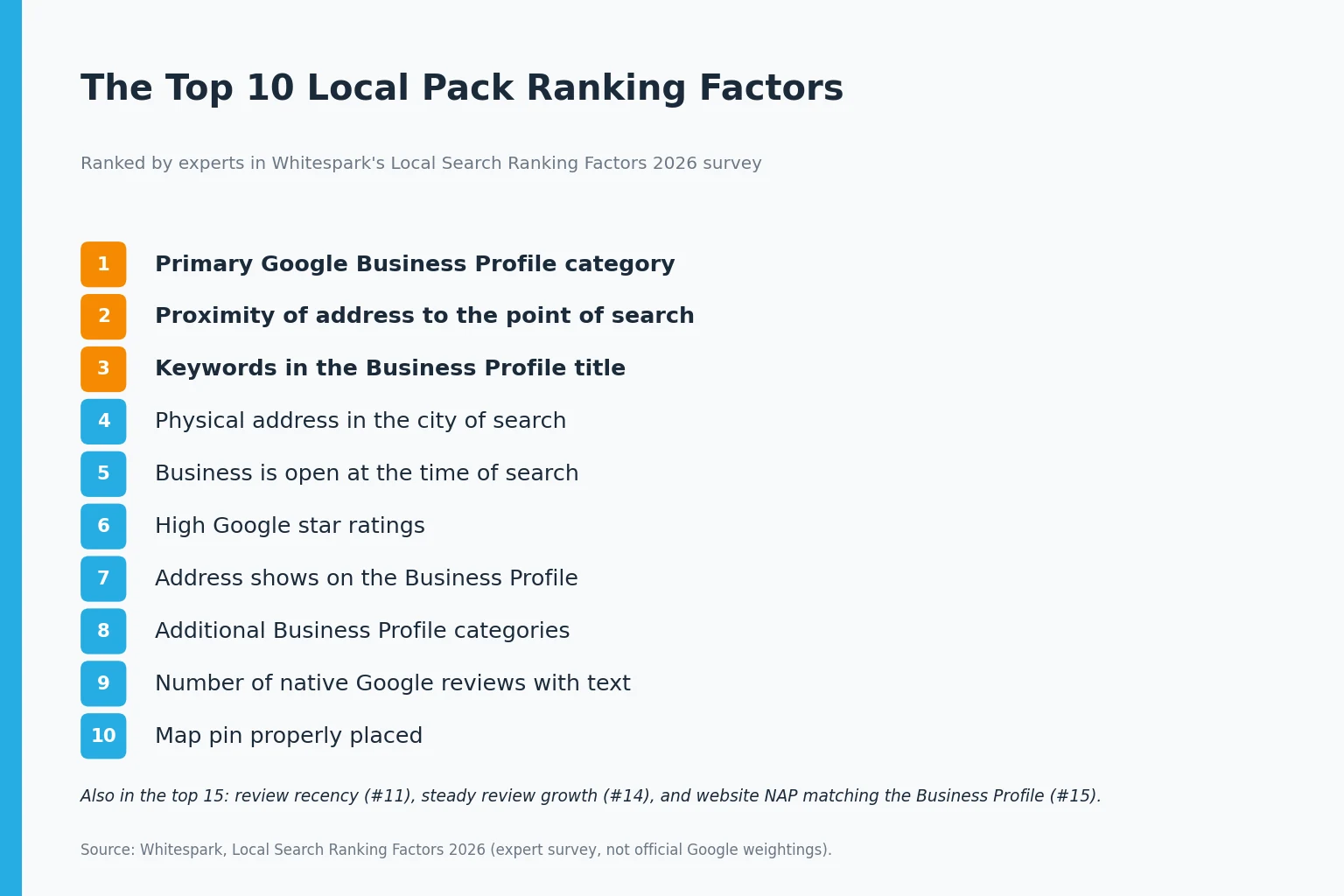
Multi-location search optimization works best with a centralized command center and decentralized local execution. You keep firm control of the core business information while letting each branch highlight its own community ties. That balance matters because search systems weigh geography heavily. In Whitespark’s 2026 survey of local SEO experts, the primary Business Profile category ranked first among local pack factors and proximity of the address to the searcher ranked second.
One corporate website cannot rank in cities where you have no verified physical presence, so every location needs its own footprint. Behind that footprint sits operational discipline: standard procedures for hours, contact details, and categories, so each change flows to every platform accurately. Dedicated local SEO services turn those procedures into a repeatable program.
Structuring Your Website With Dedicated Location Content

Your site architecture determines how easily search engines understand your geographic footprint. A single generic listing of fifty addresses has almost no local ranking power. Each physical storefront needs its own dedicated content, grouped in a hierarchical structure by state and city.
Build a Clean Location URL Structure
A strong structure might look like yourdomain.com/locations/tx/austin/ for a Texas branch. That framework gives users and crawlers clean pathways and makes it easy to add new markets without rework. Each location also needs original content rather than boilerplate repeated everywhere, including directions from major highways, nearby landmarks, and the specific services offered at that storefront.
Add Structured Data and Local Proof
Structured data helps search systems read your location details accurately. Adding LocalBusiness markup to every location passes along coordinates, operating hours, and local phone numbers in a standard format.
Beyond that, embed a Google Map, add photos of the real storefront, and introduce the local team. Those distinct signals separate high-performing location content from generic directory listings, and strong on-site optimization builds them into every template.
Mastering Google Business Profile Management at Scale

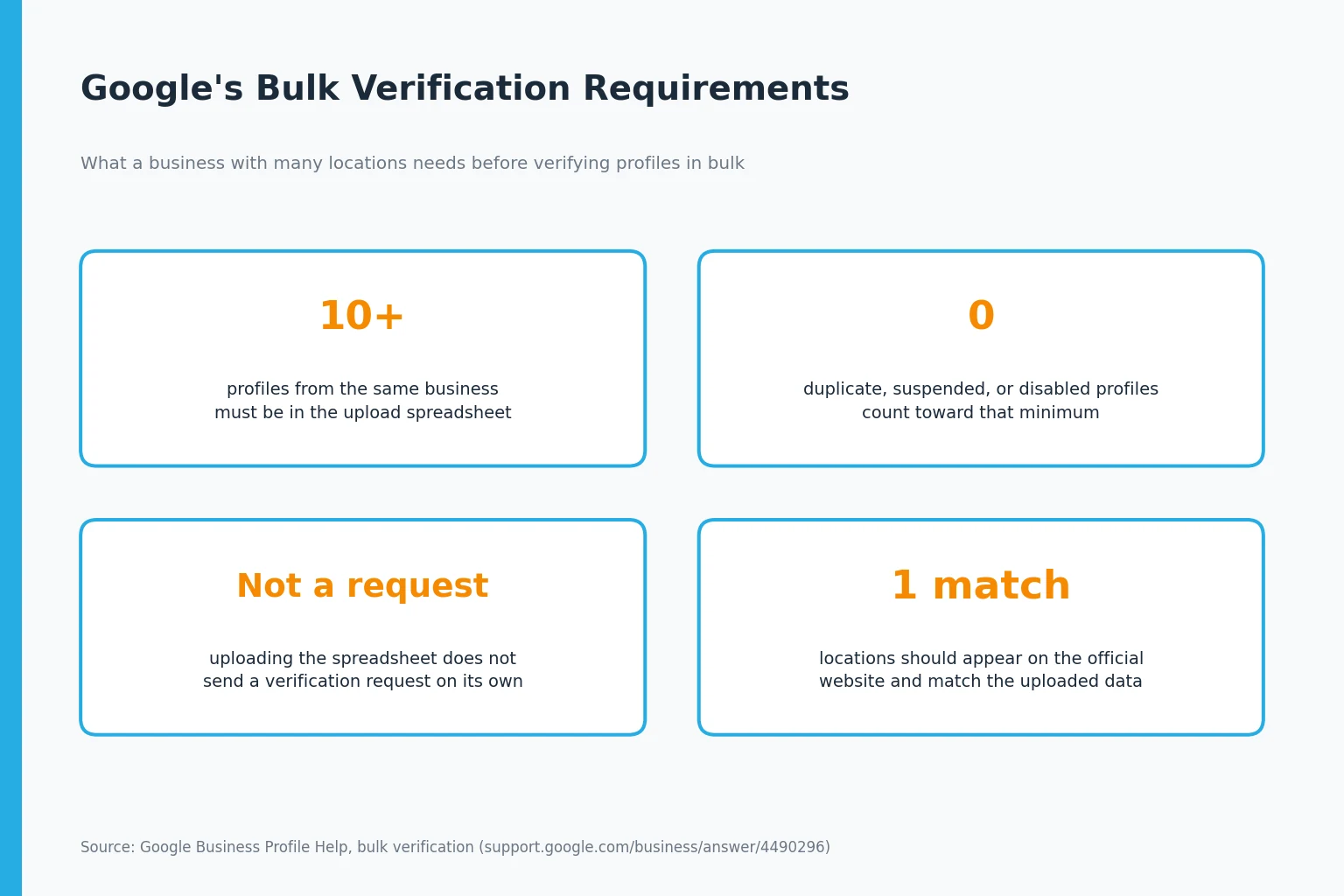
Business Profiles are the primary driver of local visibility, and managing dozens of them takes a different approach than handling one. In Whitespark’s 2026 findings, Business Profile signals make up the largest share of local pack influence at 32%. Google also provides bulk management tools for organizations with ten or more locations, which let you update hours, closures, and categories from a single spreadsheet.
Governing Business Profiles in Local SEO for Multiple Locations
Governance decides who can change what. Create a corporate or agency account using an email address on your official business domain, and avoid personal accounts for location management because they create ownership disputes when employees leave. Corporate should hold ownership of every profile while local managers contribute photos, replies, and updates.
How to Verify Multiple Business Profile Locations
- Create the account. Set up the centralized account with a business-domain email so ownership stays with the company.
- Format the spreadsheet. Download Google’s template and fill it with exact store codes, addresses, and phone numbers. Give every location a unique, permanent store code.
- Request bulk verification. Submit the completed spreadsheet and complete the verification form for Google’s review.
Brands that want this done correctly the first time can lean on a Google Business Profile setup and verification service to prepare the upload, resolve duplicates, and handle verification.
Keep Profiles Clean After Launch
Plan to review profiles regularly for edits suggested by other users. Competitors or confused customers sometimes propose changes to hours, website links, or phone numbers, and unchecked edits can go live and hurt rankings. Connecting profiles to a central management tool through the Business Profile APIs makes it much easier to monitor changes across every location.
If your brand is a franchise system, SEO for franchises adds ownership and governance structure on top of this process.

Simplify Google Business Profile Management Across Every Location
Managing dozens of Business Profiles can quickly become overwhelming. We help multi-location businesses maintain accurate listings, monitor profile changes, improve local rankings, and streamline optimization at scale.
Local Citation Building and NAP Consistency
Name, address, and phone number consistency remains a foundation of local search performance. Search systems cross-reference your business data across many directories to verify that you are legitimate and operating. If your Chicago branch lists one phone number on Yelp and another on Apple Maps, trust in that location erodes, and so can its rank in the local pack.
Use Aggregators and Automation
To manage citations across dozens of locations, use data aggregators such as Data Axle and Foursquare. These platforms distribute your business information to smaller regional directories, in-car navigation systems, and voice assistants. Updating dozens of directories by hand for each location does not scale, so automated distribution is essential, but audit existing listings before pushing new data so you do not create duplicates. Ongoing local citation management handles that cleanup and keeps every record aligned.
Phone Numbers and Niche Directories
Use local phone numbers where possible. Google’s guidelines for representing your business ask for a number that connects to the individual location and prefer a local number over a central call center line whenever possible, so a single toll-free number across every listing is a poor fit.
Citation building also extends into industry and regional platforms. A dental group with several clinics needs listings on health directories, and a restaurant chain needs a strong presence on travel and dining platforms. Identify the top niche directories in your vertical and keep every branch consistent across them, since matching categories reinforce what each location is.
Review Management for Better Local Search Rankings
Reviews influence both rankings and buying decisions. BrightLocal’s 2026 Local Consumer Review Survey found that 97% of consumers read reviews for local businesses, and Whitespark’s survey places review recency at number 11 and steady review growth at number 14 among local pack factors. For multi-location brands, that means a coordinated system that prompts customers for feedback soon after a visit and routes each review to the correct location profile.
Routing matters because a glowing review for a Miami store does nothing for a Seattle store. Local managers should also respond to reviews, and BrightLocal found that 89% of consumers expect owners to reply, with 81% expecting a reply within a week. A response target of one to two business days is a practical standard, and personal replies matter because half of consumers are put off by templated ones.
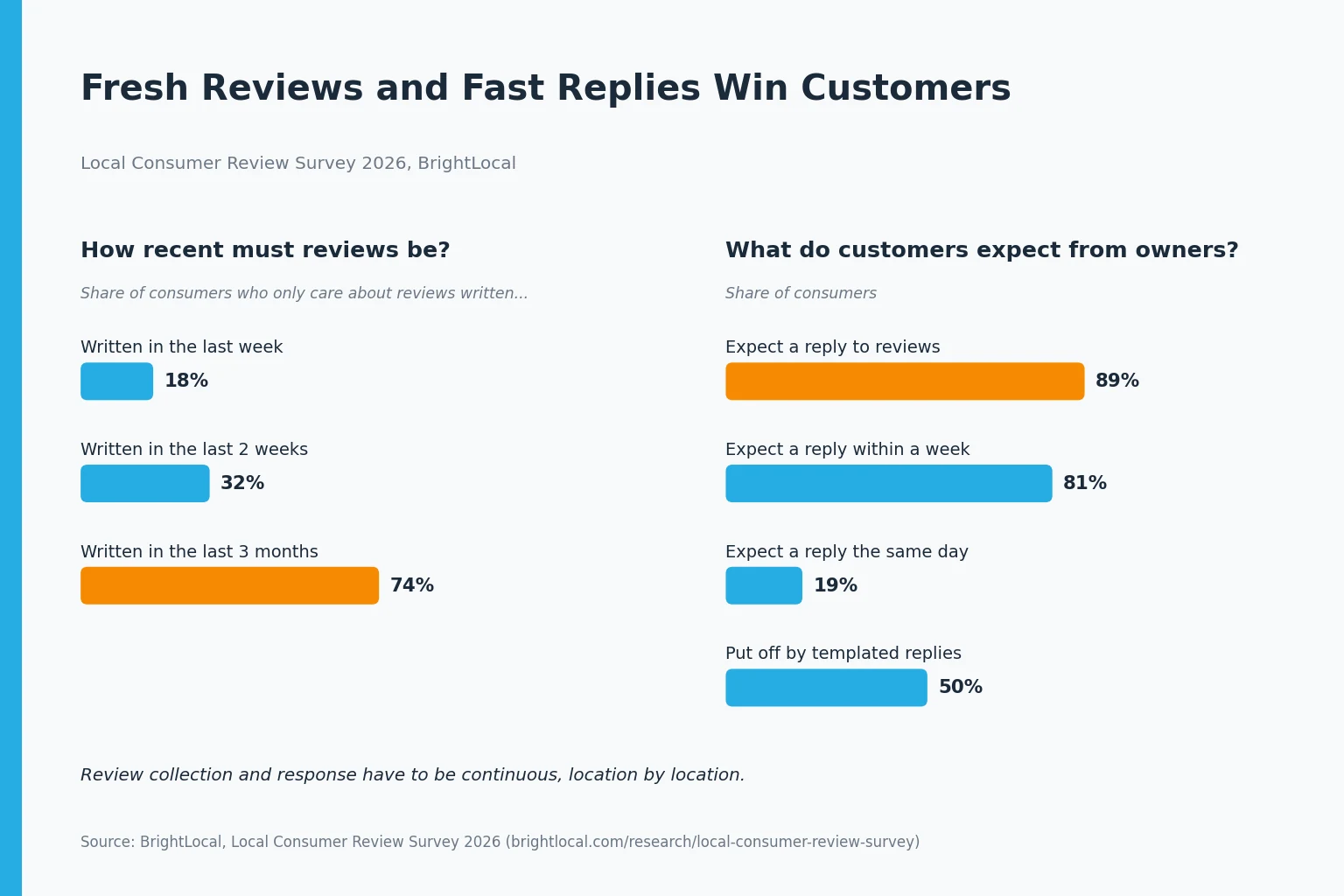
Freshness is as important as the star rating. A location with a perfect score and no recent reviews gives customers little reason to trust it, so an ongoing program that generates steady, genuine feedback for each store is part of the foundation. A managed reputation management program keeps that rhythm going across every location.
Auditing and Tracking Local SEO Across Multiple Locations
Consistency erodes without a schedule, so build audits into the calendar. A quarterly review of listings, profile changes, duplicates, and location content catches drift before it shows up in rankings, and a free SEO audit is a practical way to establish a baseline.
Tracking has to be local too. Standard rank trackers show one national view, while local results change block by block, so use tools that simulate searches from specific coordinates or zip codes. Add UTM parameters to the website link on each profile to separate Maps traffic from general organic traffic, and report results by location.
Budgeting rounds out the plan. As effort grows with each added location, comparing multi-location SEO pricing helps you decide between an in-house and outsourced model.
Local SEO for Multiple Locations FAQs
Can one location directory list all my business locations?
A general directory is fine, but each physical location needs its own dedicated content to compete in local search. Grouping all of them together limits geographic relevance and gives search engines nothing specific to match to a nearby searcher.
How do I handle local SEO for service-area businesses with multiple territories?
Create specific content for each city or area you serve, with details on the coverage area. If customers do not visit a location, hide the address on the Business Profile and set a service area instead.
Do I need a separate domain for each business location?
No. Separate domains split your authority and make management harder. Keep every location under one strong corporate domain with a structured subdirectory approach, which also makes governance and reporting far simpler.
How many locations do I need for Google bulk verification?
Google requires 10 or more profiles from the same business in the spreadsheet. Duplicate, suspended, or disabled profiles do not count toward that minimum, and uploading the spreadsheet does not by itself send a verification request.
How often should I audit my local citations?
A quarterly audit is a practical minimum for most networks. That schedule helps you catch duplicate listings and fix inaccurate data created by automated aggregators or other third parties before it affects rankings.
What is the best way to track local rankings across different cities?
Use local rank tracking that simulates searches from specific coordinates or zip codes. Standard national trackers cannot measure proximity-based results accurately, because the same search can return different local results a few blocks apart.
Winning local search across multiple markets takes discipline, standardized processes, and consistent execution. You cannot copy one city’s strategy into another and expect identical results, because each market has its own competitors, search behavior, and local nuance. Structuring your website correctly and keeping data immaculate builds a strong foundation for regional growth.
Empower local branch managers while keeping firm central control of your core digital assets. Clean local data, strong location content, and active review management reliably drive foot traffic, and regular audits protect that visibility over time. Scaling local SEO takes effort, and when you want a partner, you can talk with a multi-location SEO specialist about your markets.

Ready to Improve Your Multi-Location SEO Strategy?
We help multi-location businesses strengthen local visibility, improve Google rankings, and build scalable SEO systems that drive more traffic and leads in every market.