Franchise marketing ROI is hard to pin down because national brand campaigns and local promotions are funded and judged by different people. You invest heavily in national awareness while your franchisees put their own capital into local promotions, yet working out the actual return on those combined efforts frustrates marketing directors and franchise owners alike. The problem is a misalignment between corporate spending and local performance tracking, and it can be solved.
- Disconnected data: siloed systems, unclear attribution, and mismatched expectations hide the real return.
- Last-click blind spots: relying only on last-click credit undervalues the awareness that feeds local conversions.
- Unified reporting: shared dashboards and standard metrics build transparency and make budgets easier to defend.
- Local SEO tracking: accurate listings and location-level measurement turn visibility into provable leads.
When corporate runs a broad awareness campaign, local owners want to see foot traffic or direct leads right away. That tension sharpens around mandatory ad fund contributions, because franchisees who cannot see results from the fund start to question it. Fixing it means taking a hard look at how your organization attributes revenue across channels.
You need a clear line between top-of-funnel awareness and bottom-of-funnel local conversions, supported by data that corporate and franchisees both trust. Without it, the network keeps arguing about budget allocation and direction instead of improving results.
Why Franchise Marketing ROI Is So Hard to Measure
Many franchise systems run fragmented marketing that obscures the true return on digital investment. Corporate teams prioritize brand positioning, while franchisees want in-store sales this month. That difference in objectives creates friction every time someone evaluates results, and it is hardest to resolve when the spending is shared.
Ad fund contributions are a major source of it. Franchisees often feel their contributions disappear without measurable local results, and a national television spot is nearly impossible to tie to a single storefront. Franchisors are required to be transparent about the fund itself: the FTC’s Franchise Rule requires the franchise disclosure document to describe how advertising funds were used in the last fiscal year, by percentage.
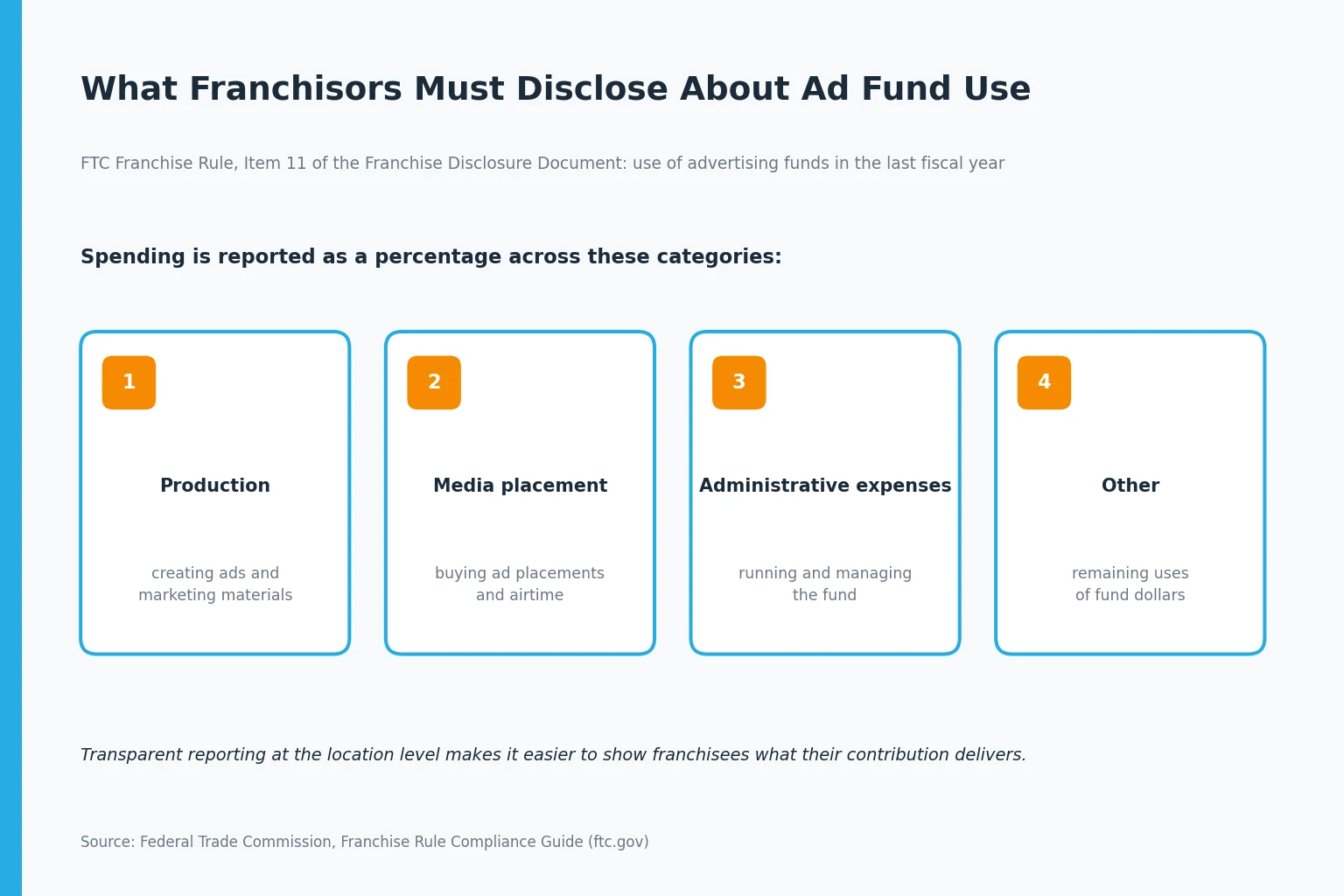
That disclosure explains where national dollars went. It does not show franchisees what those dollars did in their own market, which is the gap better measurement has to fill. Clear attribution models that both executives and local owners understand are the bridge, and without transparent reporting you risk franchisee dissatisfaction and pushback on future initiatives.
Common Marketing Attribution Failures and Franchise Marketing ROI Issues at the Local Level

Measuring local performance takes more than counting clicks on a Facebook ad for one location. A customer might see a corporate ad, search for the nearest store, and make an in-person purchase, and standard analytics capture only part of that journey. If attribution stops at the digital boundary, the offline conversion goes uncounted and the return is miscalculated.
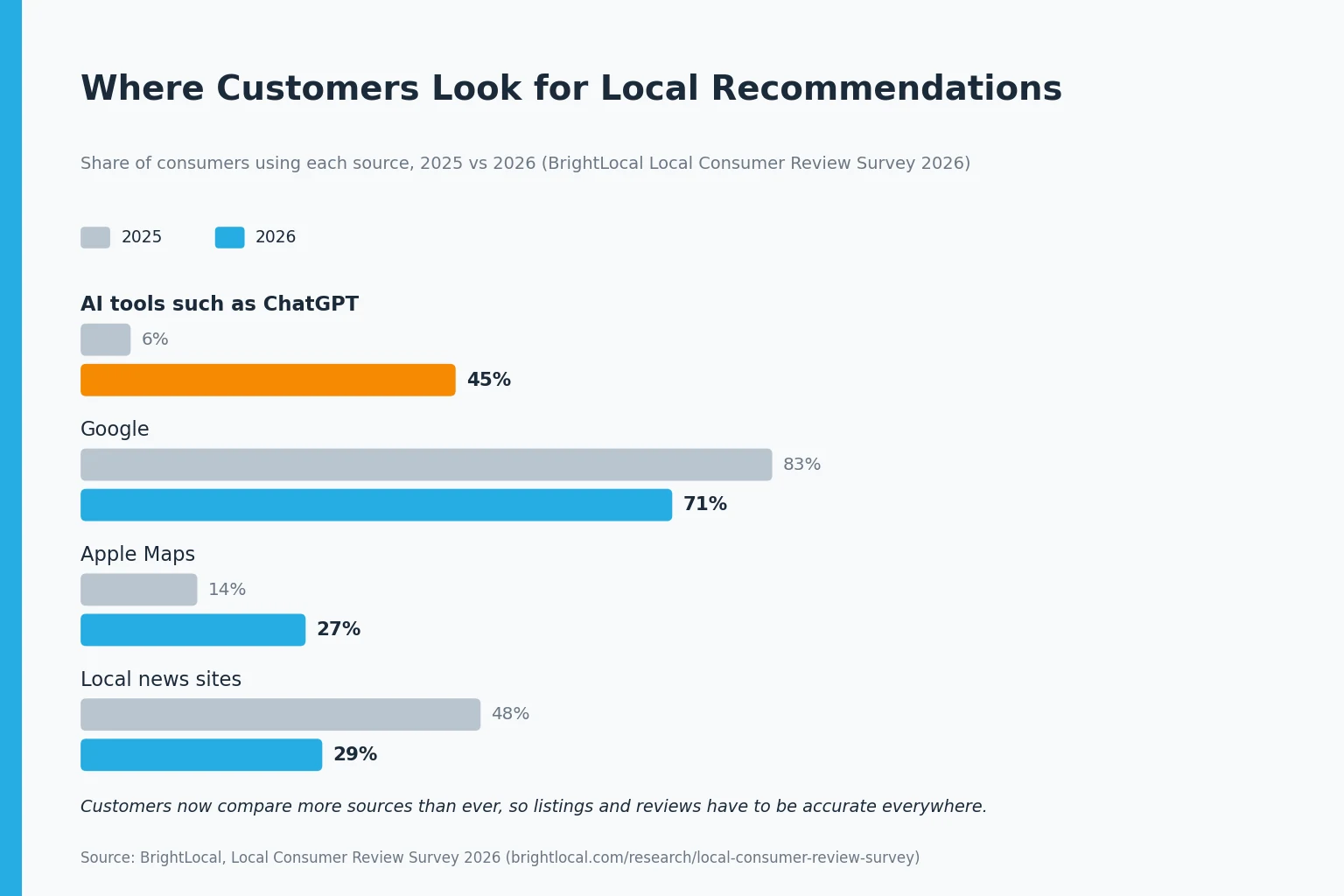
The journey also crosses more sources than it used to. In BrightLocal’s 2026 Local Consumer Review Survey, the share of consumers using ChatGPT and other AI tools for local recommendations rose from 6% to 45% in a year, alongside 71% using Google and 27% using Apple Maps. Every one of those is a touchpoint that a single-channel report misses.
Over-Relying on Last-Click Metrics for Franchise Marketing ROI
Last-click attribution gives all the credit to the final touchpoint before a purchase, which hides how early-stage awareness drives eventual revenue. A franchisee may stop funding an awareness campaign because it shows no immediate conversions, and then the pipeline dries up because that first touch disappeared from the local market.
The reporting tools themselves offer a choice. Google’s documentation on attribution in Google Analytics 4 describes three reporting models, and it is worth knowing how each assigns credit.
| GA4 reporting model | How it assigns credit |
|---|---|
| Data-driven attribution | Distributes credit across touchpoints based on data for each key event |
| Paid and organic last click | Gives 100% of the credit to the last non-direct channel clicked before converting |
| Google paid channels last click | Gives 100% of the credit to the last Google Ads click, or falls back to paid and organic last click |
Comparing the data-driven and last-click views side by side shows which channels are being undervalued, and that comparison is a useful way to help franchisees see the value of campaigns that do not close sales on their own.
The Dark Social Dilemma in Local Marketing Performance
Customers often share store links through private messages, texts, and email recommendations. Analytics platforms usually count that incoming traffic as direct, which masks the campaign that prompted the share. The result is that highly shareable content looks weaker than it is, and franchisees may ask to cut social budgets because the dashboard does not reflect offline sharing.
Educating the network about these limits manages expectations. Relying only on last-click credit will undervalue awareness work, and it can lead franchisees to pause channels that are quietly feeding their local pipeline.
How to Fix Franchise Marketing Data Silos to Improve ROI and Tracking

Franchise organizations often store customer data across many platforms and local spreadsheets. Corporate may use an enterprise CRM while franchisees run separate point-of-sale systems. Consolidating that data lets you calculate an accurate return on every marketing dollar, and it starts with agreeing on a single source of truth for customer information.
Integration takes effort from corporate IT and local operators together, but the payoff is data clear enough to support accurate, localized performance reports.
How to Consolidate Franchise Data for Better ROI
- Audit your current data sources. Identify every platform capturing customer information across the network, and catalog each local point-of-sale system in one master spreadsheet.
- Implement a unified system. Standardize customer relationship management software across corporate and franchisee operations, with training to support adoption.
- Establish standard metrics. Define the key performance indicators that corporate and local owners will both measure consistently.
Standardizing data across hundreds of locations takes operational discipline and franchisee buy-in. Show how unified data lowers each owner’s customer acquisition cost through better targeting and less waste, and compliance rises on its own. Where possible, choose analytics software that integrates with your point-of-sale systems, so in-store purchases connect automatically to the digital campaigns that drove the visit and reporting errors fall.
Aligning Corporate Strategy With Franchisee ROI Expectations
Successful networks treat marketing as a collaboration, not a top-down mandate. Explain the purpose of each marketing tier clearly and consistently: national campaigns build the trust that lets local direct-response ads convert better. When franchisees understand that relationship, they stop seeing the ad fund as an unnecessary tax.
Give local owners dashboards that show how national efforts affect their own territory, and consider monthly review calls to walk through regional results, including the campaigns that failed. Honest communication about both wins and misses builds trust across the network and reduces the friction behind most ROI disputes. This kind of structure is central to any franchise marketing approach that holds up under scrutiny.
Flexibility matters too. A strategy that dominates in New York can fail in a rural Texas market, so let franchisees allocate local budgets by market conditions while pre-approved vendors and campaign templates protect quality. That hybrid satisfies brand requirements and gives owners the control they want.
The Impact of Local SEO on Franchise Marketing ROI and Visibility
Organic search visibility is one of the most cost-effective ways to drive foot traffic to individual locations, because people searching for nearby services already have strong purchase intent. A coordinated program of local SEO services is also one of the easiest channels to measure by location, which makes it valuable in any ROI conversation.
Managing it across hundreds of locations is a logistical challenge. Inconsistent business listings, unmanaged reviews, and duplicate location content can damage organic rankings and keep customers from finding the right franchisee. Corporate should control the technical infrastructure and primary listings, with local citation management keeping every record consistent, while local owners focus on authentic reviews and neighborhood updates.
Each location also needs a verified, accurate profile, and a Google Business Profile setup and verification service helps new and existing locations get that foundation right.
Reviews support the same goal, and a managed reputation management program gives every location a steady flow of fresh feedback.
That division of labor maximizes visibility while keeping franchisees from accidentally breaking technical elements. It also produces proof. Phone calls and direction requests from local profiles are measurable, and franchisees support marketing initiatives much more readily when they can see exactly how many customers called their store. A dedicated SEO program for franchises builds that reporting into the work from the start.
Budget decisions follow the data. Reviewing franchise SEO pricing against measured local results helps corporate and franchisees agree on how much of the shared fund belongs in local search.
Franchise Marketing ROI FAQs
Why is franchise marketing ROI difficult to measure?
Customers interact with several channels before they buy. Corporate advertising, local SEO, social media, and in-store visits all contribute to a sale, and attribution gets more complex when results have to be tracked across many locations and across online and offline activity.
What causes disconnects between corporate marketing and franchisees?
Corporate teams usually focus on long-term brand awareness, while franchisees prioritize immediate local leads and sales. Without transparent reporting and shared metrics, those different goals create frustration and disputes over marketing effectiveness.
How can franchise businesses improve marketing attribution?
Use unified CRM and reporting systems, agree on standard metrics, and compare attribution views, such as data-driven and last-click reports in Google Analytics 4. Add call tracking and UTM parameters to local links so digital campaigns connect to calls, visits, and offline sales.
Why is local SEO important for franchise marketing ROI?
Local SEO places franchise locations in nearby searches from customers with strong purchase intent. Optimized Business Profiles, accurate listings, reviews, and localized content raise visibility, and calls and direction requests give each location measurable proof of return.
What metrics should franchises track to measure local marketing performance?
Track phone calls, website traffic, direction requests, lead conversions, customer acquisition cost, review activity, and local search visibility for each location. Together they show how campaigns affect each market and where budget should move.
How should franchisors explain ad fund contributions to franchisees?
Start with the disclosure already required in the franchise disclosure document, which describes how advertising funds were spent in the last fiscal year. Then add location-level reporting that shows how national and local efforts affected each franchisee’s own territory.
Franchise marketing success depends on alignment between corporate strategy and local execution. Without clear attribution, unified reporting, and open communication, networks struggle to measure effectiveness or justify advertising investments. Consolidating data, improving local SEO visibility, and tracking performance consistently at every location reduces friction, makes return transparent, and supports stronger long-term growth for corporate and franchisees alike.
If you want help connecting local results to corporate strategy, BizIQ works with franchise brands on exactly that challenge, and you can start the conversation anytime.

Improve Your Franchise Marketing ROI
We help franchise brands connect local marketing performance with corporate strategy through scalable SEO, transparent reporting, and data-driven marketing solutions.