Many franchisors struggle to attract buyers who have both the capital and the operating mindset to succeed, and franchise sales lead generation is the discipline that fixes it. You can spend thousands on advertising and still receive applications from people who lack basic funding, because passive advertising fills the inbox without qualifying anyone. The shift that works is from broad exposure to active, targeted outreach built to attract serious candidates.
- Scalable systems: predictable lead generation attracts qualified investors instead of depending on referrals alone.
- Digital presence and SEO: a clear website, targeted search visibility, and honest messaging improve lead quality and conversion.
- A blended pipeline: content, broker relationships, paid advertising, and automated nurturing keep growth consistent.
- Qualified candidates first: aligned sales processes and regional focus build a stronger, more profitable network.
Expanding a brand across regions takes repeatable systems for finding qualified operators. Many franchisors hit a growth wall because early sales rely on word-of-mouth and customer referrals, which rarely scale far enough to support aggressive expansion goals.
Why Franchise Sales Lead Generation Hits a Growth Wall
You need strategies that fill the pipeline consistently with capable investors. When prospects start researching a franchise opportunity, they look for proof of profitability and strong corporate support, and an outdated or confusing digital footprint sends them to competing brands. At BizIQ, we see that the franchisors who grow fastest treat their own website and search presence as a sales asset.
Another hurdle is separating casual dreamers from serious investors. Development teams lose hours chasing prospects who cannot afford the initial franchise fee, and clear messaging about investment levels and requirements filters them out before they consume your time.
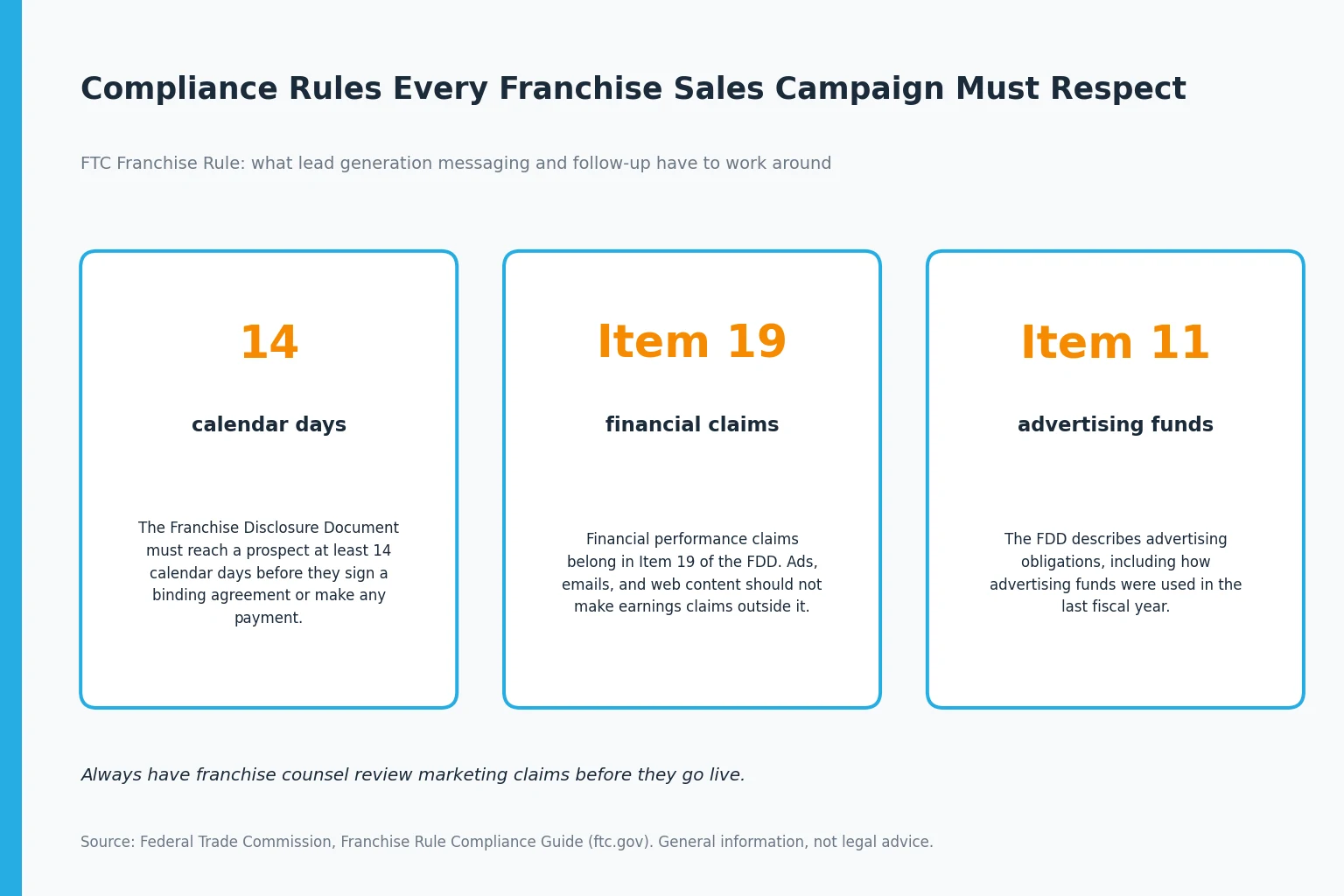
Franchise sales also operate under federal rules that shape how you market. The FTC’s Franchise Rule requires the Franchise Disclosure Document to reach a prospect at least 14 calendar days before they sign or pay, and financial performance claims belong in Item 19 of that document. Marketing copy, ads, and nurture emails should be written with those rules in mind and reviewed by franchise counsel.
Foundational Strategies: How to Generate Leads for Franchise Businesses

Optimizing Your Digital Presence
A strong website is the foundation of every lead generation campaign. It should state the investment range, available territories, and the daily reality of operating the franchise, so that clear messaging prevents unqualified applicants from clogging your pipeline.
Buyers research extensively before speaking to anyone, so your content has to answer their biggest questions about the model and the return. Franchisee stories and case studies provide social proof, with one caution: any statement about earnings is a financial performance claim, so route those through your disclosure document and legal review.
Search visibility matters because many candidates begin with a search. A focused organic SEO program helps your opportunity appear for regional and investment-focused queries, and dedicated territory content can capture people looking to buy a franchise in their own area.
Leveraging Franchise Portals and Broker Networks
Franchise portals can supply a steady stream of early inquiries for emerging brands. Conversion rates are often lower, but portals add volume and awareness, so track each one carefully to avoid wasting budget.
Established franchisors often add professional brokers, who present your opportunity to candidates who have already shown financial capability. Genuine broker relationships can change your expansion trajectory, but commissions can be substantial, so a balanced approach that pairs brokers with your own lead generation keeps the cost per acquisition in check.
Track the source of your best operators over time. You may find that portals deliver more volume while organic search produces better long-term partners, and that insight tells you where to invest next.
Franchise Lead Generation: How to Build a High-Converting Pipeline

To generate leads reliably, you need a systematic path from awareness to signature. Franchise development teams need a structured process to keep momentum through long sales cycles, and the framework below gives them one.
Building Your Sales Funnel
- Define your ideal franchise candidate. Profile the best operators from your most successful locations, including financial capacity, management experience, and cultural fit. Look beyond net worth to daily operating skills.
- Deploy targeted content marketing. Publish material that answers real buyer concerns, such as investment guides and clear explanations of fees and support. Strong content marketing builds authority with cautious investors.
- Implement automated lead nurturing. Set up email sequences that keep prospects engaged over the long decision cycle. Consistent, value-driven communication keeps your brand top of mind, and email marketing makes it repeatable.
Advanced Tactics for Attracting Quality Buyers
Harnessing Social Media and Paid Advertising
Many buyers use professional social networks like LinkedIn to research a franchise opportunity. Targeted ads there can reach people with specific management backgrounds, including corporate executives considering a career change.
Retargeting on Facebook and Instagram can remind people who visited your site to finish an inquiry, and video testimonials often earn the best engagement. A managed Facebook advertising program keeps those campaigns focused on qualified audiences.
Search advertising captures high-intent traffic from people actively looking for investment opportunities, and regular optimization keeps wasted spend low. Professional Google Ads management helps keep those campaigns efficient. Whatever the channel, ad copy should follow the same compliance guardrails as the rest of your marketing.
Crafting a Compelling Brand Story
Investors do not just buy a business model, they buy into a brand story and a corporate vision. Highlighting your culture and commitment to your people can attract operators who share your values, and a strong narrative separates your concept from hundreds of others.
Public relations can amplify that story across business publications, and earned coverage builds credibility that advertising cannot. Sharing the track record of your executive team also reassures buyers that the people guiding the system have the experience to handle economic challenges.
Aligning Franchise Development Teams With Sales Goals
Aligning Marketing and Franchise Sales Lead Generation Goals
Generating inquiries means little if the sales team cannot close them. Marketing and franchise sales need clear communication protocols and a shared definition of what counts as a qualified lead.
A customer relationship management system should track every interaction with a prospect, so managers can watch follow-up times and spot bottlenecks. Fast responses raise the odds of engaging a candidate, and regular training keeps representatives aligned with current trends. Selling franchises works best as a consultative process, not a high-pressure close, because trust and visible ongoing support are what secure the agreement.
Where to Focus Franchise Expansion Regionally
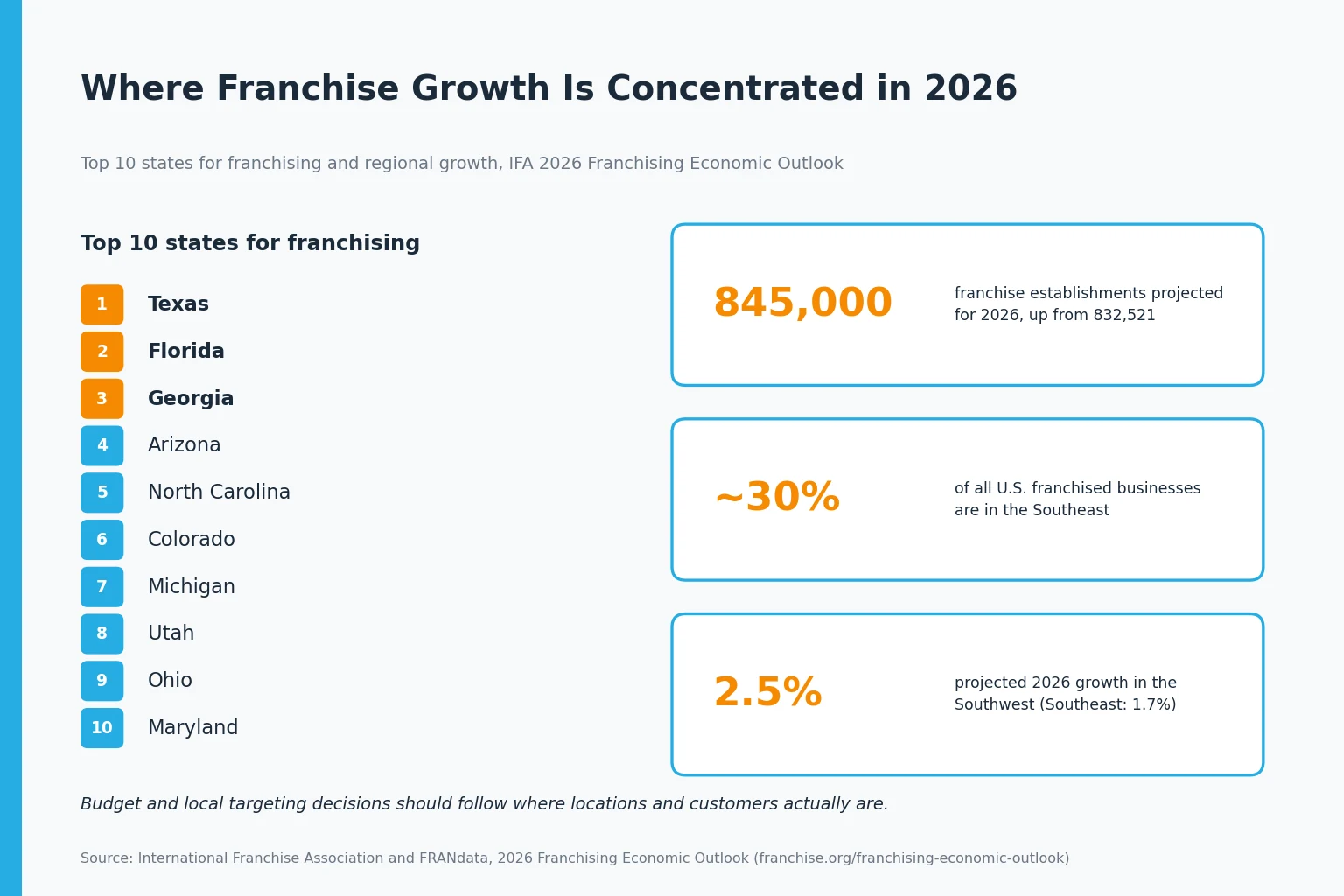
Concentrating resources in specific regions builds local brand density and operational efficiency, and it often beats scattered national expansion. Growth is not evenly spread. The International Franchise Association’s 2026 outlook projects the Southwest to grow 2.5% and the Southeast 1.7%, with the Southeast holding nearly 30% of all U.S. franchised businesses.
Independent franchisors can use that focus to compete on support instead of ad volume. Emphasizing personal access to founders and hands-on guidance attracts buyers who want a closer corporate relationship, and hyper-targeted regional campaigns generate quality leads without matching the budgets of larger brands. Once those locations open, a franchise marketing strategy for local visibility keeps each new unit growing.
Franchise Sales Lead Generation FAQs
What is the average cost per franchise lead?
It varies widely by industry, investment level, and channel, so no single number applies. A more useful measure is cost per qualified candidate and cost per signed franchisee, which show whether spend is attracting buyers who can actually close.
How long does the typical franchise sales cycle take?
Franchise sales cycles run for months, not days. Funding, legal review, and discovery steps all take time, and the FTC requires the disclosure document to reach a prospect at least 14 calendar days before they sign or pay, which sets a floor on the timeline.
Are franchise portals still effective for lead generation?
Yes, portals remain useful for building awareness and generating volume. Pair them with strong internal qualification so your team spends time only on candidates who meet your financial and operating criteria.
What role does content marketing play in franchise expansion?
Content educates candidates about your systems and financial expectations. It builds trust early and helps candidates who are not a good fit step aside before they reach your sales team.
Should we use broker networks for franchise sales lead generation?
Brokers can accelerate growth by connecting you with pre-qualified buyers. Weigh their commissions against the speed and quality of the candidates they deliver, and consider combining them with your own lead generation to manage cost.
Can franchise ads and web content mention how much a franchisee can earn?
Financial performance claims are governed by the FTC Franchise Rule, which directs them to Item 19 of the Franchise Disclosure Document. Have franchise counsel review ads, testimonials, and emails before they go live, because earnings language can create compliance risk.
Expanding successfully takes a multi-channel approach to franchise sales lead generation. Relying on a single channel leaves you exposed to algorithm changes and market shifts, and diversifying sources keeps qualified leads arriving whatever happens externally.
Finding the right operator matters more than filling a territory. A poorly matched candidate can damage your reputation and drain support resources, so prioritizing quality over volume protects the long-term health of the network. Keep analyzing your data, refining your messaging, and adapting to what investors need, and when you want a partner for the marketing side, talk with a franchise marketing specialist about your expansion plan.

Scale Your Franchise Growth Strategy
We help franchise brands attract qualified leads, improve online visibility, and build scalable marketing systems designed for long-term expansion.