The local SEO challenges for franchises are far more complex than the daily effort of ranking a single storefront. Multiplying that work across dozens or hundreds of locations creates an operational problem that calls for a multi-location strategy, because search engines treat each location as its own local entity that needs verification before it can rank well.
- Scale problems: citation consistency, duplicate content, and local ranking performance all get harder with every location.
- Central systems: accurate listings, optimized Business Profiles, and unique local content for every market need one owner.
- Local authority: local links and consistent citations improve map visibility and organic rankings.
- Ongoing audits: regular audits, scalable reporting, and location-specific optimization keep visibility steady as the network grows.
When corporate marketing teams do not align with individual franchisees, rankings can fall quickly across the whole network. You need a centralized strategy that still allows localized execution at the store level, which prevents internal competition and protects the brand while you pursue your most profitable local searches.
Local SEO Challenges for Franchises Start With Corporate and Local Friction
Franchise search optimization breaks down most often where corporate control meets local execution. The marketing department wants strict brand compliance across every digital asset, while franchisees just want the phone to ring in their own neighborhood. That friction often produces rogue websites, unverified profiles, and fragmented citation data that confuses search systems.
Consistent name, address, and phone data remains foundational. When franchisees create their own Yelp or Facebook listings without oversight, inaccurate details spread quickly. In Whitespark’s 2026 survey of local SEO experts, website NAP that matches the Business Profile ranks among the top 15 local pack factors, and conflicting data erodes trust in the location.
Tracking hundreds of citations by hand is not realistic, so enterprise-level listing tools and professional local citation management monitor external data and correct drift before it affects visibility. That investment protects the brand from sudden drops caused by fragmented data.
Google Business Profile Management Across Territories
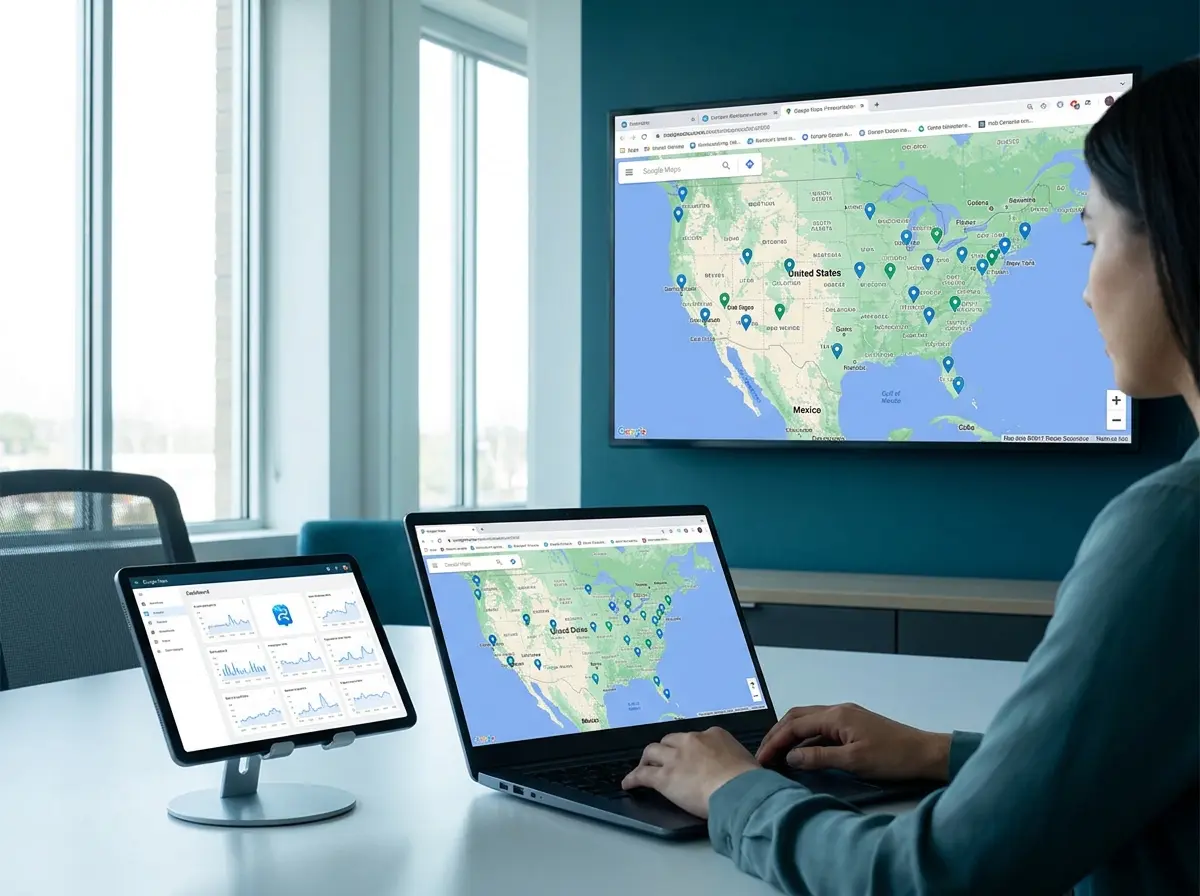
The Business Profile is the most important digital asset for a local business, and for franchises it turns chaotic without a clear structure. Franchisees often claim listings with personal email accounts instead of corporate credentials, and if that franchisee leaves the network, the brand can lose access to the profile entirely.
Solving Local SEO Challenges for Franchises With Central Ownership
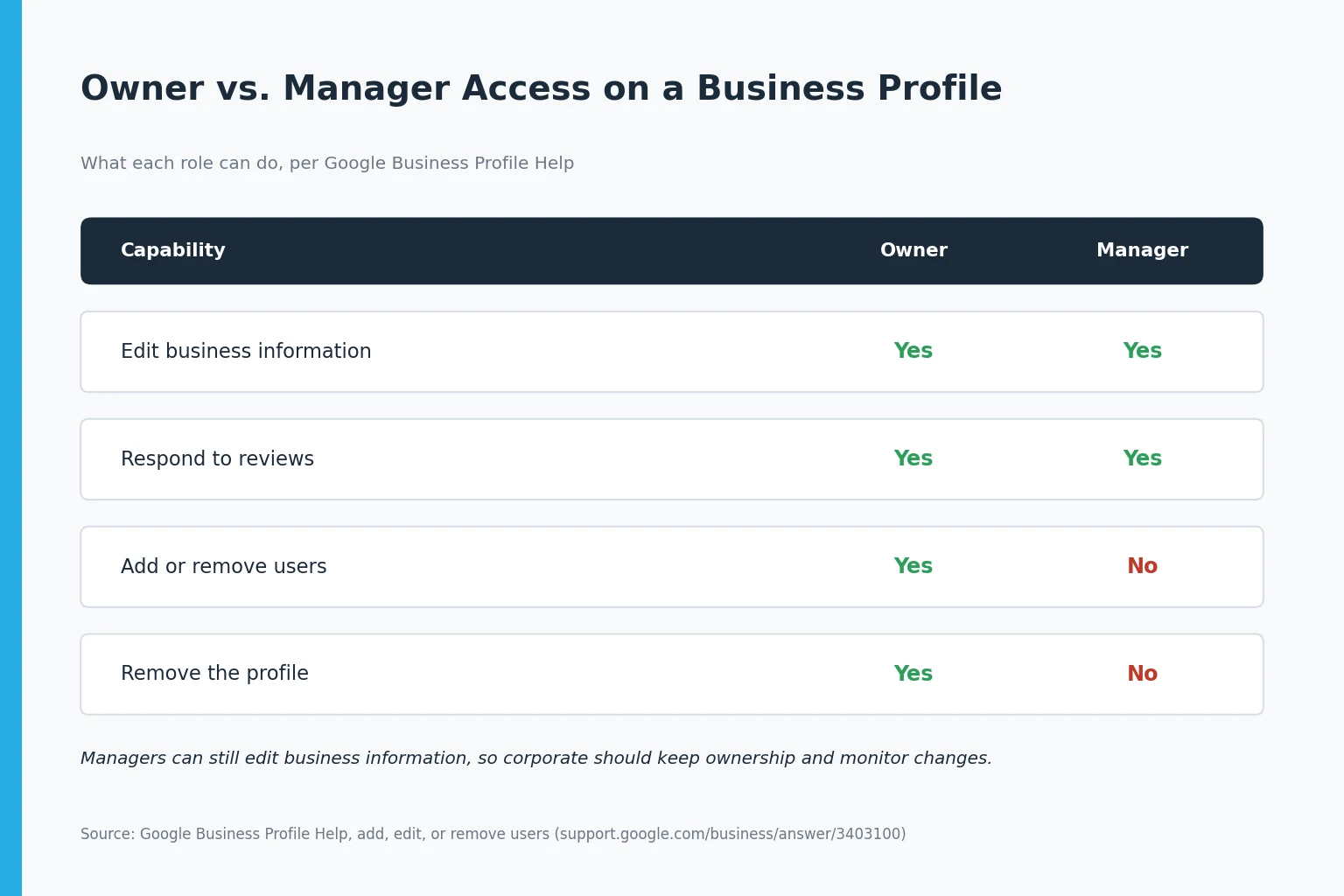
The fix is a centralized ownership model. The corporate entity should hold primary ownership of every profile, while franchisees receive manager access to respond to reviews and post local updates. Google’s owner and manager roles make this possible, though managers can still edit business information, so changes should be monitored. Set these rules during franchise onboarding to avoid conflicts later.
Profile quality matters because category and location signals drive results. Whitespark’s 2026 survey ranks the primary Business Profile category as the number one local pack factor and also lists a wrong primary category as a leading negative factor, so each location’s category should be deliberately chosen and consistent with how it appears on signage and online.
Resolving Rogue and Duplicate Listings
Duplicate listings plague almost every large franchise system. Sometimes a well-meaning employee creates a new profile because they cannot access the original, and sometimes a relocated store leaves a ghost listing behind. When duplicates exist, Google has a harder time deciding which profile represents the active location.
Audit regularly to find and merge duplicates, and report unowned duplicates through the official channels. For networks with ten or more locations, Google’s bulk verification lets corporate verify new locations from a single spreadsheet.
A Google Business Profile setup and verification service can prepare the upload, resolve duplicates, and verify every location.

Improve Your Local SEO Visibility Across Every Franchise Location
Inconsistent citations and weak local backlinks can hurt your rankings in every market. We help franchise businesses strengthen local authority, improve directory accuracy, and scale local SEO campaigns that drive measurable traffic and leads.
Boosting Local Rankings by Overcoming Duplicate Content
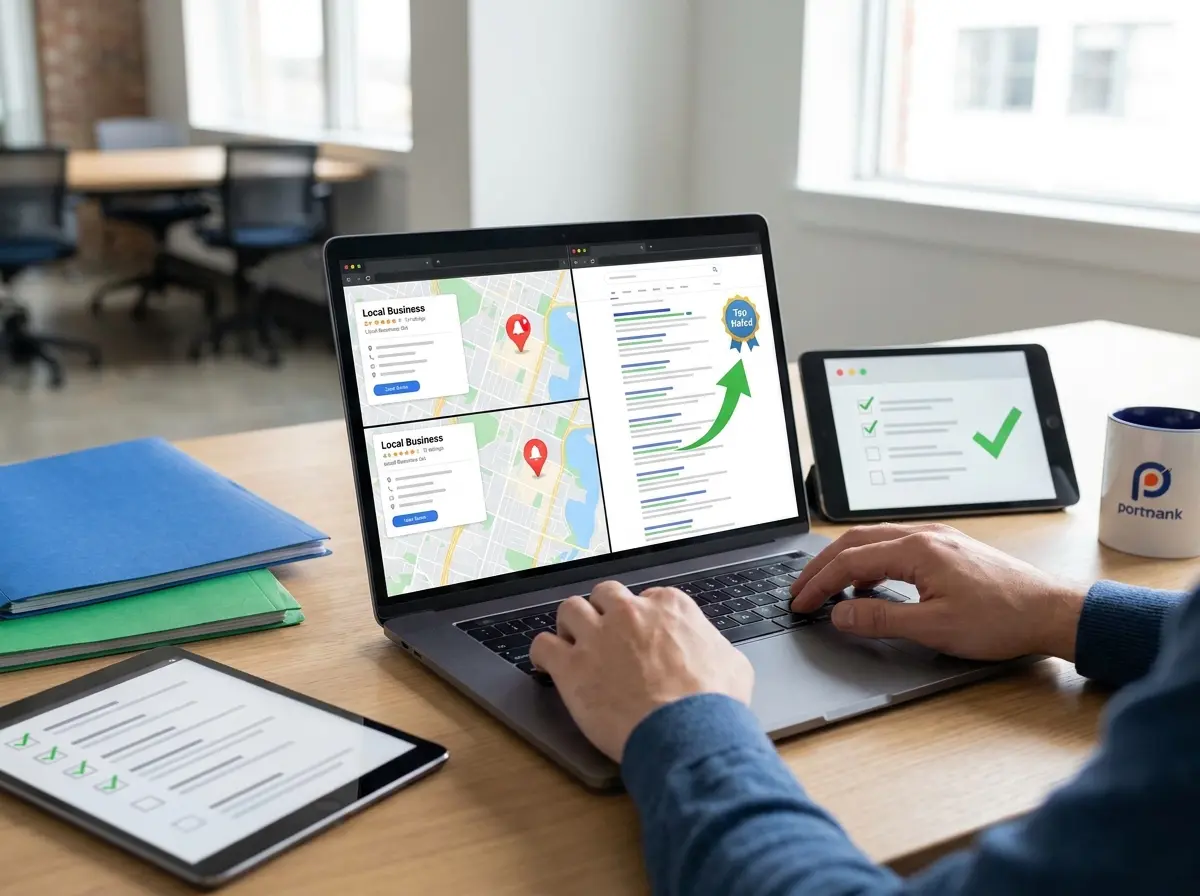
A standard franchise practice is giving every city its own dedicated content. Many brands copy their primary service text and swap the city name. Google’s documentation on canonicalization explains that when URLs are very similar, Google groups them and shows only one, so lazy templates simply get filtered out of local results.
Each location’s content has to offer real value to the local searcher. Include photos of the actual storefront and team, genuine local reviews, and details about the surrounding community. Strong on-site optimization builds those elements into templates so quality scales.
Technical markup matters too. Local business structured data helps search systems read exact addresses, hours, and phone numbers, and it is a clear advantage over competitors who skip it.
Developing Geo-Targeted Content for Better Local Visibility
Embed a Google Map of the exact location and write about neighborhood landmarks, nearby highways, and the charities the franchise supports. That context establishes geographic relevance for readers and crawlers alike. Do not rely on text-spinning tools to produce location content at scale. Invest in helpful writing that answers the questions customers in that market actually ask.
How to Audit Franchise Local SEO
- Inventory all digital assets. Compile a master list of every domain, social account, and directory listing in a shared spreadsheet that both corporate and local teams can reach.
- Check NAP consistency. Run priority locations through a citation scanner to find discrepancies, and correct top-tier directories like Apple Maps, Bing, and Yelp first.
- Analyze location content. Review the written content for each location to find duplicate text and thin sections.
- Review profile ownership. Confirm corporate owns every profile and that no location depends on a personal email address.
Scaling Local Link Building and Maintaining Citation Consistency
Earning links is one of the hardest parts of optimizing a multi-location business. Corporate websites attract links naturally, but individual locations rarely do without a deliberate plan. Whitespark’s survey places links at 24% of local organic ranking weight, so a location with no local links of its own starts at a disadvantage.
Franchisees can use their real-world community ties to earn relevant links from neighborhood sources. Sponsoring a youth sports team or joining the local chamber of commerce often produces a valuable link, and hosting community events creates opportunities for local news coverage. Corporate can help by giving every franchisee a playbook of these tactics.
Citation building supports the same goal. Submitting business data to major aggregators distributes it to many directories at once, and keeping core data accurate on Apple Maps and Bing Places avoids customer confusion. Be careful with discount directory-submission packages, because they often create many low-quality listings with incorrect details that can hurt more than help. Coordinated local SEO services keep all of these efforts consistent across the network.
Centralized Review Management and Reputation Strategy
Reviews influence both rankings and consumer trust, and a wide gap in scores between locations damages the overall brand. Some franchisees ask for reviews actively while others ignore feedback entirely. BrightLocal’s 2026 Local Consumer Review Survey found that 74% of consumers only care about reviews from the last three months and that 89% expect owners to respond, so inconsistency across locations is costly.
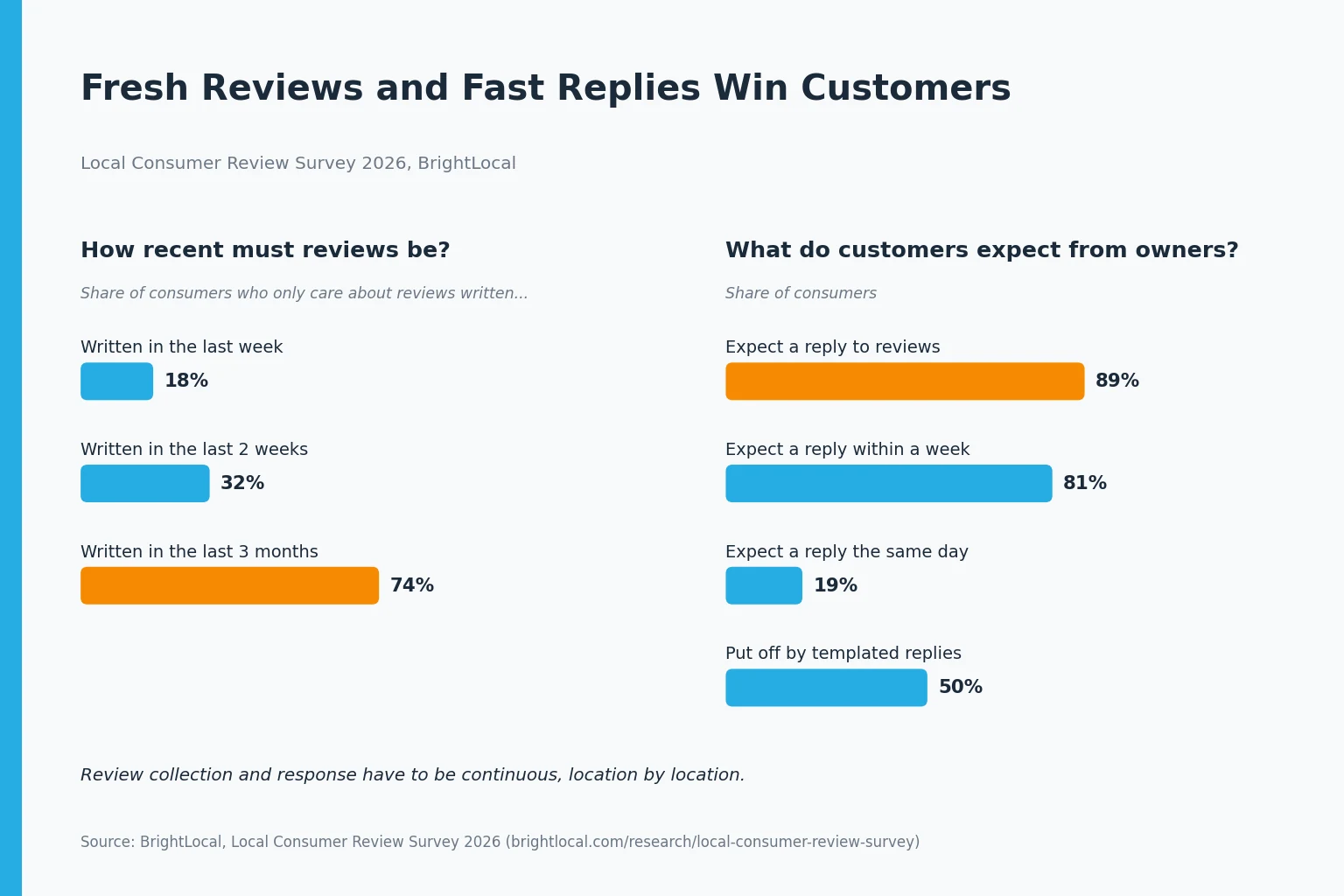
Corporate should give franchisees review management tools that trigger requests after a completed purchase, while following Google’s review policies, which discourage incentives and selective solicitation. Franchisees also need training to reply professionally to both praise and complaints, since a prompt, calm reply to a negative review limits damage and shows prospects that you care.
Monitoring reviews has an operational benefit as well. If several customers mention slow service at one store, corporate can step in with training before the problem spreads. A managed reputation management program provides that visibility across the network.
Local SEO Challenges for Franchises FAQs
Should each franchise location have its own separate website?
Generally no. Hosting every location on one strong corporate domain usually produces better search results, because separate sites split authority and create administrative work for the corporate team. A subfolder structure keeps governance and reporting in one place.
How do we handle franchisees who hire their own marketing agencies?
Set clear brand guidelines and require corporate approval for any third-party marketing vendor. Providing a list of vetted agency partners helps keep quality and strategy consistent across the network.
What is the most important ranking factor for local franchises?
For map results, Business Profile signals are the largest group in Whitespark’s 2026 survey at 32%, led by the primary category. For local organic results, website content and links carry more weight, so a franchise location needs strength in both.
Who should own a franchise location’s Google Business Profile?
Corporate should hold primary ownership so a location is never lost when an operator leaves. Franchisees can receive manager access to respond to reviews and post local updates, with scheduled monitoring of any edits.
How often should a franchise audit its local SEO?
A quarterly review of listings, profile changes, duplicates, and location content is a practical minimum for most networks, with extra checks after new openings, relocations, or ownership changes.
How can franchise locations earn local backlinks?
Community involvement works best: local sponsorships, chamber of commerce membership, charity partnerships, and local events that earn press coverage. Corporate can support franchisees with a shared playbook and talking points.
Mastering local search for a multi-location brand takes organization and clear communication between corporate and franchisees. The friction between control and execution never disappears in a franchise model, but it can be managed, and firm guidelines set early prevent digital messes that take years to clean up.
Prioritize accurate data, centralized profile ownership, and genuinely local website content. Give franchisees the right tools while corporate keeps administrative control of the primary digital assets, and a well-run strategy turns your geographic footprint into a competitive advantage in every market. Start by auditing your current map listings and finding rogue profiles, and consider the franchise marketing strategy that supports every territory.
If you want expert support, BizIQ helps multi-location brands scale local SEO.
To discuss your network, talk with a franchise SEO specialist anytime.

Ready to Scale Your Franchise SEO Strategy?
We help multi-location businesses improve local rankings, strengthen franchise visibility, and create scalable SEO systems designed for long-term growth.