
Franchise growth stalls when corporate vision clashes with local execution, and the result is often a set of expensive franchise marketing mistakes that hold back scalability. You invest heavily in building a recognizable name, yet regional sales tell a disappointing story. That disconnect usually points to flawed promotional tactics operating across the network.
- Brand and communication gaps: inconsistent branding and weak corporate-to-franchisee communication undercut local marketing.
- Local visibility: ignoring local SEO, Business Profiles, and mobile-friendly websites reduces lead generation.
- Engagement and reporting: localized social media and transparent ROI reporting build trust with operators and customers.
- Regular audits: brand compliance reviews and campaign analysis prevent costly inefficiencies and support scalable growth.
Corporate leaders push broad national campaigns while individual operators struggle to connect with their immediate communities. Finding these gaps takes an honest look at how the system talks to local buyers. Fixing them stops the financial bleed and restores profitability across the network.
Every successful expansion rests on a marketing strategy that scales across regions. Without direction, operators spend budget on unproven tactics with poor returns, which dilutes the core message and confuses customers in different territories. Leadership has to step in early, because a fragmented approach does lasting damage to brand loyalty and regional sales. If you want a partner for the local visibility side, BizIQ works with franchise brands on exactly that.
Franchise Marketing Mistakes: Failing to Maintain a Consistent Brand Identity
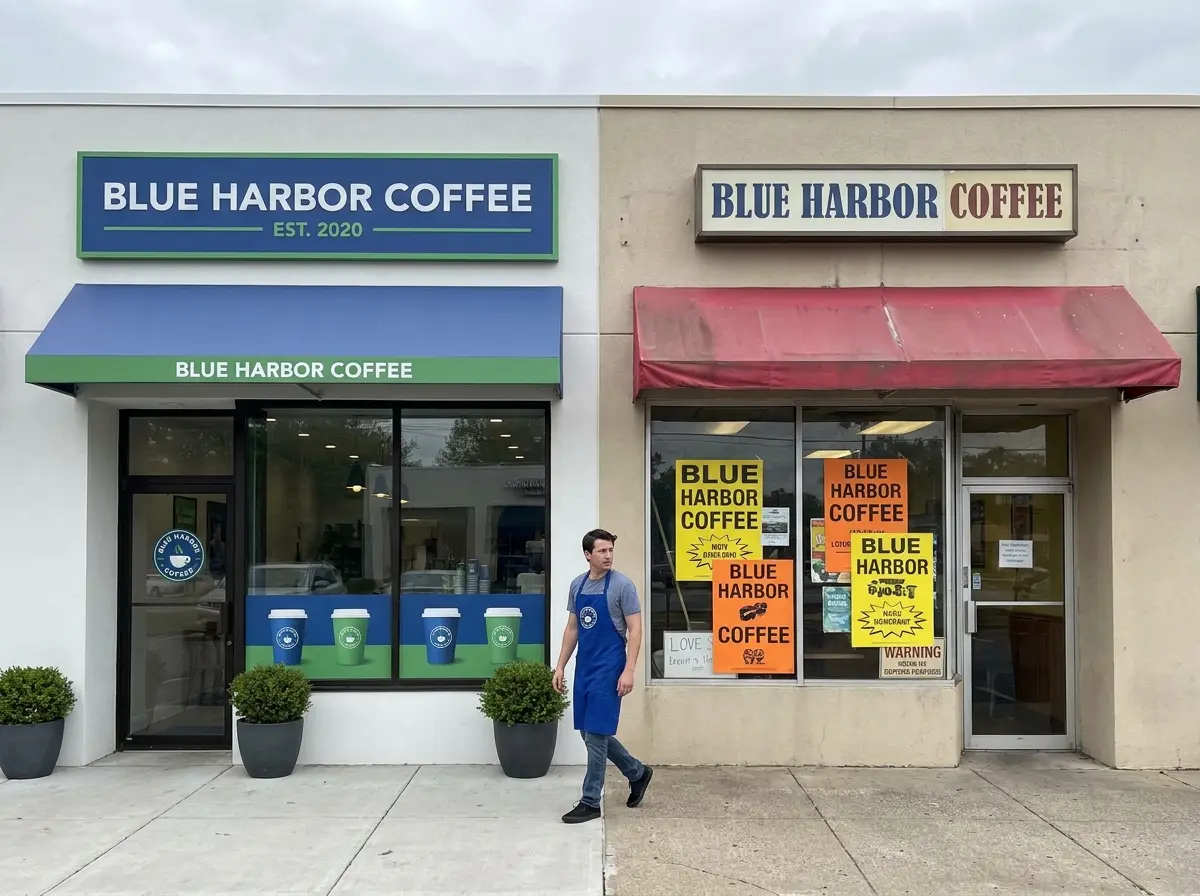
Customers expect the same experience in New York as in California, and keeping a franchise brand consistent across hundreds of units is one of the hardest operational challenges. Many operators ignore brand guidelines and build their own unapproved flyers for local promotions.
That inconsistency fractures trust and makes national advertising less effective locally. The fix is to give operators accessible, premium marketing materials they can deploy quickly, so following the brand is easier than breaking it. A centralized digital asset library supplies the content operators actually need each day, stops rogue advertising early, and protects the corporate identity. Consistent branding signals professionalism and stability in every market, which builds the reputation that drives repeat business.
Franchise Marketing Mistakes: Ignoring Local SEO and Digital Presence
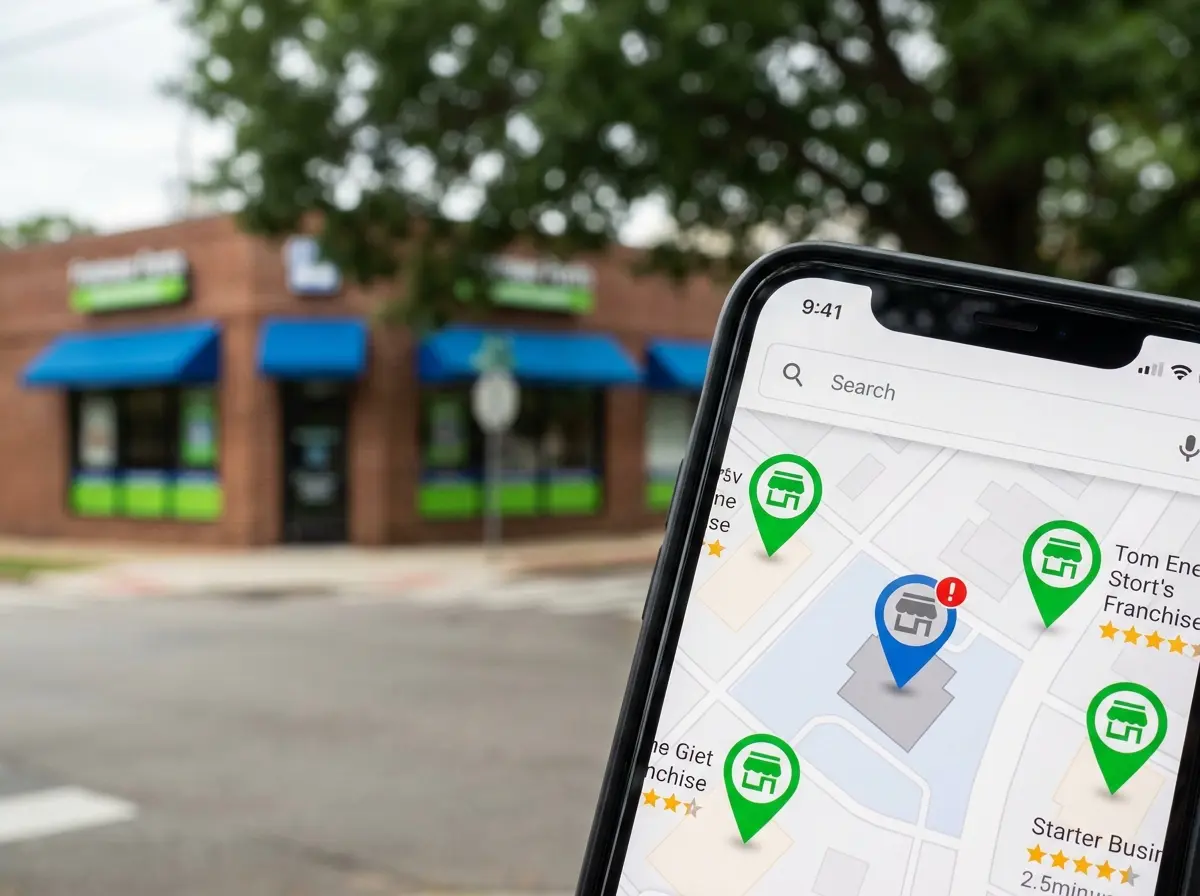
National recognition matters, but local search visibility drives the daily foot traffic to each storefront. Ignoring local optimization hands neighborhood customers to agile independent competitors. A solid foundation of local SEO services puts operators in front of nearby buyers who are searching for immediate solutions.
Neglected Business Profiles and Listings
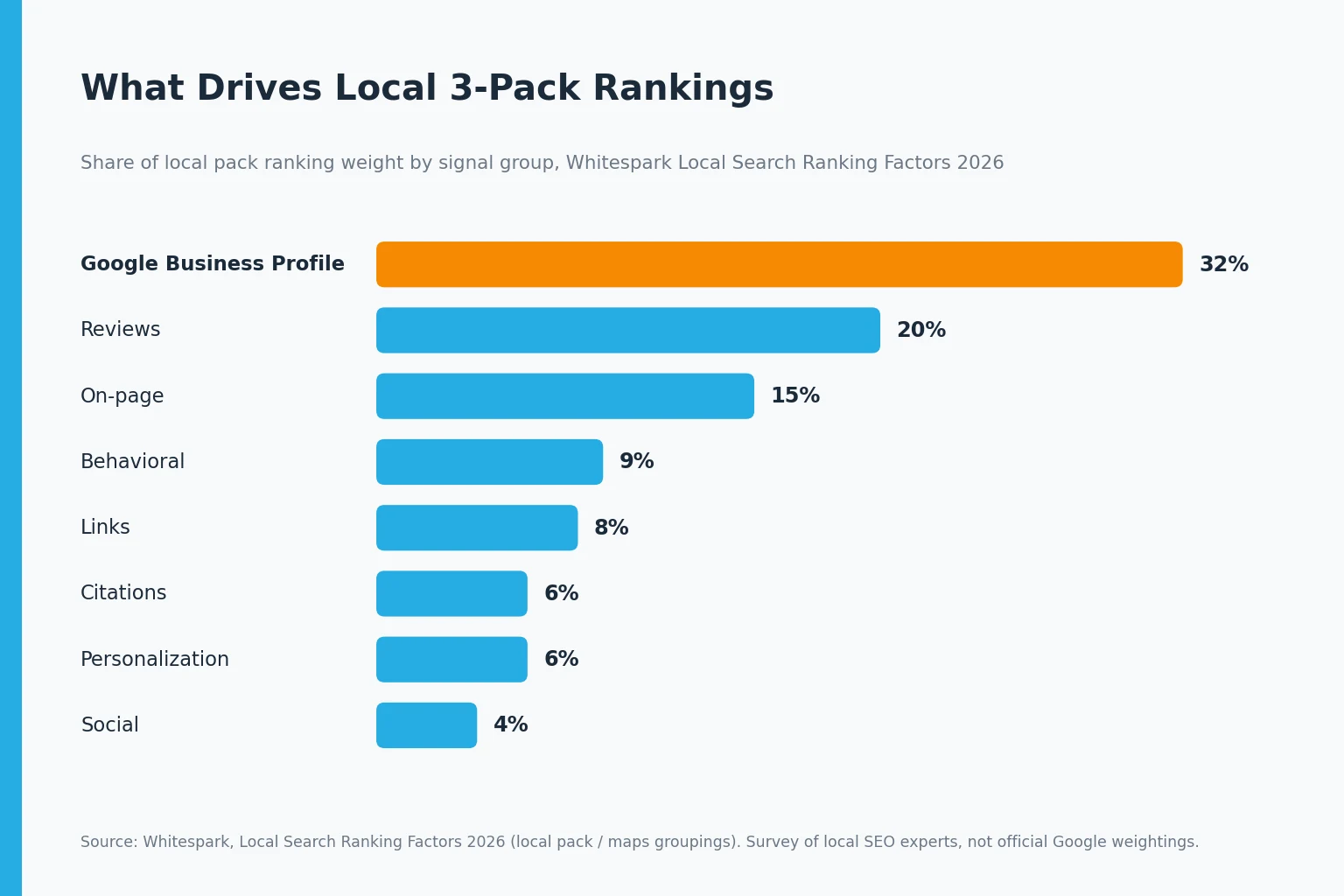
Local visibility starts with fully optimized profiles and accurate directory listings. In Whitespark’s 2026 survey of local SEO experts, Business Profile signals carry 32% of the weight in local pack rankings, ahead of reviews at 20%. Many franchisors manage hundreds of profiles from one dashboard and end up with unanswered reviews, outdated photos, and no local posts.
A Google Business Profile setup and verification service gives every location an accurate, verified foundation, and corporate can keep ownership while local operators keep their listings active.
Weak Website Design and Duplicate Content
Website design plays a critical role in turning local traffic into paying customers. Slow, hard-to-use sites send visitors straight to competitors, and many franchise templates are heavy with tracking scripts and unoptimized images. Google publishes clear targets for loading, responsiveness, and stability.
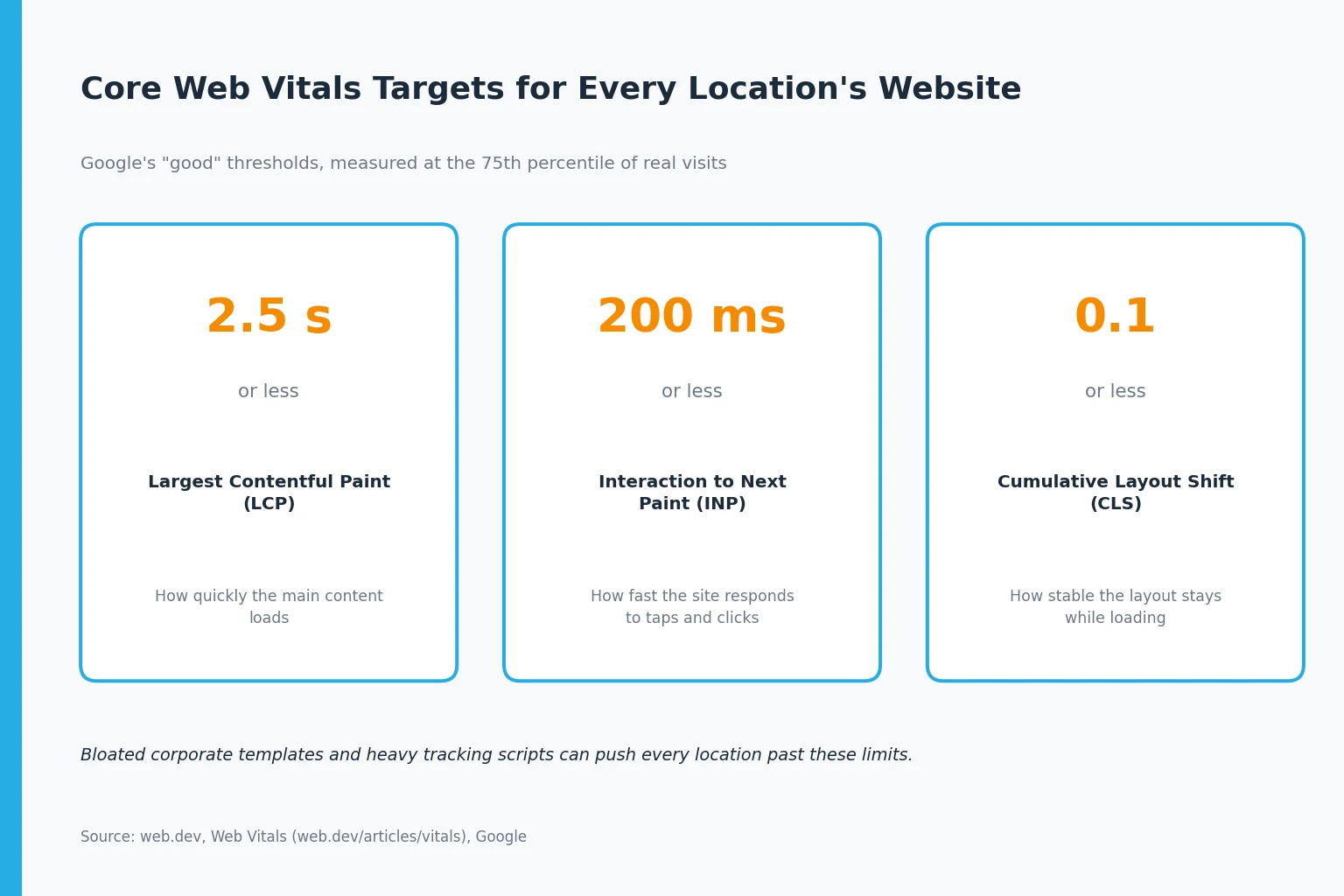
Design also has to accommodate dynamic local content while protecting the corporate structure, and mobile performance deserves special attention because many local searches happen on phones. Franchise brands that need a build and ongoing support often start with marketing packages with website design and local SEO included.
Duplicate content is the other common trap. Google’s documentation on canonicalization explains that when URLs have very similar content, Google groups them and shows one, so identical copy across locations simply gets filtered. Write specific, localized content for every unit, and review it regularly with local audits that catch technical issues before they affect rankings.
Strong on-site optimization builds that into every template.
Social Media Missteps and Franchise Marketing Mistakes
Franchise networks struggle to balance a national brand voice with authentic neighborhood engagement. A major mistake is mandating identical social posts across every regional account, which flattens engagement and ignores the personality of each territory. Operators need room to highlight local events inside approved brand parameters.
Missed opportunities pile up when networks ignore user-generated content from real local customers. Social media works best as a two-way channel for answering neighborhood questions and reviews, not as a static billboard, and too many networks launch profiles and then abandon them.
Paid social also needs precise regional targeting to protect return on ad spend, and without oversight it can quietly drain capital and operator time. Corporate can help with customizable templates that operators adapt for their own neighborhoods, and professional social media management keeps the voice consistent while leaving room for local personality.
Franchise Marketing Mistakes: Disconnect Between Corporate and Franchise Locations
Headquarters and field operators look at priorities through different lenses. Corporate focuses on long-term development and broad awareness, while a franchise owner cares about foot traffic and today’s register. Franchisees often feel mandatory advertising fees vanish into a corporate black hole, and that misalignment breeds resentment.
Franchisors already have to be transparent about the fund: the FTC’s Franchise Rule requires the franchise disclosure document to describe how advertising funds were used in the last fiscal year, by percentage.
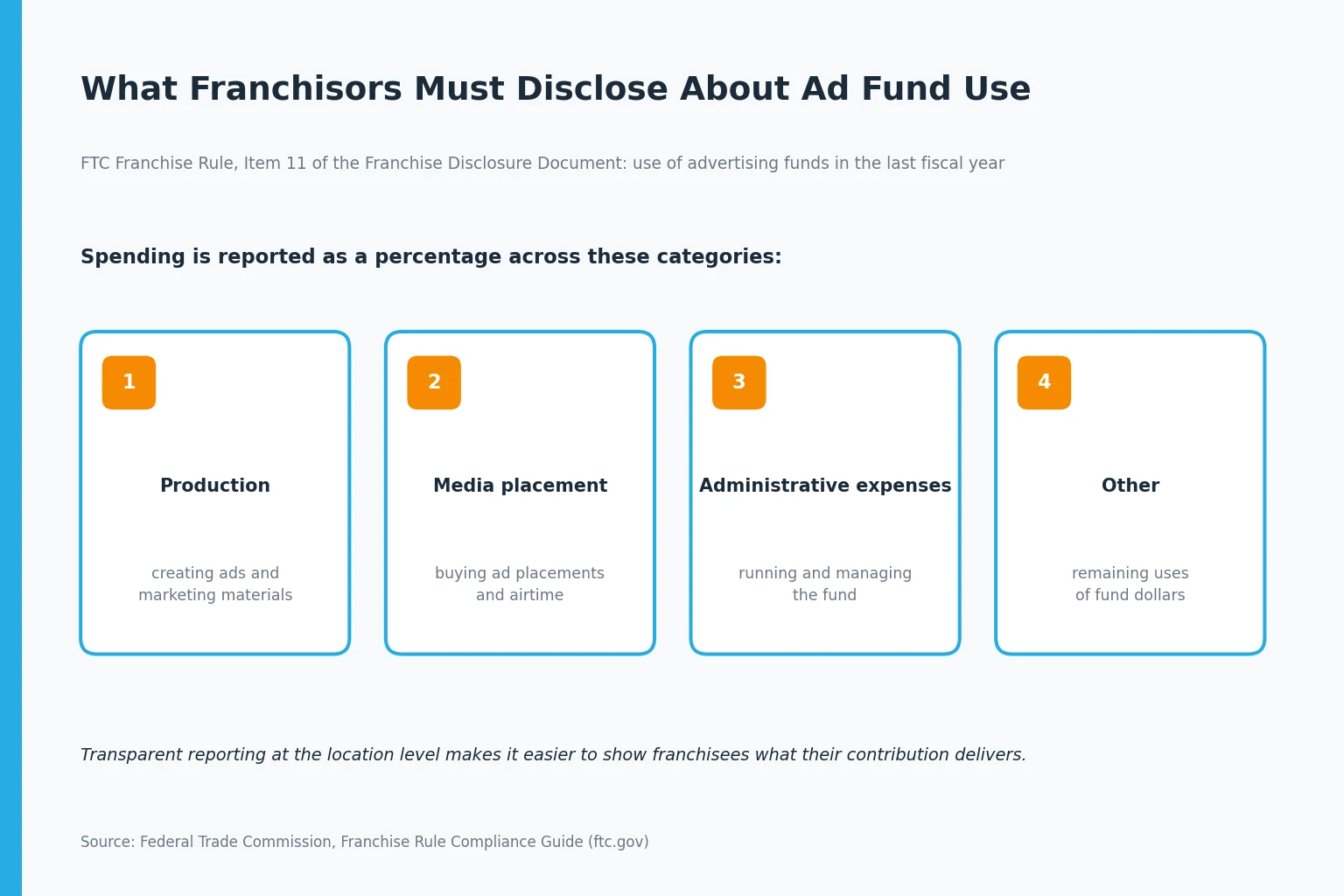
That disclosure covers the system as a whole, but a franchisee still wants proof that national dollars translate into neighborhood sales. Localized performance dashboards show each operator how corporate campaigns benefit their own territory, and they reduce pushback on mandatory initiatives. Building that reporting is central to any franchise marketing approach that operators trust.
Audit Your Local Marketing Strategies to Prevent Franchise Marketing Mistakes
Regular audits help corporate find performance gaps before they cause serious financial damage. A standardized process for evaluating how each unit executes the strategy highlights which operators need support and which locations are outperforming expectations. A free SEO audit is a practical way to start the search visibility part of that review.
How to Evaluate Regional Performance
- Review local brand compliance. Look at recent promotional materials from each location and confirm they meet corporate visual and messaging standards. Brand management tools can flag unauthorized logo use or off-brand color schemes quickly.
- Analyze search visibility. Check rankings for each location with localized keywords, paying special attention to the completeness and accuracy of each Business Profile.
- Evaluate campaign ROI. Compare each unit’s advertising spend with its sales growth during the promotional period.
Common Franchise Marketing Mistakes to Avoid
Catching systematic errors early keeps losses from spreading across the network. A frequent mistake is launching a large national promotion without preparing regional staff for the demand it creates. Another is ignoring the power of local community outreach, which many operators underestimate.
Common Franchise Marketing Mistakes Network Leaders Overlook
Many of the most common problems come from poor communication between headquarters and the field. Reviewing them regularly keeps the promotional engine efficient, and an early fix stops a small issue from spreading through the system. Understanding what is going wrong helps corporate build better support structures for field operators.
A simple review can also reveal overlapping territories where operators bid against each other in paid search. Google’s own location targeting options let advertisers choose a radius or specific locations, so clear geographic boundaries for every campaign are possible.
Corporate leadership should also educate operators continuously on modern best practices, and professional Google Ads management can keep territories separate and spend efficient.
Franchise Marketing Mistakes FAQs
What are the most common franchise marketing mistakes?
The most common are inconsistent branding, ignoring local SEO and Business Profiles, mandating identical social posts across every location, weak communication between corporate and franchisees, and failing to report results at the location level.
How do we keep branding consistent across franchise locations?
Give operators a centralized library of approved, customizable materials and clear guidelines, and make approved assets easier to use than building their own. Brand reviews and automated checks help catch off-brand materials early.
Why do some franchise locations underperform even with strong national marketing?
National campaigns build awareness, but sales happen locally. A location with an incomplete Business Profile, inconsistent listings, duplicate website content, or a slow website can lose nearby customers to independent competitors regardless of national brand strength.
Should corporate control all local social media accounts?
Usually a balance works best. Corporate supplies templates, approved assets, and guidelines, while local operators add neighborhood events and respond to customers, which keeps the brand consistent and the engagement genuine.
How do we stop franchisees from competing against each other in paid search?
Define clear geographic boundaries for each location’s campaigns, use location targeting with radius or specific areas, and coordinate keyword and budget plans from a central account or an approved agency.
How often should a franchise system audit its marketing?
A quarterly review of brand compliance, search visibility, and campaign return is a practical rhythm for most networks, with extra checks after new openings or major campaigns.
Franchise success depends on a marketing system that balances strong corporate branding with authentic local engagement. When networks prioritize local SEO, consistent messaging, transparent reporting, and community-driven marketing, they build stronger customer relationships and more sustainable growth. Avoiding the common mistakes also protects the brand and helps every location compete in its own market while improving overall profitability. To talk through your own network, talk with a franchise marketing specialist about where to begin.

Build a Stronger Franchise Marketing Strategy
From local SEO and Business Profile optimization to scalable franchise advertising, we help franchise brands improve visibility, generate leads, and grow consistently across every location.