
Poor Google rankings for franchises frustrate corporate marketing directors because the problem is structural, not a lack of effort. Managing search optimization for one business location takes real daily work. Multiply that across dozens or hundreds of franchise locations throughout the country and the technical workload explodes, which is why local independents so often outrank the franchisees of well-known brands.
- Conflicting signals: duplicate content, inconsistent NAP data, and competing local strategies confuse Google’s systems.
- Rogue assets: unauthorized franchise websites and unmanaged Business Profiles fragment brand authority and map pack visibility.
- The fix: unique local content for each location, centralized profile management, structured data, and consistent citations.
- The payoff: local links, accurate listings, and scalable systems improve rankings, local traffic, and franchise revenue.
Corporate executives know their branches deliver services that rival any independent shop, yet those independents consistently outrank individual franchisees in map results and organic search. The reason is that search systems evaluate a multi-location brand differently than a single neighborhood business, and a brand that cannot send clear, consistent signals loses ground. At BizIQ, we see the same patterns across franchise networks of every size.
Why Poor Google Rankings for Franchises Happen: Corporate Control vs. Local Relevance
Franchise marketing teams live in a tug-of-war between corporate control and local geographic relevance. Leadership wants one unified brand voice on every digital asset, while franchise owners just want the phone to ring with nearby customers. That friction produces a disjointed digital strategy that confuses crawlers, and Google struggles to decide which URL deserves the top spot for a local query.
How Duplicate Content Causes Poor Google Rankings for Franchises
Duplicate content is one of the biggest culprits. Many franchisors paste the same service descriptions across dozens of location URLs and change only the city name before publishing. Google’s documentation on canonicalization explains that when URLs are very similar, Google groups them and shows only one version. The result is not a penalty, but your own locations end up competing with each other, and most of them are left out of results.
The Impact of Rogue Franchisees on Local SEO

Franchise owners are independent entrepreneurs who expect quick results in their territories. When corporate moves slowly, some hire local agencies or build inexpensive sites on consumer platforms. Those assets compete with the corporate domain for the same geo-targeted keywords, and search systems see two websites claiming to represent the same business in the same city. That creates a trust problem that can hurt both.
Whether a franchisee is allowed to build a separate site depends on the franchise agreement, so corporate should state the rules clearly during onboarding. Systems that keep every location on one corporate domain generally avoid this conflict and consolidate authority in one place.
Fixing Inconsistent NAP Data Across the Network
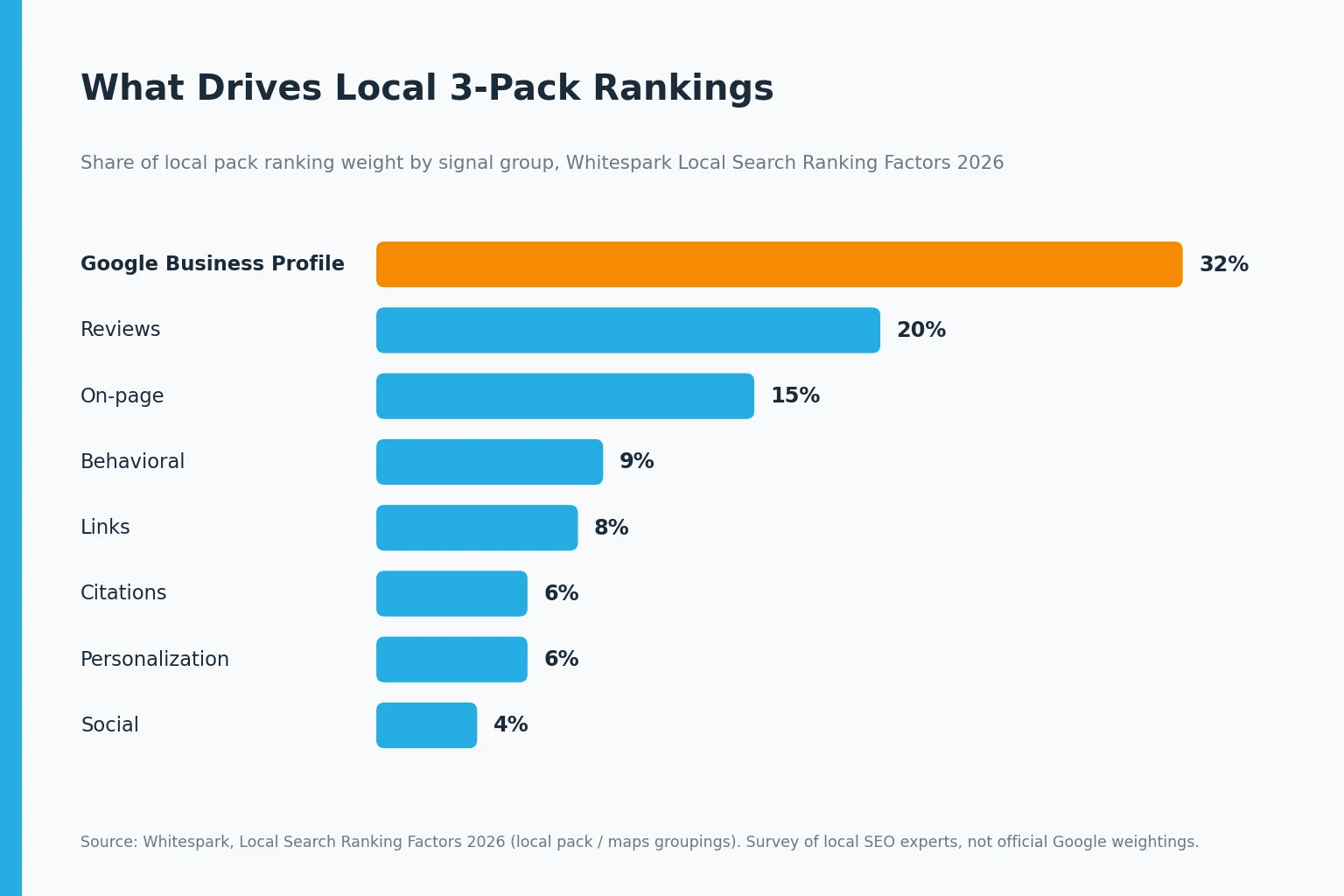
Decentralized marketing also scrambles name, address, and phone consistency across the web. In Whitespark’s 2026 survey of local SEO experts, website NAP that matches the Business Profile ranks among the top 15 local pack factors, and citations account for roughly 6% of local pack ranking weight. When directories show conflicting phone numbers or addresses, Google gains less confidence in the location, and you cannot expect strong rankings if basic contact details vary from site to site.
Ongoing local citation management corrects those conflicts and keeps every listing aligned as locations open, move, or close.
Strategic Solutions: How to Fix Poor Google Rankings for Franchises

Reversing declining visibility takes a systematic local SEO approach that balances corporate oversight with hyper-local optimization. It starts with regaining control of your digital footprint across every location, and with clear, enforceable guidelines for how franchisees interact with marketing channels. A coordinated SEO program for franchises puts those guidelines into practice.
How to Optimize Your Franchise Locations for Local Search
- Consolidate Business Profiles. Claim every Business Profile under one corporate account and give franchise owners manager access to answer reviews. Managers can still edit business information, so monitor changes on a schedule. For networks with ten or more locations, Google’s bulk verification speeds up the process.
- Create hyper-local content for every location. Build dedicated content on the corporate website for each franchise, with original writing about local staff, regional landmarks, and community involvement.
- Add local business structured data. LocalBusiness markup on each location tells search engines your coordinates, operating hours, and other details in a standard format.
Profiles matter because they carry the most weight in map results. Whitespark’s 2026 survey puts Business Profile signals at 32% of local pack ranking weight, ahead of reviews at 20%, and a Google Business Profile setup and verification service gets every location set up correctly.
Dedicated location content also needs to be built into templates so quality survives scale, and strong on-site optimization does exactly that.
Building Local Authority Through Citations and Local Links
Search engines judge a brand’s regional prominence by looking at mentions across the web. Each location needs accurate listings on platforms like Yelp, Apple Maps, and Bing Places, and managing them by hand across a large network quickly becomes unsustainable. Enterprise listing tools push accurate data to major aggregators together, prevent duplicates, and help suppress profiles created by well-meaning franchisees.
Local links are the next phase. Most franchise sites have plenty of strong links pointing to the corporate root, while individual locations rarely earn any of their own. In Whitespark’s survey, links account for 24% of local organic ranking weight, so encourage franchisees to sponsor youth teams, join chambers of commerce, and take part in community events that earn relevant local links. Coordinated local SEO services turn those community ties into a repeatable program.
Measuring Franchise Search Performance and SEO ROI
Tracking performance across hundreds of locations calls for dashboards built for multi-location organizations. National rankings can hide local problems, because a keyword might rank first in Chicago and far down the results in Dallas. Track map pack visibility and organic rankings from each franchise’s own area.
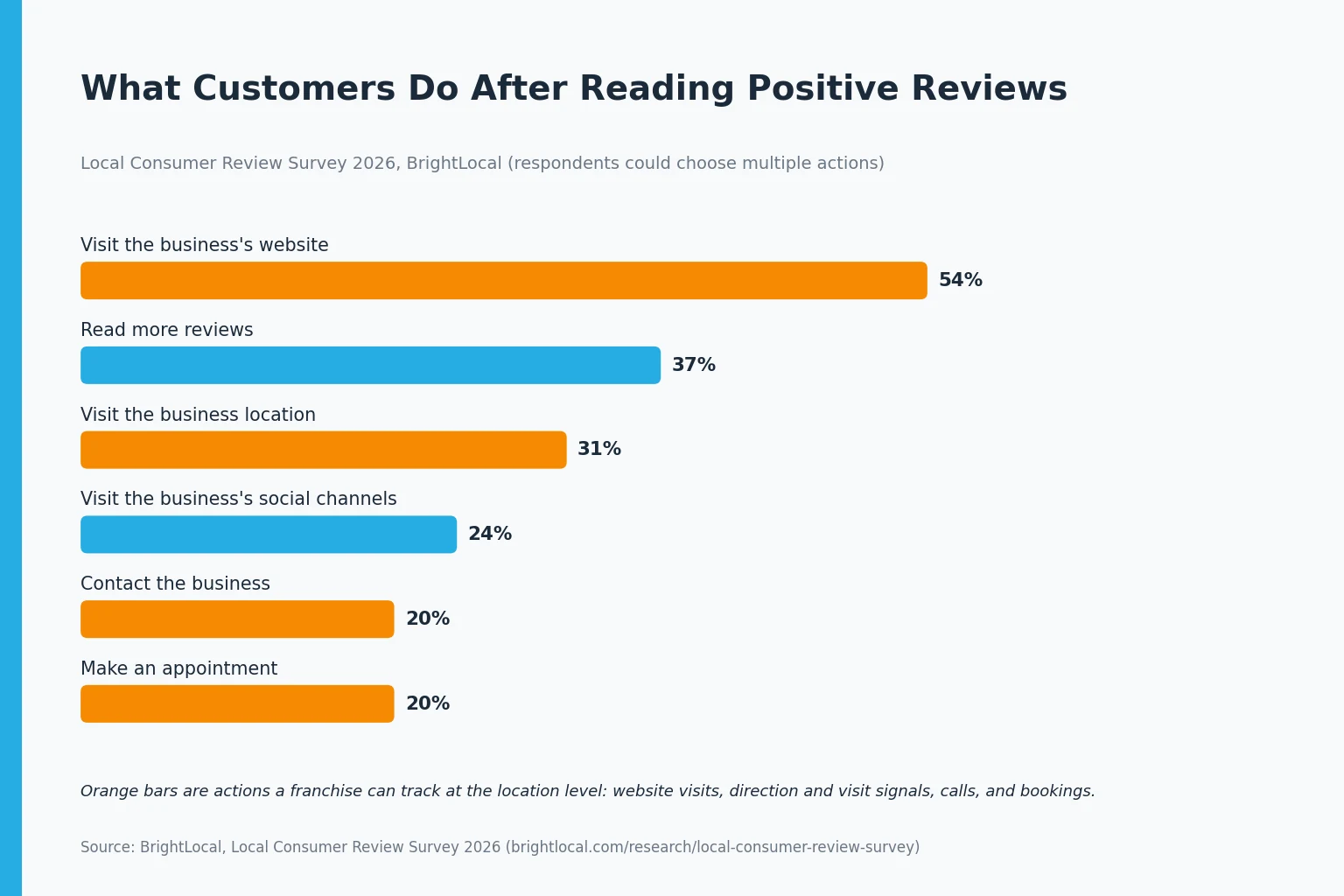
Pay particular attention to the actions that signal real customers. BrightLocal’s 2026 Local Consumer Review Survey found that after reading positive reviews, 54% of consumers visit the website, 31% visit the location, and 20% contact the business. Calls and direction requests from each Business Profile are tangible proof that SEO drives foot traffic and revenue.
A free SEO audit is a practical way to baseline those numbers by location before you begin.
Budget planning follows from the data, and reviewing franchise SEO pricing shows what network-level programs involve.
Poor Google Rankings for Franchises FAQs
Why do my franchise locations rank lower than local competitors?
Local competitors focus an entire website on one area and one customer base. A franchise location is one small part of a large corporate website, and Google often favors the specific local relevance of an independent shop over generic, duplicated corporate content.
Should each franchise location have its own separate website?
Usually not. One corporate domain with dedicated content for each location shares authority and avoids competing sites. Whether a franchisee may build a separate site depends on the franchise agreement, so corporate should set the policy clearly at onboarding.
How do we handle duplicate content across hundreds of franchise locations?
Write original content for every location: local landmarks, team members, community involvement, and neighborhood details. Google groups near-identical URLs and shows one, so original content gives each location a reason to be shown.
What is the best way to manage Google Business Profiles for franchises?
Corporate should hold primary ownership of every profile, with manager access for local franchisees who answer reviews and post updates. Because managers can still edit business information, scheduled monitoring of changes keeps the data accurate.
How long does it take to improve franchise local SEO rankings?
Timelines vary by market and starting point. Profile and listing fixes can help within weeks, while content and link growth typically build over several months as search systems recrawl updated content and process new citations.
How do we measure franchise SEO results by location?
Track map pack and organic rankings from each location’s area, along with calls, direction requests, and website visits from each Business Profile. UTM parameters on profile links separate that traffic from general organic visits.
Fixing poor Google rankings for franchises takes time, dedicated resources, and organizational discipline. A generic corporate website cannot capture hyper-local search traffic on its own, so every branch needs attention through optimized business profiles and genuinely local content.
By eliminating rogue websites and correcting NAP inconsistencies, you build a solid foundation for growth, and your locations can reclaim stronger positions in local results. That visibility ultimately drives more foot traffic and revenue for your franchisees. To discuss your own network, talk with a franchise SEO specialist about where to begin.

Strengthen Your Franchise SEO Strategy Across Every Location
From Business Profile management to hyper-local content and citation consistency, we help franchise brands improve local rankings and generate more leads in every market.