Choosing a franchise SEO company for a franchise-cooperative network means looking well past the standard local SEO checklist. When your corporate website, location content, and local listings are not aligned, search engines and AI tools struggle to index your locations or recommend them to nearby customers who are ready to buy. This guide gives you the questions to ask, the warning signs to watch for, and the proof to demand before you commit a single dollar of co-op funds.
- Franchise-cooperative search architecture needs a specialized setup that generalist agencies rarely deliver.
- Thin, near-duplicate location content is usually a bigger risk to a network than crawl budget.
- A rigorous vetting process protects your co-op budget and ties local leads back to revenue that franchisees can trace.
Many franchise brands are living with flat or declining web traffic because their SEO providers are still solving a 2018 problem: basic citations and keyword rankings. The real failure points sit deeper, in rendering gaps that hide location-finder content from crawlers, thin copy-and-paste location content, and entity confusion that causes AI search tools to merge or skip individual storefronts. At BizIQ, we treat franchise search as an engineering and data-clarity problem instead of a templating exercise, and the framework below reflects that.
What a Franchise SEO Company Must Understand About Co-Op Search
A franchise network is not a collection of small businesses that happen to share a logo. It is one brand with shared authority, shared templates, and shared risk, and every decision about site structure, listings, and governance affects every location at once. A capable partner should be able to explain that in plain language before you ever discuss price.
Subdirectories vs. Subdomains
The most influential architectural decision a franchise brand makes is where location content lives. Hosting every location under one corporate domain with clean subdirectories, such as brand.com/locations/city-store, is the structure we recommend, and the reasoning is operational rather than magical. Backlinks, citations, and brand authority earned by the main domain all benefit the location content beneath it, and there is one set of templates, one sitemap structure, and one link profile to manage.
Subdomains and standalone websites work against that consolidation. Google’s own crawl documentation notes that a subdomain such as code.example.com is treated as a separate site with its own crawl budget, which means each one has to earn trust on its own. Across hundreds of locations, that is a large and unnecessary resource drain.
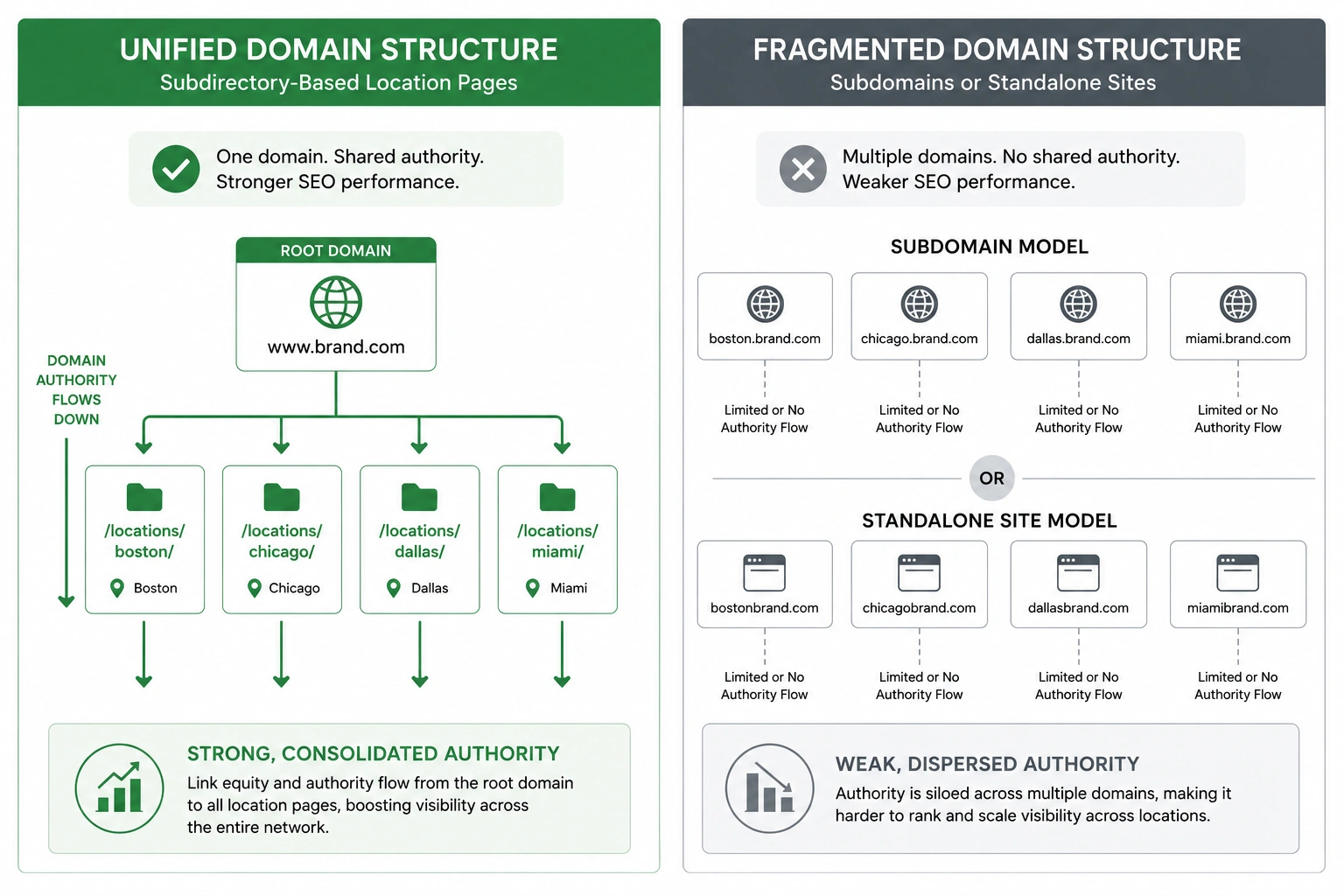
One structural risk deserves a direct question in every vendor interview. Without deliberate mapping, locations in the same metro area cannibalize each other. Two Phoenix locations competing for the same “HVAC repair Phoenix” query split impressions and confuse Google about which one to show. A qualified partner resolves this with territory-level boundary mapping and differentiated keyword targeting.
Local Listings and Google Business Profile Governance
Listing accuracy is foundational, and it is where franchise networks quietly forfeit map pack visibility. Whitespark’s 2026 survey of local SEO experts ranks the primary Business Profile category as the number one local pack factor, and it places a properly positioned map pin and website NAP that matches the Business Profile among the top 15. Every one of those is a governance problem as much as a marketing one.
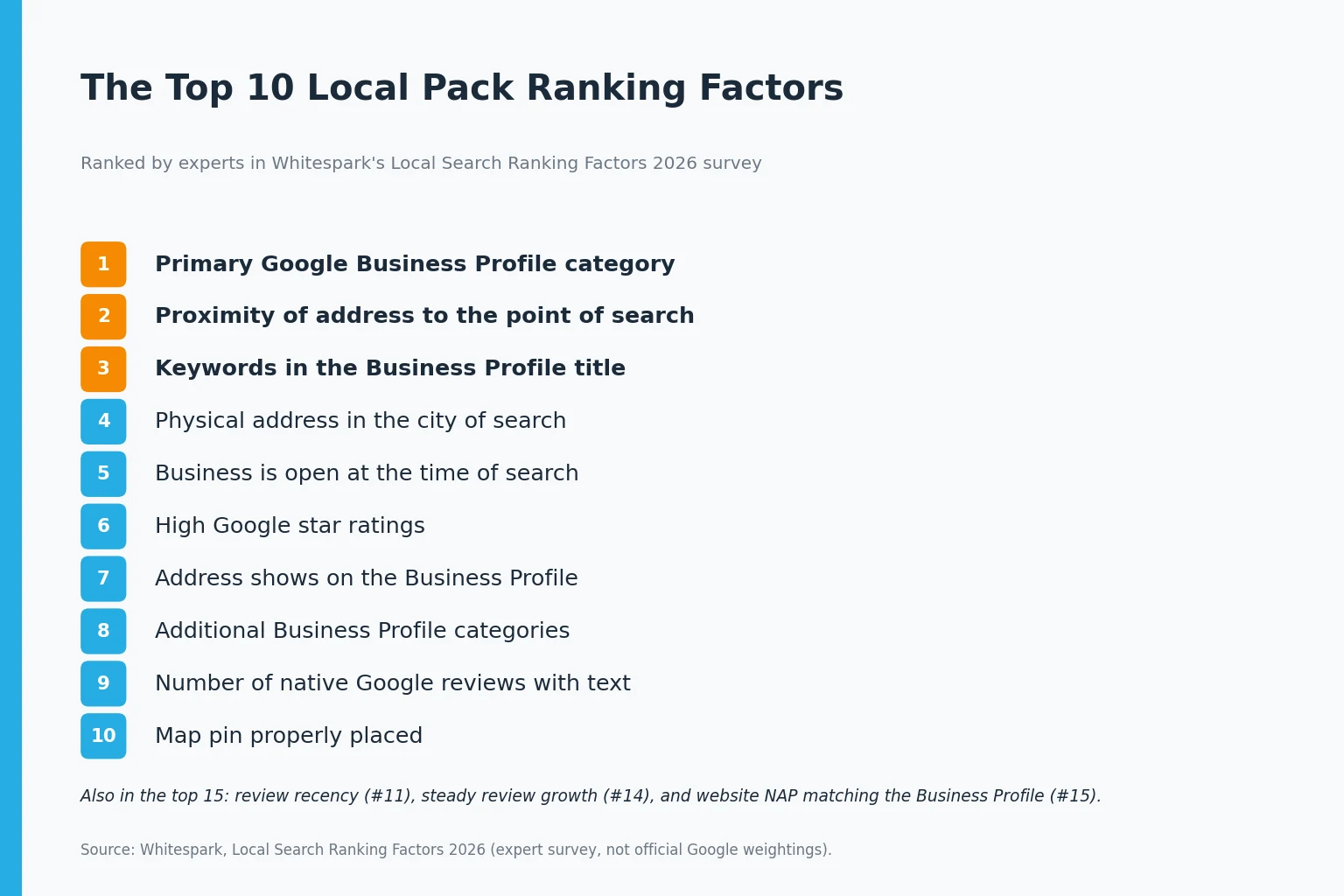
A single transposed phone number or outdated suite address, cloned across dozens of directories, sends conflicting signals about which version of a location is correct. Consistent data across every directory is the job of ongoing local citation management, and any vendor you hire should be able to describe exactly how it keeps hundreds of listings aligned.
Access control is the second half of governance. Corporate should hold primary ownership of every profile to protect the brand’s digital assets, because unapproved edits can alter categories, add incorrect attributes, or flag a location as closed. At the same time, local operators need to upload photos, reply to reviews, and update seasonal hours. Google’s owner and manager roles make this possible, but note that managers can still edit business information, so the practical model is corporate ownership plus scheduled monitoring of changes, not a hard lock.
Any agency that cannot describe a clear Google Business Profile access and monitoring protocol for large networks is not operating at the level a co-op model requires.
Warning Signs of a Generalist Search Marketing Provider
Generalist agencies are not incompetent, they are mismatched. The frameworks they apply to a single-location restaurant or a regional law firm do not translate to hundreds of territories. Knowing what to listen for in the interview keeps co-op funds from paying for activity reports instead of revenue.
- Guaranteed rankings before any technical audit: an agency that promises positions without first examining your site’s index coverage, rendering, and existing duplicate content is selling confidence instead of competence. Rankings are an output of technical and content quality.
- Separate subdomains or standalone websites for each location: this is the clearest sign that an agency does not understand franchise architecture, because every location moved off the corporate domain has to rebuild authority from scratch.
- Automated city-name swaps as a content strategy: identical templates deployed across hundreds of markets with only the city changed are thin by design. Google’s spam policies on doorway abuse list content targeted at specific regions or cities that funnels users to one destination as a violation, so mass-produced location content carries real risk.
- Reports that lead with rankings and traffic graphs: metrics that never connect to store-level calls and conversions measure the agency’s activity, not your revenue.
Questions to Ask When Vetting a Franchise SEO Company
The interview is where most franchise marketing teams lose leverage, not because they ask the wrong questions but because they accept vague answers. These questions are designed to surface real depth instead of rehearsed sales positioning.
Technical Competence Questions
How do you audit indexation and crawl efficiency across our location content?
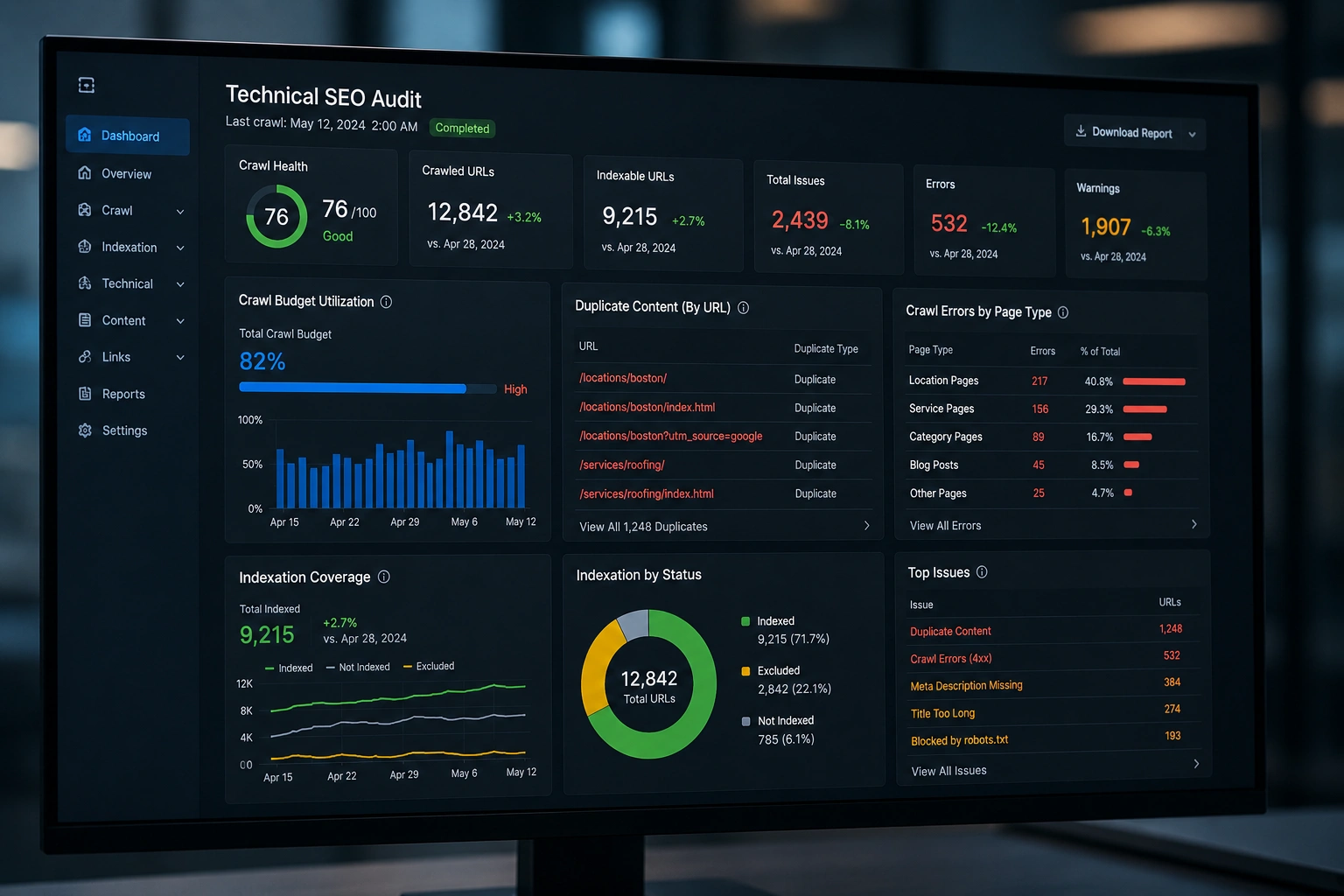
This question separates specialists from generalists, and the honest answer is nuanced. Google’s guidance on crawl budget says it is an advanced topic intended mainly for sites with 1 million or more unique URLs, or 10,000 or more with rapidly changing content, or sites with many URLs reported as discovered but not indexed. For most franchise networks, the practical problem is not crawl budget but whether location content is being indexed at all. A specialist will check index coverage in Search Console, explain which one applies to you, and will not invent a crawl budget crisis to justify a retainer.
What is your process for handling JavaScript-rendered location finders?
Many franchise sites use JavaScript-heavy frameworks for their store locators. Google states that Googlebot renders JavaScript, but it also notes that server-side or pre-rendering is still a great idea because it makes sites faster and because not all bots can run JavaScript. That second point matters for AI crawlers. Ask the agency to describe a rendering audit in specific terms, including how they confirm that location names, addresses, and links appear in the delivered HTML.
How do you structure LocalBusiness schema so each storefront stays a distinct entity?
Structured data helps search and AI systems understand which business is which. Without a documented schema process, locations can be blurred together or left out of AI-generated answers. A qualified partner will describe how each location is marked up with its own name, address, phone, and relationship to the parent brand, and how that markup is monitored over time.

Is your franchise network invisible in local search?
Get a detailed technical audit of your franchise-cooperative site architecture. Our specialists will identify the rendering gaps and indexation problems holding your locations back.
Reporting Questions to Ask Any Franchise SEO Company
How will you connect organic leads to store-level revenue?
Keyword rankings and impressions are leading indicators, not business outcomes. The reporting you need includes unique tracking numbers per location, call recording and qualification to separate genuine inquiries from spam and misdials, and attribution that shows which queries started the customer journey. Without that layer, cost per acquisition across territories is guesswork, and guesswork does not survive a franchisee budget review. Ask to see a sample report with validated leads separated from raw call counts.
How does your pricing change as we add locations?
Pricing models vary widely, so ask whether cost scales per location, per package tier, or by scope of work, and whether there is a term commitment. Comparing multi-location SEO pricing structures side by side makes it easier to see which model rewards network growth instead of penalizing it.
The Economics of Local Visibility and Co-Op Funds
Co-op marketing funds are shared money, which raises the standard for accountability. Every dollar directed to local search should be traceable to calls, visits, or sales at specific locations.
Co-Op Fund Transparency and Compliance
Contribution percentages are set in each franchise agreement and disclosed in Item 11 of the Franchise Disclosure Document. Under the FTC’s Franchise Rule compliance guide, franchisors must describe how advertising funds were used in the last fiscal year, including the percentages spent on production, media placement, administrative expenses, and other categories.
To see why that matters for a search vendor, consider a hypothetical system with $50 million in annual sales and a 2% contribution. That is a $1 million fund that has to be reconciled, and a vendor that cannot report at the location level makes the organic search portion impossible to evaluate. Reporting granular enough to support that disclosure is a compliance question, not just an analytics preference.
What Franchise SEO Costs
Pricing depends on location count, existing technical debt, and the amount of custom content each market needs. For reference, our marketing packages that include a website build and local SEO support start at $399 per month, and our organic SEO packages start at $1,500 per month. Our franchise SEO pricing overview explains what each option covers.
Eliminating Duplicate and Thin Location Content
The Cost of Boilerplate Location Content
When hundreds of locations share identical body copy, identical service descriptions, and identical metadata with only the city name changed, search engines have little reason to index or rank them. At best, near-duplicates are grouped together and only one version is shown. At worst, mass-produced regional content runs into the doorway abuse policy described earlier. Either way, the brand ends up with a location directory that is live for visitors but functionally invisible in organic search.
What works is genuinely unique local content on every location. That means real staff bios with names and tenure, community involvement that cannot be cloned across markets, service area details that reflect actual territory boundaries, verified local reviews, and neighborhood-specific FAQs. Strong on-site optimization builds those elements into templates so quality scales without becoming repetitive.
Google Business Profile, Review Recency, and Map Pack Visibility
Optimizing Local Signals for the Map Pack
Map pack placement is not purely a matter of proximity. Whitespark’s 2026 survey places review recency at number 11 and steady review growth over time at number 14 among local pack factors, which supports treating review acquisition as an ongoing operating discipline instead of a one-time setup task.
Consumers reinforce the point. In BrightLocal’s 2026 Local Consumer Review Survey, 74% of consumers said they only care about reviews written in the last three months, and 89% expect business owners to respond to reviews.
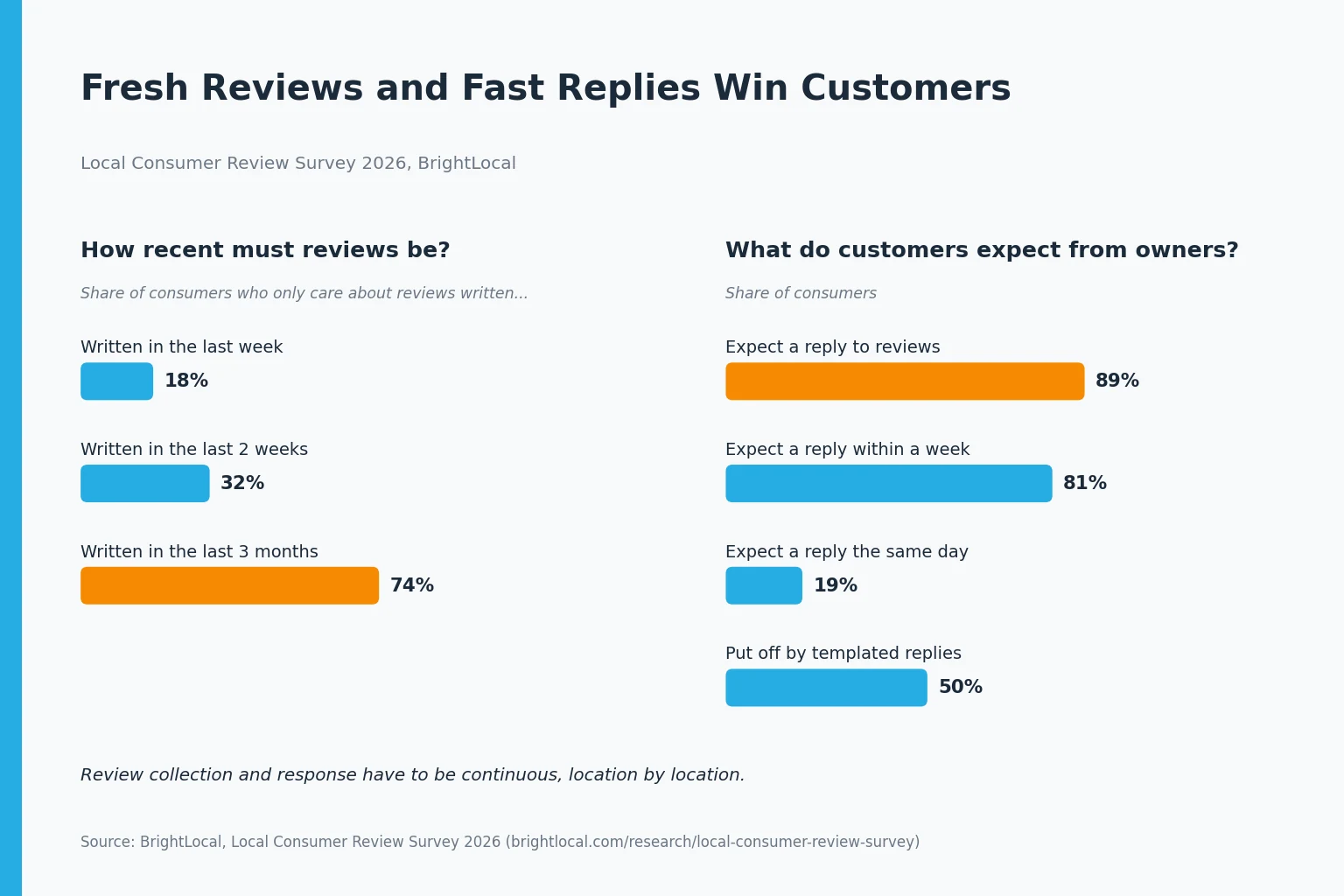
Scaling review acquisition across hundreds of locations without breaking platform guidelines takes a system: automated requests triggered by completed transactions, plus location-level reply protocols so every review gets a timely, personal response. Templated replies put off half of consumers, so the system has to leave room for local voice. A managed reputation management program is built for exactly this kind of coordinated, multi-location work.
Content Governance and Franchisee Guardrails
Balancing Corporate Control With Local Operator Autonomy
The tension between brand control and local flexibility predates digital marketing, but search raises the stakes because every location shares one domain. A single franchisee who hires an unvetted agency to buy low-quality links can expose the shared domain to action under Google’s spam policies. One operator’s shortcut can become a network-wide problem.
That asymmetry gives the centralized camp a structurally sound argument. Inconsistent messaging, keyword stuffing on local content, and purchased reviews are technical liabilities that spread across a shared domain. The decentralized camp is equally right that corporate-only campaigns lack the neighborhood specificity local ranking rewards. A corporate copywriter in Phoenix cannot match what a franchisee in Boise knows about regional terminology, competitors, and community events.
The workable answer is a hybrid governance model, and it is central to any franchise marketing strategy built to scale. Corporate owns the site architecture, technical templates, schema standards, and link strategy. Local operators contribute unique proof, including photos of their real team, review replies, event announcements, and neighborhood service details. The guardrails are structural, meaning operators work inside approved content modules, so brand compliance and local relevance reinforce each other.
Measuring Revenue Attribution Instead of Proxy Metrics
Connecting Organic Clicks to Store-Level Conversions
An agency that opens its reports with keyword position dashboards and organic traffic graphs, without tying them to store-level conversions, is measuring its own activity. Franchisees want to know how many calls came in last month and what those calls were worth.
The harder part is filtering signal from noise. Across a large network, some share of inbound calls will be spam, wrong numbers, or existing-customer service calls that should not count as new leads. Stripping those out changes cost per acquisition materially, and a vendor that skips this validation step inflates your apparent lead volume while understating your real acquisition cost. Ask every candidate to show validated lead counts next to raw call counts.
Franchise SEO Company FAQs
How does franchise SEO differ from standard local SEO?
Standard local SEO optimizes a single business in one area. Franchise SEO manages visibility for many locations at once, balancing shared brand authority on one corporate domain with neighborhood-level relevance for each storefront, while preventing locations in overlapping markets from competing against each other.
How much does a franchise SEO company cost?
It depends on location count, technical debt, and custom content needs. At BizIQ, marketing packages with a website build and local SEO support start at $399 per month, and organic SEO packages start at $1,500 per month. Networks with fragmented domains or heavy duplicate content should expect an initial cleanup phase before steady optimization begins.
Should franchise locations have separate websites or share one domain?
For most networks, one corporate domain with a subdirectory structure is the better choice. It consolidates backlinks and authority, and it keeps templates, sitemaps, and governance in one place. Google treats a subdomain as a separate site with its own crawl budget, so subdomains and standalone websites each have to build trust independently.
How do we prevent duplicate content across hundreds of locations?
Give every location genuinely unique elements: local team photos and bios, verified local reviews, service details specific to that market, an embedded map, and neighborhood FAQs. Templates should protect brand structure while leaving room for real local content, because city-name swaps alone are thin and can run afoul of Google’s doorway abuse policy.
What should a franchise SEO request for proposal include?
Ask for their approach to site architecture, indexation and rendering audits, listing and Business Profile governance, schema, review management, and location-level reporting that separates validated leads from raw calls. Also ask about pricing at your current and projected location counts, and whether any term commitment applies.
How long does it take to see measurable leads from a franchise SEO campaign?
Timelines depend on network size and starting point. Technical fixes and listing cleanups tend to show up first, while location content and review growth build over several months. Networks with fragmented domains, widespread duplicate content, or unverified Business Profiles should expect a longer rectification phase before growth accelerates.
Choosing the right search partner is the difference between spending co-op funds on empty performance reports and building lead-generation infrastructure that supports every local owner in the network. Focus on site architecture, unique local content, validated lead reporting, and fund transparency, and you will find an agency that delivers measurable, long-term return. Start by auditing your current site structure and drafting a technically focused request for proposal, and when you want a second opinion, talk with a franchise SEO specialist about your network’s architecture and goals.
Ready to dominate your local markets?
Work with a search marketing partner that understands franchise-cooperative business models. Let us build a customized search strategy for your entire network.