A comprehensive franchise SEO strategy balances a strong national brand with aggressive local visibility. You have to capture high-intent traffic from local search results without creating duplicate content problems across hundreds of locations. This guide covers how SEO for franchises lets multi-location businesses win their markets while protecting the corporate identity.
- Two levels: a franchise SEO strategy balances corporate domain authority with hyper-local visibility for every location.
- One domain: subdirectories on the main corporate website consolidate authority while giving each franchisee dedicated local content.
- Local signals: Business Profile management, local reviews, citation consistency, and neighborhood-specific content lift map pack rankings at scale.
- Tiered reporting: corporate sees national performance while local owners track calls, direction requests, and local keyword results.
Franchise SEO works on two levels that often compete for prominence. The corporate entity wants strict brand guidelines and consolidated domain authority, while individual franchisees need hyper-local content, and that tension often leads to thin location content that cannot rank because of duplication.
Search engines look for relevance signals that connect users with nearby businesses. If your corporate website only lists addresses without local context, single-location competitors will outrank you, so franchisees need to replicate local authenticity through sponsorships and community involvement while borrowing trust from the parent brand. Corporate teams should give franchisees scalable frameworks and templates that make it easy to add neighborhood-specific information. SEO for franchises done well builds a large, authoritative domain that also wins the micro-moments of local search.
Franchise SEO Strategy: Structuring Your Website for Maximum Impact
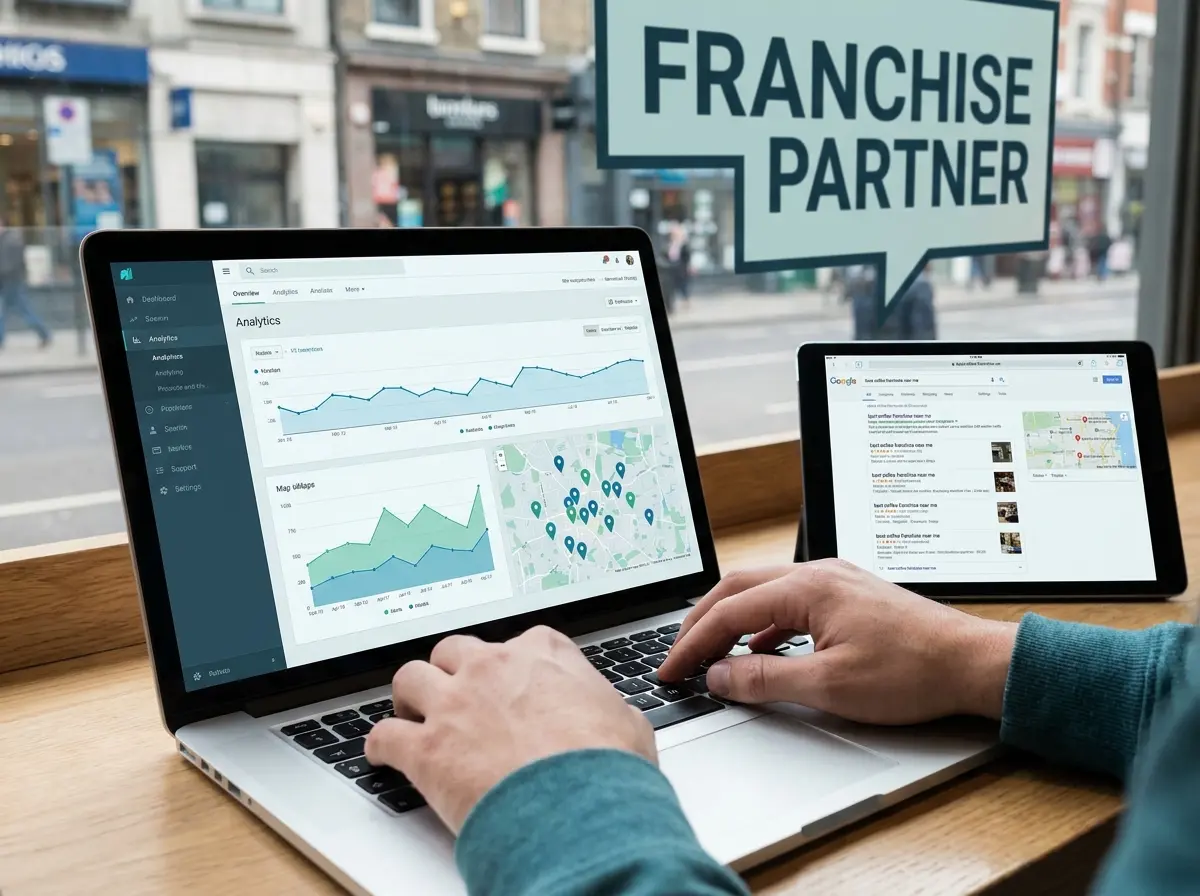
The foundation of any multi-location strategy is your domain architecture. Many brands struggle to choose between subdomains, subdirectories, and separate domains for franchisees. We recommend subdirectories on the corporate domain, because every local section benefits from the authority of the main site, and separate domains force each location to start from scratch and fragment your link building. Google’s crawl documentation notes that a subdomain such as code.example.com is treated as a separate site with its own crawl budget.
Building Effective Local Content for a Franchise SEO Strategy
Once the structure is in place, each location’s content has to earn its place. A template that only swaps the city name and phone number gets grouped with its near-duplicates, because Google’s documentation on canonicalization explains that similar URLs are clustered and one version is shown. Every location needs distinct, useful information.
Include details about the local team, photos of the actual storefront, and neighborhood-specific directions. Franchisees can highlight local promotions, community partnerships, and customer testimonials from their own area, and a service area map shows the territory they cover. Strong on-site optimization builds those elements into corporate templates.
One technical point deserves attention: give each location a self-referencing canonical tag so search engines treat it as its own URL and do not confuse it with the corporate root.
Multi-Location SEO: Mastering Google Business Profile at Scale
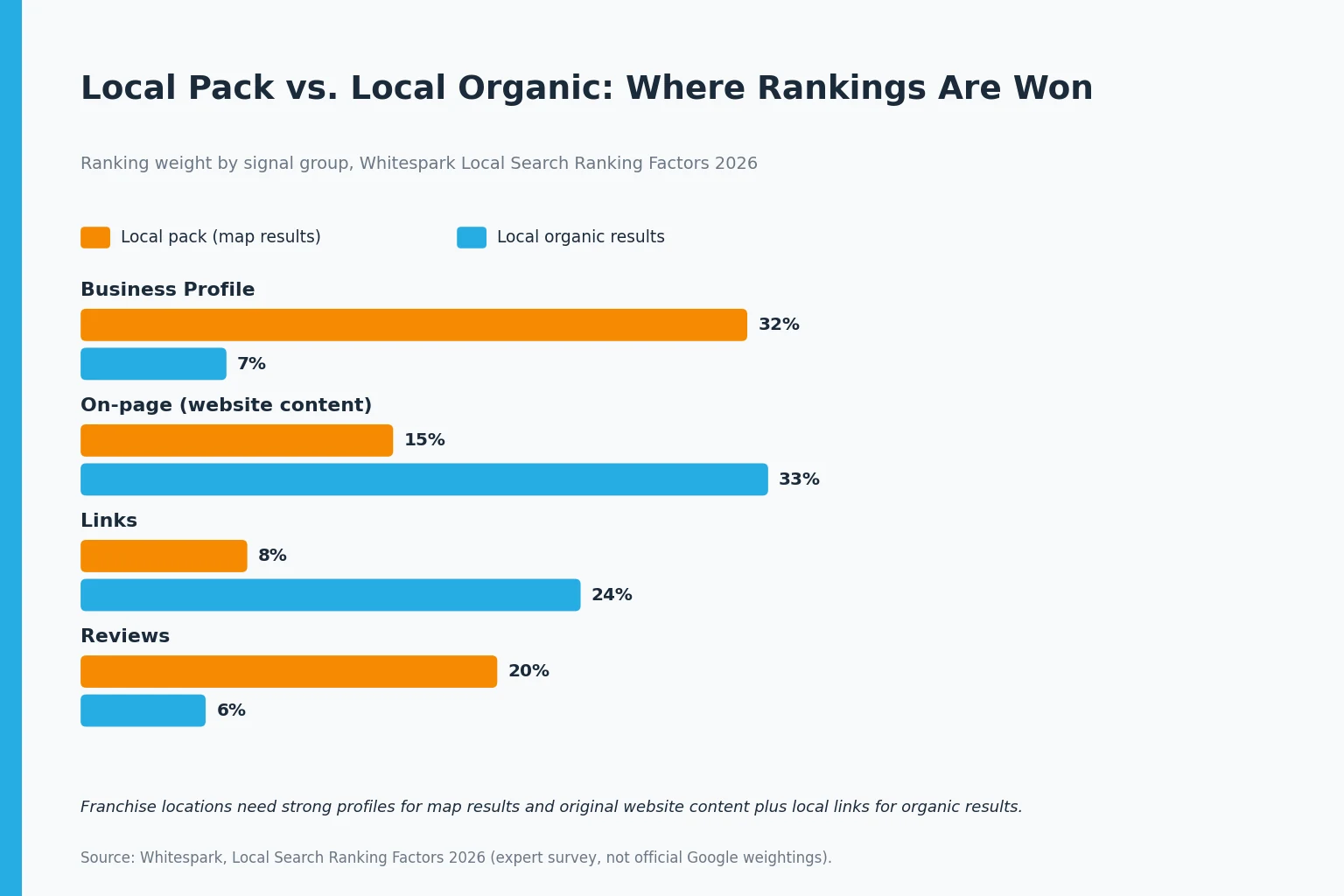
Your Business Profile is the primary driver of map pack rankings. In Whitespark’s 2026 survey of local SEO experts, Business Profile signals make up the largest group of local pack factors at 32% of ranking weight, with the primary category ranked first among individual factors. For a franchise with hundreds of locations, managing profiles one at a time becomes an operational burden, so you need a central system that still allows local engagement.
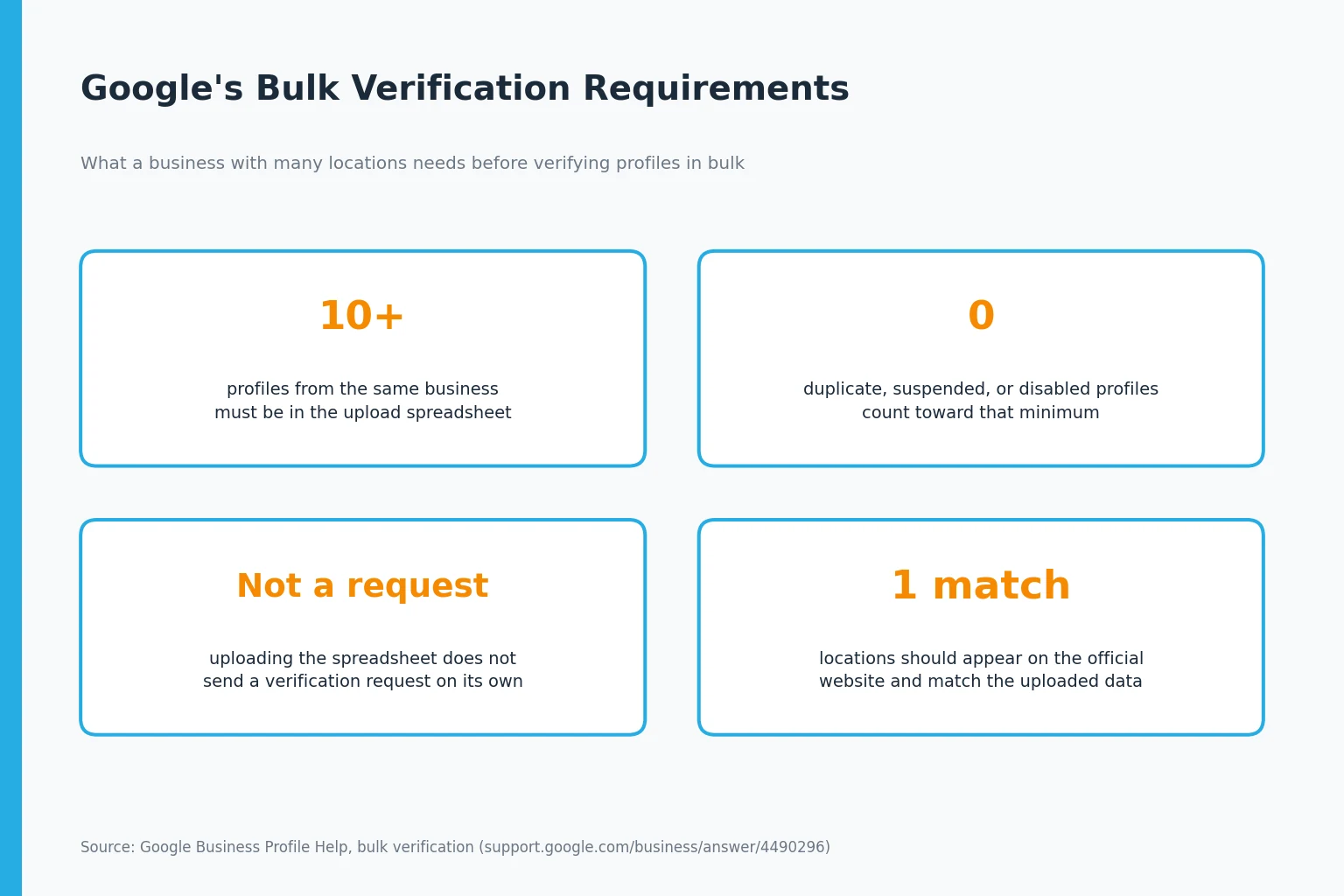
Google provides tools for businesses with ten or more locations. Its bulk verification process lets a business verify many profiles from a single spreadsheet instead of one at a time, subject to specific requirements.
Strict corporate control should not stifle local engagement. Franchisees need access to reply to reviews, post local updates, and upload recent photos. BrightLocal’s 2026 Local Consumer Review Survey found that 89% of consumers expect owners to respond to reviews, so the local voice matters, and a managed reputation management program helps keep replies timely.
How to Set Up Bulk Profile Management
- Consolidate your accounts. Gather every franchisee’s existing Business Profile access into one corporate account, using a company email address instead of an individual employee’s so ownership survives staff changes.
- Create a location spreadsheet. Download Google’s bulk upload template and fill it with each location’s standardized data, with unique store codes that match your internal systems.
- Request bulk verification. Submit the completed spreadsheet and verification request, which avoids verifying each location one at a time.
A Google Business Profile setup and verification service can prepare the upload and handle the verification process for every location.

Improve Google Business Profile Visibility Across Every Location
Manage local rankings, profile accuracy, reviews, and location-level search visibility with multi-location SEO built for growing franchise networks.
Local Link Building and Citation Management for Franchisees
Links are a core ranking factor, but franchise networks complicate how they are earned. Most natural backlinks point to the corporate root instead of specific local content, so you need a targeted strategy that drives links to the franchisee’s own section of the site. Whitespark’s survey puts links at 24% of local organic ranking weight, compared with 8% for local pack results, which is why locations without local links struggle in organic results.
Local sponsorships are one of the most effective ways to earn geographically relevant links. Franchisees can sponsor youth teams, community events, and neighborhood charity runs, since those organizations often link back to sponsors. Chamber of commerce and local business association memberships add authoritative local links, and corporate should have franchisees register using their specific location URL.
Citations need the same discipline. Point local directory listings to the franchisee’s own location content instead of the corporate root, so local signals consolidate in one place, and ongoing local citation management keeps name, address, and phone data consistent across the network.
Scaling Your Franchise SEO With Content Marketing Across Locations
Producing quality content for hundreds of locations takes a systematic approach. You cannot expect local owners to write full blog posts about their services, so corporate should provide a structured content matrix that keeps quality consistent across the network.
In a content matrix, corporate publishes strong, universally useful content once, such as a guide to winterizing exterior pipes for a plumbing franchise. Each location’s content then carries a short, unique local summary, with climate-specific advice, local examples, and a link to the master guide. That gives readers real value and keeps each location’s content distinct, while avoiding the same long article repeated at hundreds of URLs. Professional content marketing keeps that production steady.
Measuring Performance: Tracking and Reporting Multi-Location SEO Success
Analysis gets harder as you track hundreds of markets at once, and a single national dashboard can mask serious problems at individual locations. A tiered reporting structure gives visibility to both corporate executives and local owners.
| Audience | What to report | Why it matters |
|---|---|---|
| Corporate teams | Total organic traffic, aggregate map pack visibility, brand-wide keyword movement, technical issues | Shows trends, justifies budget, and directs strategy across the network |
| Local franchisees | Calls from organic search, direction requests, local keyword rankings for their territory | Shows the value of the program and discourages rogue marketing |
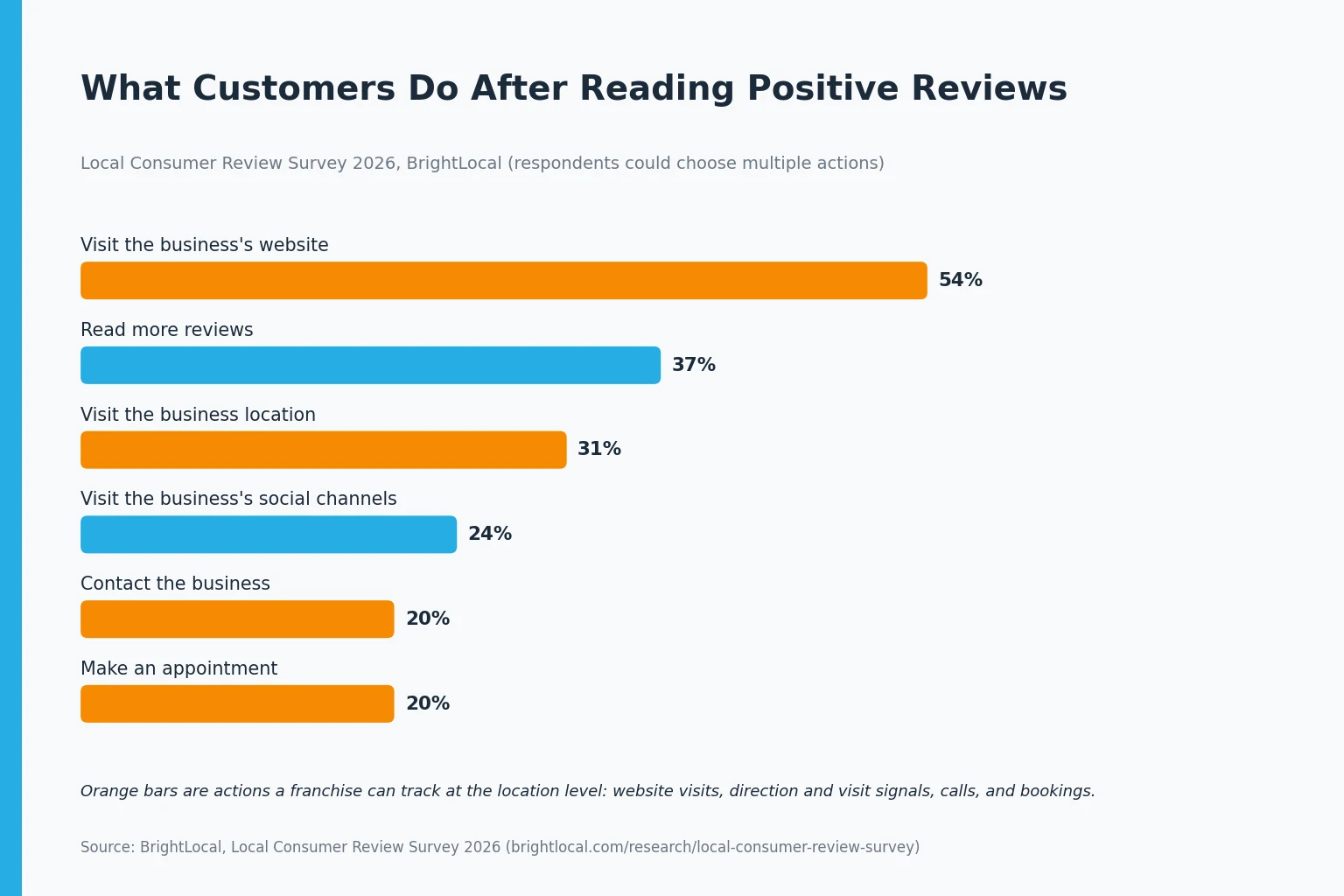
The actions that matter most are the ones customers take. BrightLocal’s 2026 survey found that after reading positive reviews, 54% of consumers visit the business’s website, 31% visit the location, and 20% contact the business, which are the signals local reports should capture.
A free SEO audit is a practical way to baseline each location before you begin.
Our franchise SEO pricing overview shows what network programs include.
Franchise SEO Strategy FAQs
Should franchisees have their own separate websites?
For most networks, no. A subdirectory on the corporate domain consolidates authority and makes brand management far simpler, and whether a franchisee may run a separate site also depends on the franchise agreement.
How do we handle duplicate content across hundreds of locations?
Add localized elements to every location: photos of the local team, community involvement, local reviews, and distinct neighborhood descriptions. Google groups very similar URLs and shows one, so unique content is what lets each location be shown.
Can corporate manage all Google Business Profile reviews?
Corporate can monitor reviews, but local franchisees should ideally reply. Local owners give authentic, context-aware responses, and most customers expect an owner reply.
What is the most important local ranking factor for franchises?
In Whitespark’s 2026 survey, the primary Business Profile category ranks first and proximity to the searcher ranks second. Strong location content and local links add the edge needed in organic results.
How long does it take a new franchise location to rank?
It varies by market and competition. A new location on an established corporate domain may gain traction sooner than a new site, and proper verification plus local link building can speed things up.
What should a tiered franchise SEO report include?
Corporate needs network-wide traffic, map pack visibility, and technical health. Each franchisee needs calls, direction requests, and local rankings for their own territory.
Franchise SEO demands coordination between corporate resources and local execution. You have to use the authority of your national brand while competing aggressively at the neighborhood level, and success comes from a structured site architecture, careful profile management, and scalable content.
Subdirectories consolidate your authority into one domain, and when franchisees build local links and earn genuine reviews, you capture high-intent traffic in every market. To talk through your own network, talk with a franchise SEO specialist about where to begin.

Win the Local Search Battle With a Scalable SEO Partner
Talk with us about building a franchise SEO system that strengthens your corporate domain, supports local owners, and helps every location compete in search.