
Growing a multi-location brand means balancing national consistency with local relevance, and the right franchise marketing solutions make that balance workable. You have to hold strict brand standards while giving individual operators the tools to attract local customers through franchise digital marketing, which can feel like walking a tightrope. Effective systems bridge the gap with centralized control and decentralized execution.
- Control and autonomy: custom franchise marketing solutions let multi-location brands balance corporate control with local autonomy without weakening brand standards.
- Central tools: digital asset management, local SEO platforms, CRM systems, and social media syndication make franchise digital marketing easier to scale.
- Operator support: approved templates, consistent messaging, and local campaign support help franchisees attract nearby customers faster.
- Network metrics: regional cost per acquisition, local visibility, foot traffic, reviews, and franchisee revenue show how the network is performing.
Many franchisors struggle to keep the brand intact as the network spreads across states and territories. Individual operators often lack the expertise to run strong digital campaigns alone, and they may publish off-brand social posts or run poorly built local ads that damage the national identity. At BizIQ, we help franchise brands put systems in place so that does not happen.
A centralized marketing platform gives corporate approval workflows to review what local owners publish, while franchisees get pre-approved templates they can adapt for their location. That protects the brand and speeds up local market penetration through consistent multi-location marketing and professional franchise advertising. When customers recognize your branding, they feel more confident choosing a new location, so equipping franchisees with scalable tools directly supports the financial success of your newest operators.
Franchise Marketing Solutions: Essential Core Components for Scalable Success

A comprehensive marketing stack needs several connected tools to work at scale. Digital asset management software is the foundation for creative operations and brand consistency, because one central library holds your approved logos, promotional videos, and localized ad copy where franchisees can reach it without waiting on corporate.
Local SEO is another critical pillar. Search engines weigh local intent, so hundreds or thousands of locations need optimization, and good franchise marketing solutions include directory listing management that keeps names, addresses, and phone numbers accurate everywhere. Google reports that customers are 70% more likely to visit businesses with a complete Business Profile, which makes accurate profiles a direct driver of store visits.
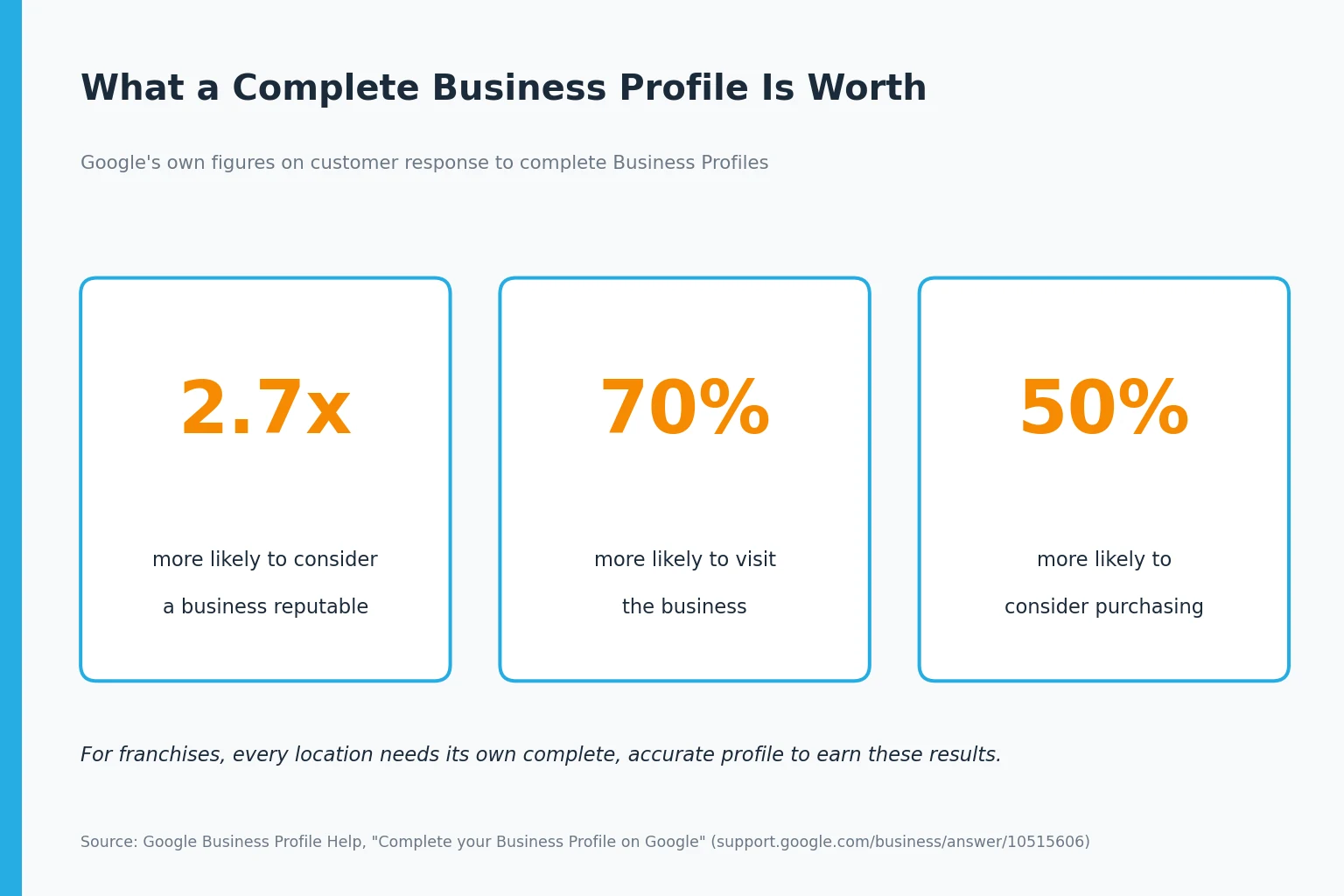
A Google Business Profile setup and verification service gets each location started correctly.
Ongoing local citation management keeps listings consistent as the network grows.
Finally, you need a unified customer relationship management system that connects the network. A shared CRM lets corporate track lead generation across every territory, see which campaigns return the most, and share the tactics that work. Add a clear approval workflow before you roll out any new software, since a phased rollout keeps your support team from being overwhelmed and shows usability problems early.
Social Media Syndication: Enhancing Multi-Location Marketing Efforts
Managing social accounts for hundreds of locations is a logistical headache. Without the right software, you risk publishing outdated promotions or neglecting some regional profiles entirely. Syndication tools let headquarters push corporate messaging to local accounts automatically while keeping the brand consistent.
Local operators still need to post community-focused content, such as photos of their staff or local sponsorships. A good setup places a corporate approval layer over those local posts to prevent brand safety problems while keeping them relevant, and professional social media management supports that balance.
Local Marketing Strategy: Implementing Systems for Franchise Success

Rolling out a new framework across many locations takes careful planning and clear communication. You cannot hand over a software license and expect results from franchise operators. Success depends on training and gradual adoption.
Steps to Launch Your Franchise Marketing System
- Audit your current assets. Review existing materials to find off-brand content and outdated messaging, and consolidate approved files in one accessible place before inviting franchisees. Delete old logos and expired promotions so no one uses them by accident.
- Establish brand guidelines. Write clear rules for logo use, color palettes, and acceptable local promotions, and build them into the approval workflows of your software.
- Train your franchisees. Run hands-on workshops that show operators how to use the platform, and keep support channels open as they build local campaigns. Record sessions so new owners can watch them during onboarding.
After launch, watch adoption closely. Some franchisees will embrace the tools quickly while others resist changing habits, so focus early support on the late adopters and show them early wins. Our franchise marketing resources go deeper on rollout and governance.
How to Evaluate Franchise Marketing Solutions and Software
Compare options by what each component does for the network, not by feature lists alone.
| Component | What it does | Why it matters |
|---|---|---|
| Digital asset management | Stores approved logos, templates, and ad copy | Keeps every location on brand and cuts requests to corporate |
| Listing and profile management | Syncs names, addresses, hours, and profiles | Keeps location data accurate across directories and maps |
| CRM and lead tracking | Captures leads and outcomes by territory | Shows which campaigns return the most |
| Social scheduling and approvals | Pushes corporate posts and reviews local ones | Protects brand safety while allowing local voice |
| Review management | Monitors and routes reviews by location | Spots quality issues early and supports replies |
| Reporting dashboards | Shows network and location-level results | Gives corporate and franchisees the data they each need |
Reviews deserve their own process, and a managed reputation management program is one way to keep every location’s feedback visible and answered.
Franchise Advertising Success: Measuring Network Performance and ROI
Data visibility separates growing franchise brands from those that stall. Corporate leaders should track national performance and individual locations together, because that dual view shows overarching trends and points to the operators who need extra support.
Cost per acquisition is among the most important metrics. Comparing it across territories shows where to adjust your approach, and tracking it by region reveals which markets deliver efficiently. Customer actions matter as well. In BrightLocal’s 2026 Local Consumer Review Survey, 54% of consumers visited a business’s website and 31% visited the location after reading positive reviews, which are the signals local reporting should capture.
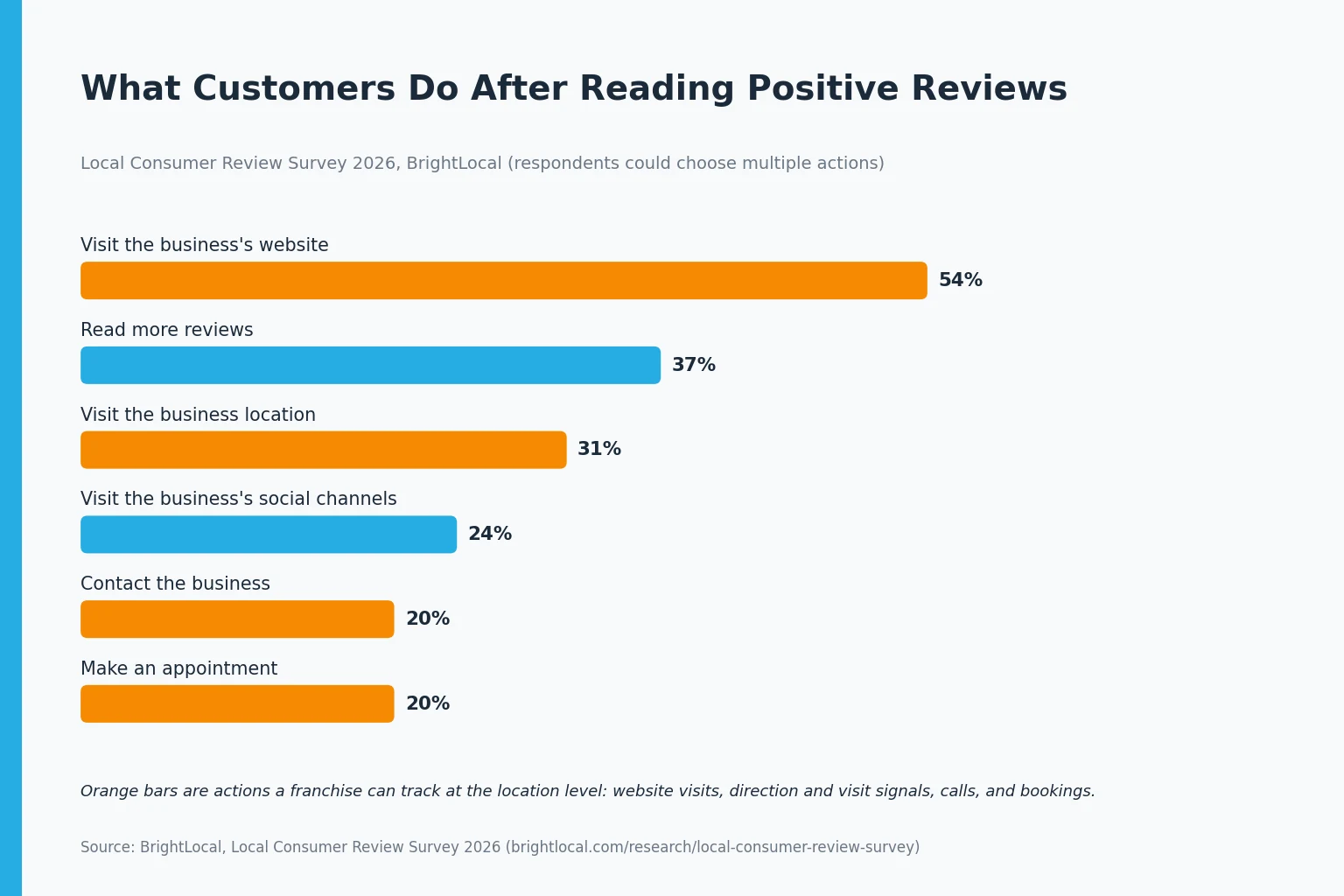
Platforms that aggregate online reviews help you spot quality control issues before they escalate, and automated review requests can build the reputation of newly opened locations and drive foot traffic. A free SEO audit is a practical starting point for local visibility benchmarks.
Optimizing Budget Allocation: Financial Strategies for Franchise Marketing
Smart marketing divides budget between national awareness and local lead generation. Corporate funds typically cover television, major sponsorships, and brand-level digital campaigns, while local operators fund targeted social ads, direct mail, and community events.
Many franchise agreements require owners to contribute a percentage of revenue to a national advertising fund, so transparency about how pooled money is spent builds trust. The FTC’s Franchise Rule requires the franchise disclosure document to describe how advertising funds were used in the last fiscal year, by percentage.
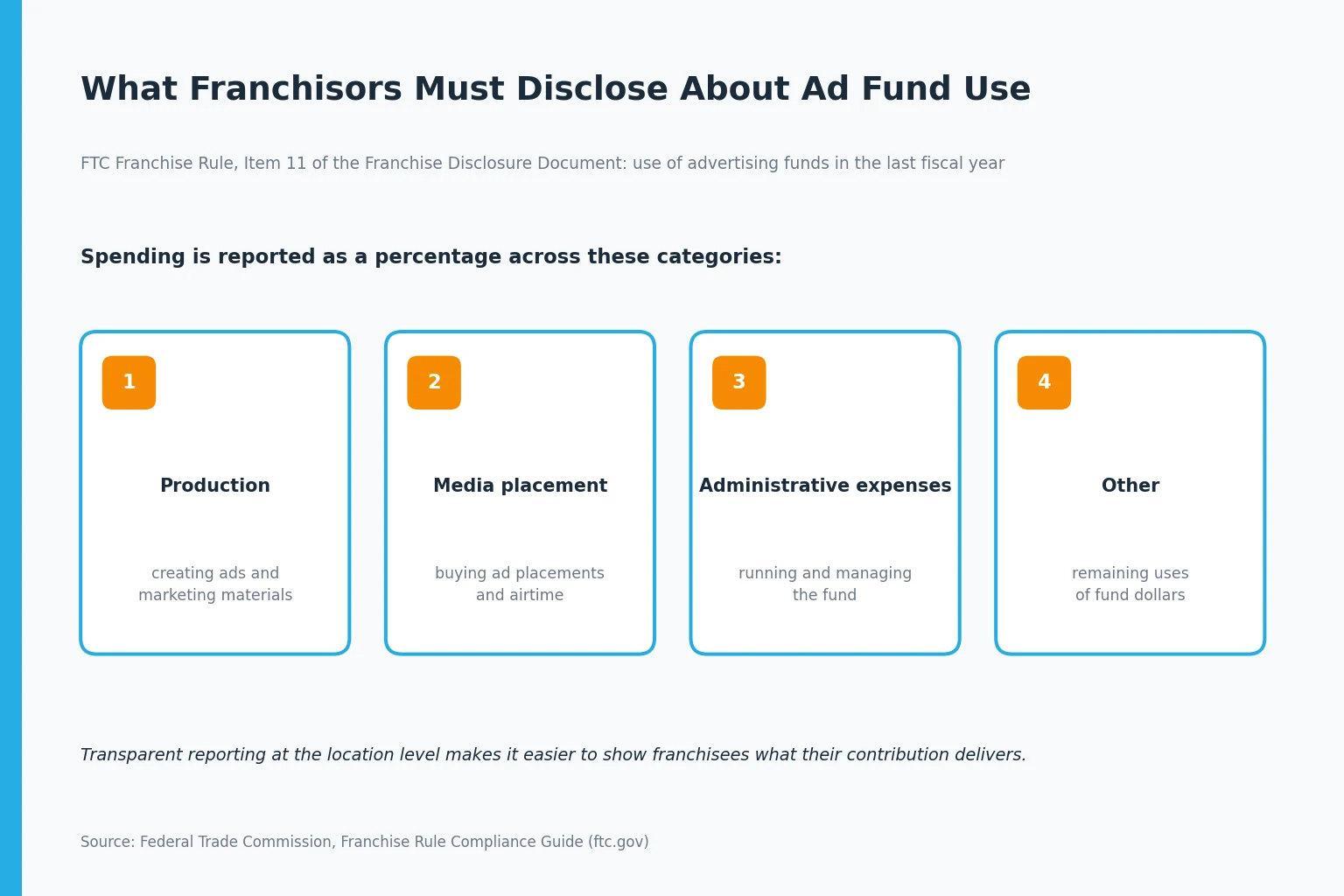
Showing the direct effect of national campaigns on local sales keeps corporate and owners aligned, and our franchise SEO pricing overview shows what local search programs cost within that mix.
For larger systems, multi-location SEO pricing explains how costs scale as locations are added.
Franchise Marketing Solutions FAQs
What are franchise marketing solutions?
Franchise marketing solutions are software platforms and strategic frameworks that help multi-location brands manage advertising at scale. They give corporate teams centralized control while giving local franchisees the tools to run compliant, localized campaigns.
How do local franchisees benefit from centralized marketing?
Franchisees gain professional, pre-approved assets without hiring their own designers, save time on campaign creation, and avoid costly brand compliance mistakes, which leaves more time for running daily operations.
Why is local SEO important for franchises?
Local SEO helps each location appear when nearby customers search for what it offers. Accurate listings, complete Business Profiles, and localized content drive foot traffic to specific stores instead of only promoting the national brand.
How much should a franchisor control local marketing?
Franchisors should control brand identity, logo use, and core messaging to protect the brand’s reputation, while leaving franchisees room to promote local events, feature local staff, and run community-specific offers.
What metrics indicate successful franchise marketing?
Regional cost per acquisition, local search visibility, foot traffic growth, and franchisee revenue are the core measures. Review scores across the network add insight into local customer satisfaction.
What should we look for in franchise marketing software?
Look for asset management with approval workflows, listing and profile management, a shared CRM, social scheduling with review steps, review management, and dashboards that serve both corporate and local owners. Ease of use for non-marketers decides whether franchisees actually adopt it.
Scaling a franchise takes more than selling territories and opening storefronts. You have to give operators the resources to capture local market share, and franchise marketing solutions bridge the gap between corporate brand standards and local customer engagement.
Centralized platforms protect your brand identity while empowering local entrepreneurs, who gain professional assets, local SEO support, and streamlined advertising tools. That support translates into stronger revenue and better franchisee retention. Build marketing infrastructure that scales as the network grows, invest in training to drive adoption, and when you want a partner, talk with a franchise marketing specialist about your network.

Build Franchise Marketing Systems That Actually Scale
Talk with us about creating a franchise marketing strategy that protects your brand, supports local operators, and helps every location attract more customers.