Franchise SEO marketing is the work of making every location in a franchise network easy to find in search while keeping one consistent brand. It connects a corporate website, individual location content, Google Business Profiles, reviews, and local content so that a customer searching nearby finds the right location quickly and trusts what they see.
- Two audiences: Corporate teams protect the brand, while franchisees win the customers in their own neighborhoods.
- Scalable structure: One corporate domain with useful, unique content for each location keeps authority together.
- Local foundations: Accurate profiles, consistent listings, and fresh reviews drive map visibility.
- Location-level results: Calls, direction requests, and website clicks show what is working at each storefront.
Running a franchise means balancing national recognition with local presence, and search is where that balance becomes visible. A customer in Dallas needs to find the Dallas location, not the one in Austin. Getting that right across dozens or hundreds of locations takes a system, and that is what BizIQ builds for multi-location brands.
How Franchise SEO Marketing Balances Brand and Local Visibility
Marketing one business means one set of decisions. Marketing a franchise network means many owners, many locations, and one brand, all competing for searches that are decided one neighborhood at a time. The fundamentals of franchise SEO are built around that tension.
Franchisor Goals and Franchisee Goals
The franchisor wants a consistent brand message and strong overall recognition. Each franchisee, as a local business owner, knows their customers best and needs calls, visits, and bookings in their own territory. Search marketing works when both goals are served by the same system.
Without coordination, locations compete with each other in results, owners publish off-brand content, and customers get conflicting information. A clear division of responsibilities prevents most of those problems.
Who Handles What in a Franchise Network
| Task | Corporate Team | Franchisee |
|---|---|---|
| Website structure and technical SEO | Owns and maintains | Provides local details |
| Google Business Profiles | Holds ownership and standards | Keeps hours, photos, and offers current |
| Reviews | Sets response guidelines | Requests reviews and replies |
| Local content | Supplies approved templates | Adds community and team details |
| Reporting | Tracks network and location results | Reviews results for their own location |
Building a Franchise Website Structure That Scales
Most successful franchise networks use one corporate website with a dedicated destination for each location. This structure helps search engines understand the relationship between the brand and each branch, and it lets authority built by the whole network benefit every location. Careful on-site optimization keeps that structure clear for both search engines and customers.
Location Content That Reflects Each Community
Each location’s content should be useful to someone deciding whether to visit. Include the exact address and local phone number, current hours, the services offered there, photos of the storefront and team, driving directions, nearby landmarks, and the neighborhoods served. Copying one description across every city gives search engines and customers little reason to prefer your location.
Google’s spam policies also warn against multiple domain names or content aimed at specific cities that simply funnel users to one destination. Giving each location real, distinct value is the safest and most effective approach.
Mobile-First Indexing and Franchise Websites
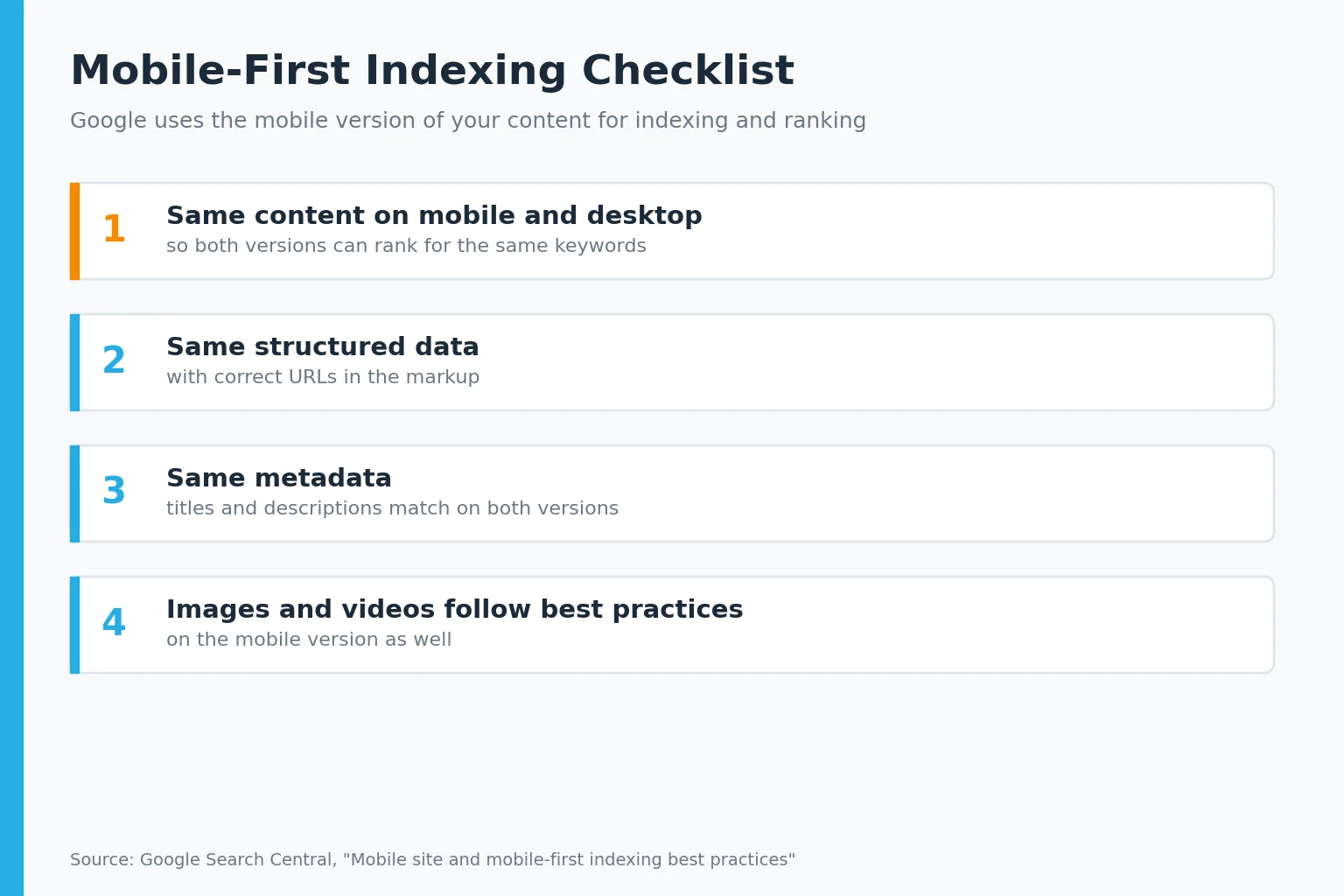
Many customers search for local businesses on a phone, and Google uses the mobile version of a site’s content for indexing and ranking. That makes it essential that the mobile experience carries everything the desktop version does.
Fast loading and clean design matter too, because visitors who wait on a slow site often leave before they call or request directions.
Local Search Foundations for Every Franchise Location
Local visibility starts with the details customers and search engines use to verify a business. A dedicated local SEO program puts a repeatable process behind those details for every location.
Franchise SEO Marketing Starts With Accurate Business Profiles
Google Business Profiles drive much of a location’s map visibility, so each one needs the right categories, hours, photos, and services. Google’s guidelines say the business name should match real-world signage without added location descriptors, and that each profile should use a phone number connected to that individual location whenever possible.
Our Google Business Profile setup and optimization work applies those standards from the first day of every new location.
Consistency across the web matters as well. In Whitespark’s 2026 expert survey, matching name, address, and phone details between a website and its profile ranked among the top 15 local pack factors. The survey reflects expert opinion rather than official Google weightings.
A managed citation cleanup and management process finds mismatched details across directories and corrects them before they confuse customers.
Reviews and Reputation at Scale
BrightLocal’s 2026 survey found that 97% of consumers read reviews for local businesses, and that 54% visit the website after reading positive reviews. Every location’s review profile is part of your sales process.
Franchisees need an easy way to ask for reviews and clear guidelines for replying, including to negative feedback. A program for review generation and response keeps every location active and professional.

Turn Every Franchise Location Into a Local Traffic Magnet
See how each of your locations appears in local search today and where the biggest opportunities are.
Content and Social Marketing That Support Franchise SEO
Content helps customers connect with the brand and gives search engines proof that each location is active in its community. Corporate teams can publish the brand story, new offerings, and educational material, while franchisees add local flavor such as community events, sponsorships, and neighborhood stories.
A strong content marketing plan gives owners approved templates they can customize, which saves time and keeps the voice consistent. Customer stories from specific locations also build trust with people who live nearby.
Social channels extend that local presence. Coordinated social media management lets each location share events and offers within brand guidelines, which reinforces local relevance and drives visits to the website.
Email completes the loop by bringing past customers back. Thoughtful email marketing turns first-time visitors from search into repeat customers at the location they already know.
Technical SEO for Franchise Websites
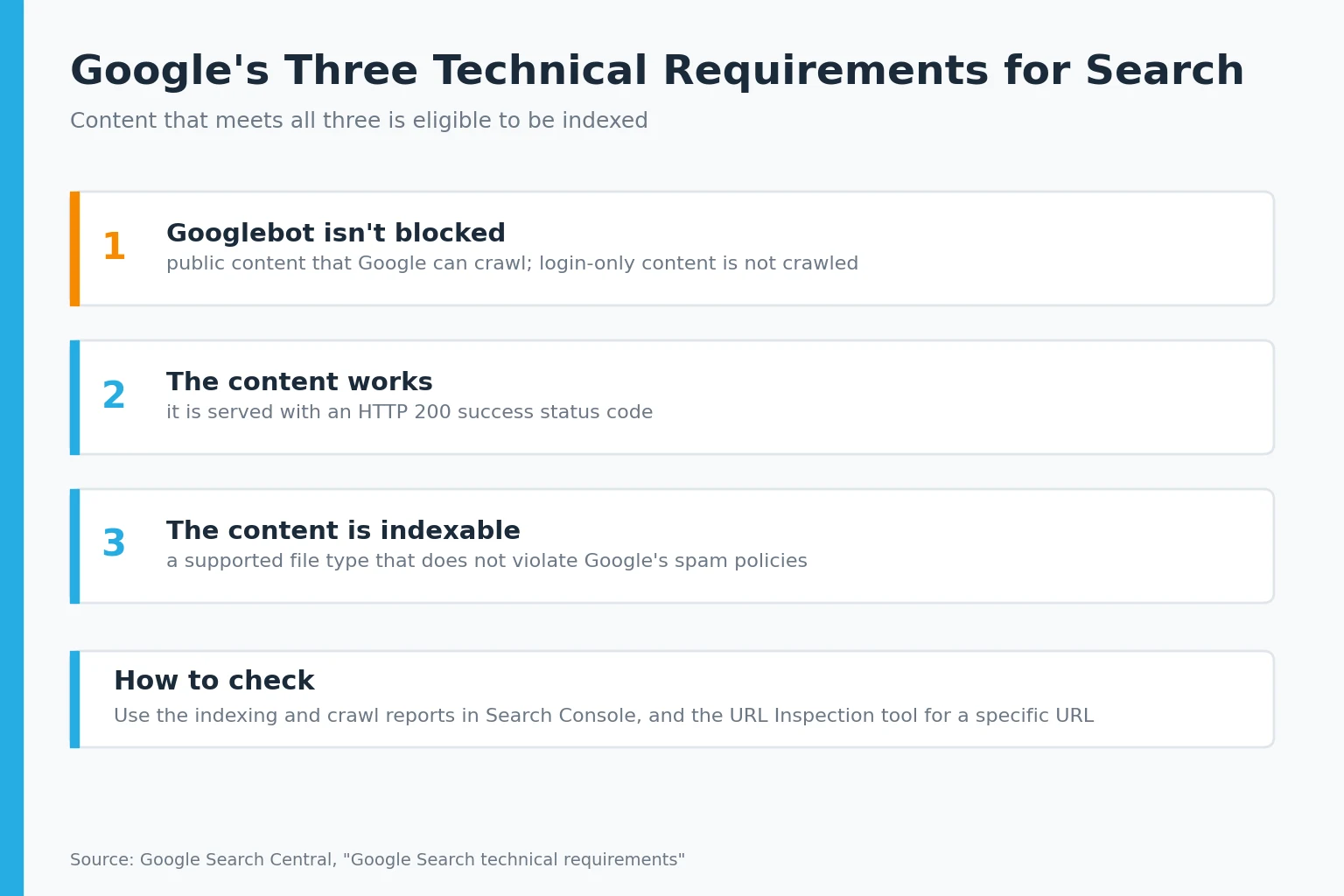
Technical SEO makes sure search engines can reach and understand every location. Google lists three minimum requirements: Googlebot must not be blocked, the content must work and return a success status, and it must be indexable. On a large franchise site, a single misconfiguration can remove many locations from results at once.
Structured data adds context for each location. Google recommends defining every business location with local business markup that includes its address, phone number, and hours, and the markup should always match what visitors see.
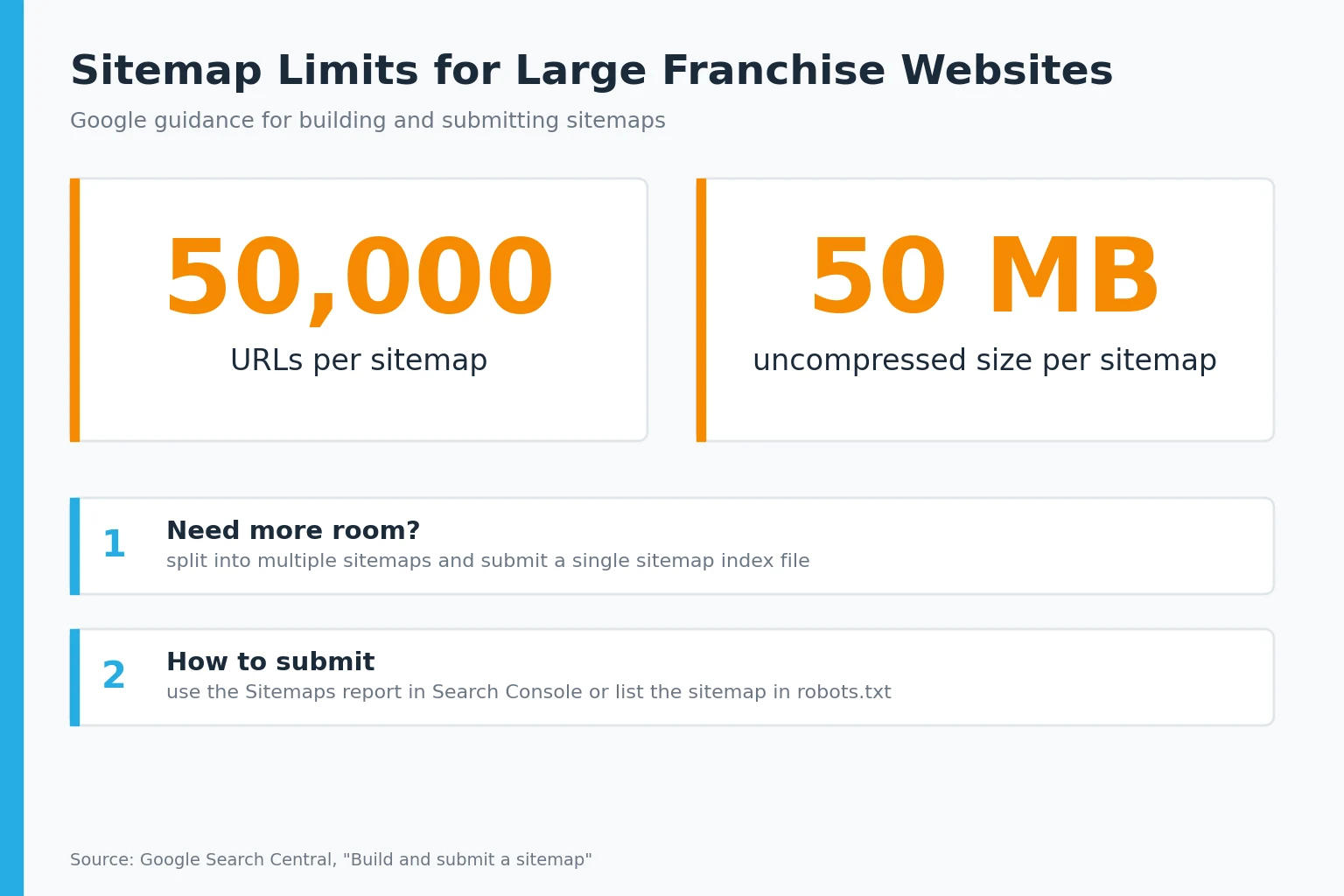
Sitemaps help search engines discover every location. Google limits a single sitemap to 50,000 URLs or 50 MB uncompressed, so very large sites should split sitemaps and submit a sitemap index file.
Regular technical audits catch indexing, speed, and markup problems early, before they cost locations their visibility.

Fix the Technical SEO Issues Holding Your Franchise Back
Slow load times, poor indexing, and missing markup can quietly reduce visibility. Make sure every location can be found.
Measuring Franchise SEO Marketing Results
Good measurement works at two levels: the whole network and each individual location. Corporate teams need to see the overall picture, while owners need proof that marketing brings customers to their own storefront.
Google reports many of the most useful actions directly in each Business Profile, including calls, direction requests, website clicks, messages, and bookings, as described in its Business Profile performance documentation. Pair that data with local rank tracking, website analytics, and review growth.
| Metric | What It Shows | Who Uses It |
|---|---|---|
| Calls and direction requests | Customers moving toward a visit | Owners and corporate |
| Website clicks | Interest in learning more | Owners and corporate |
| Local rankings by location | Visibility for nearby searches | Owners and corporate |
| Organic visits to location content | Demand for each storefront | Corporate |
| Review count and rating | Reputation at each location | Owners |
A shared dashboard helps corporate teams spot struggling locations early and direct support where it will have the most impact.
Choosing a Franchise SEO Expert or Partner
Not every agency understands franchises. Look for a partner with experience managing brands across many owners and locations, and ask how they balance corporate control with local needs. They should explain how their approach scales as you add locations, and they should report results by location, not only in aggregate.
Ask to see client case studies that show improved visibility and leads across multiple locations, and expect clear communication about what work is being done and how it is performing.
To understand how an SEO investment is typically structured, review franchise SEO packages and pricing before you compare providers.
Common Franchise SEO Mistakes to Avoid
- Inconsistent business details: Mismatched names, addresses, or phone numbers across directories confuse customers and search engines.
- Duplicate location content: Identical text for every city gives search engines no reason to show your location over a competitor’s.
- Ignoring reviews: Unanswered feedback hurts trust, and customers notice when owners do not respond.
- Poor coordination: When corporate teams and franchisees do not share a plan, efforts overlap or conflict.
- One-size-fits-all tactics: What works in one market may need adjusting in another.
- No rollout process: Without a clear process, changes spread unevenly across locations.
- Skipping technical audits: Indexing and speed problems can hide locations from search results for months.
What’s Next for Franchise SEO Marketing
Search is increasingly shaped by AI-generated answers, and customer habits are shifting with it. BrightLocal’s survey found that the share of consumers using AI tools for local business recommendations rose from 6% to 45% between its 2025 and 2026 editions.
The good news is that the fundamentals still apply. Google says there are no additional requirements to appear in AI Overviews or AI Mode, and it introduced generative AI performance reports in Search Console in June 2026 so site owners can see how often their content appears in those features. Accurate profiles, helpful location content, and strong reviews remain the best preparation.
Brands that want a partner for this work can explore marketing built for franchise networks that is designed to adapt as search evolves.
Franchise SEO Marketing FAQs
What is franchise SEO marketing?
Franchise SEO marketing is the practice of improving search visibility for every location in a franchise network while keeping the brand consistent. It combines website structure, location content, Google Business Profiles, reviews, and measurement.
How is it different from SEO for a single location?
A single business manages one set of signals. A franchise network manages many locations at once, plus the coordination between corporate teams and individual owners, so it needs scalable systems for profiles, content, listings, and reporting.
Should each franchise location have its own website?
In most cases, no. One corporate website with distinct content for each location keeps authority together and brand standards consistent. Google’s spam policies also flag multiple domains aimed at specific cities that funnel users to one destination.
Should corporate or franchisees manage Google Business Profiles?
Most networks do best when corporate holds ownership and sets standards, while franchisees keep hours, photos, offers, and replies current. Google’s access roles let owners add users and managers edit information without sharing passwords.
Which metrics matter most?
Track calls, direction requests, website clicks, local rankings, organic visits to location content, and review growth for each location, then compare locations to find the ones that need extra support.
How long does franchise SEO marketing take to work?
Timelines depend on your starting point, the accuracy of existing listings, and competition in each market. Progress usually builds over several months rather than days, and results vary by location.
Conclusion: Growing Every Location With Franchise SEO Marketing
Getting found online is a challenge for any franchise system, but a focused approach makes it achievable. Build one strong website structure, keep every profile and listing accurate, give each location useful content of its own, and measure results where customers actually act.
When you are ready to see where your locations stand, contact our team to talk through your network and your growth goals.

Ready to Grow Every Franchise Location With Confidence?
Build a strategy that brings more calls, more foot traffic, and stronger visibility across every market you serve.