Attracting prospective owners takes far more than a contact form and generic ad copy, which is why many brands turn to franchise lead generation services to build a steady pipeline of qualified candidates. The right partner finds people who have the capital, the timeline, and the drive to open a location, then guides them through research, disclosure, and conversations with your development team.
- Quality over volume: Qualification questions and intent-based targeting bring in serious buyers, not casual browsers.
- Compliance matters: Any claim about sales, income, or profits belongs in Item 19 of the Franchise Disclosure Document.
- Full-funnel tracking: Measure cost per qualified lead and cost per signed agreement, not just cost per lead.
- Patient nurturing: Franchise decisions take time, so follow-up has to stay useful, consistent, and respectful.
Demand for franchise opportunities is tied to a growing sector. The International Franchise Association projects about 845,000 franchised establishments in its 2026 Franchising Economic Outlook, up from 832,521 in 2025.
Growth like that rewards brands that market with a plan. At BizIQ, we help franchise brands turn that opportunity into a development pipeline they can plan around.
What Franchise Lead Generation Services Include
Franchise development marketing is a different job from marketing to customers. Customer campaigns send people to a nearby location. Development campaigns speak to a prospective owner who will compare brands, study costs, and talk to existing franchisees before making one of the largest financial decisions of their life.
What to Expect From Franchise Lead Generation Services
A capable provider handles the full path from first impression to a scheduled conversation. That usually includes the following:
- Audience and channel strategy for franchise buyers, including paid search, content, and social media
- A dedicated franchise development website experience with clear investment and support information
- Lead capture forms with qualification questions
- CRM integration and tracking from first click to signed agreement
- Email, text, and retargeting sequences that nurture prospects over time
- Reporting that connects marketing spend to qualified conversations and closed deals
Many of these programs sit inside broader marketing built for franchise networks, so the brand story stays consistent for both customers and future owners.
How Franchise Buyers Research Before They Inquire
Good lead generation starts with understanding the buyer. The Federal Trade Commission publishes a guide that tells prospective franchisees to research carefully, and its advice shapes how serious candidates behave: they look beyond a brand’s own website, read the disclosure document, and call current and former owners.
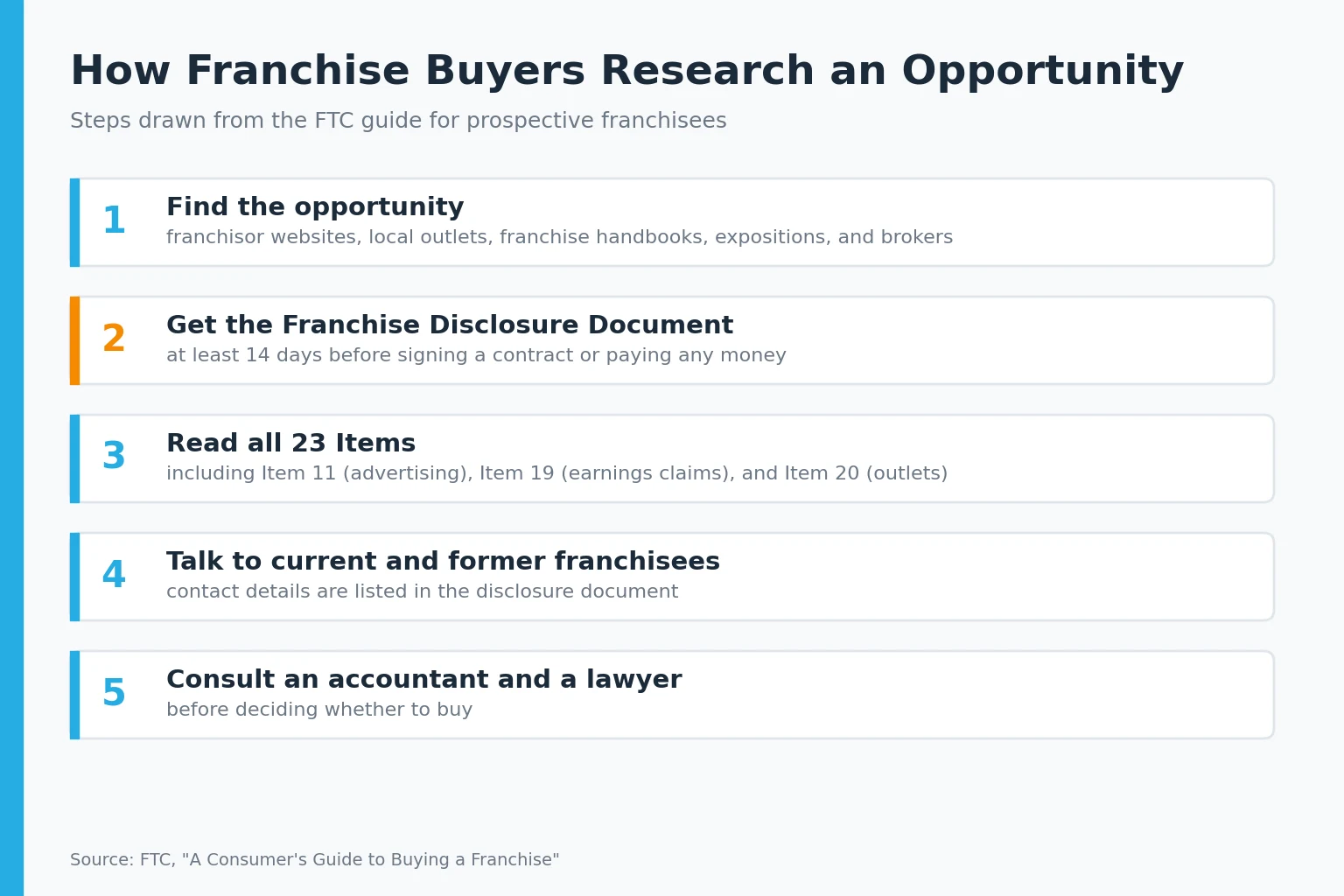
That research habit has a practical meaning for your marketing. Prospects will compare what your campaigns say with what the Franchise Disclosure Document says, so every message needs to be accurate, specific, and consistent with your disclosures.
What High-Intent Franchise Leads Look Like
A high-intent prospect shows financial and behavioral signals before ever speaking with your team. They search for specific investment levels and industries, read detailed information about support and costs, and come back to the website more than once. They also tend to know whether they need financing.
Qualification questions on your forms help separate serious candidates from casual browsers. The FTC guide tells buyers to ask themselves how much they can invest, whether they need financing, whether they will run the business or hire a manager, and whether they want to own several outlets. Mirroring those questions on your forms, along with preferred territory and target timeline, gives your team useful context from the first contact.
Marketing Within the Rules: Earnings Claims and Disclosure
Franchise advertising is regulated, and lead generation content is where mistakes often start. Under the FTC Franchise Rule, a franchisor must give a prospect the disclosure document at least 14 calendar days before the prospect signs a binding agreement or pays anything. Claims about sales, income, or profits must have a reasonable basis and appear in Item 19.
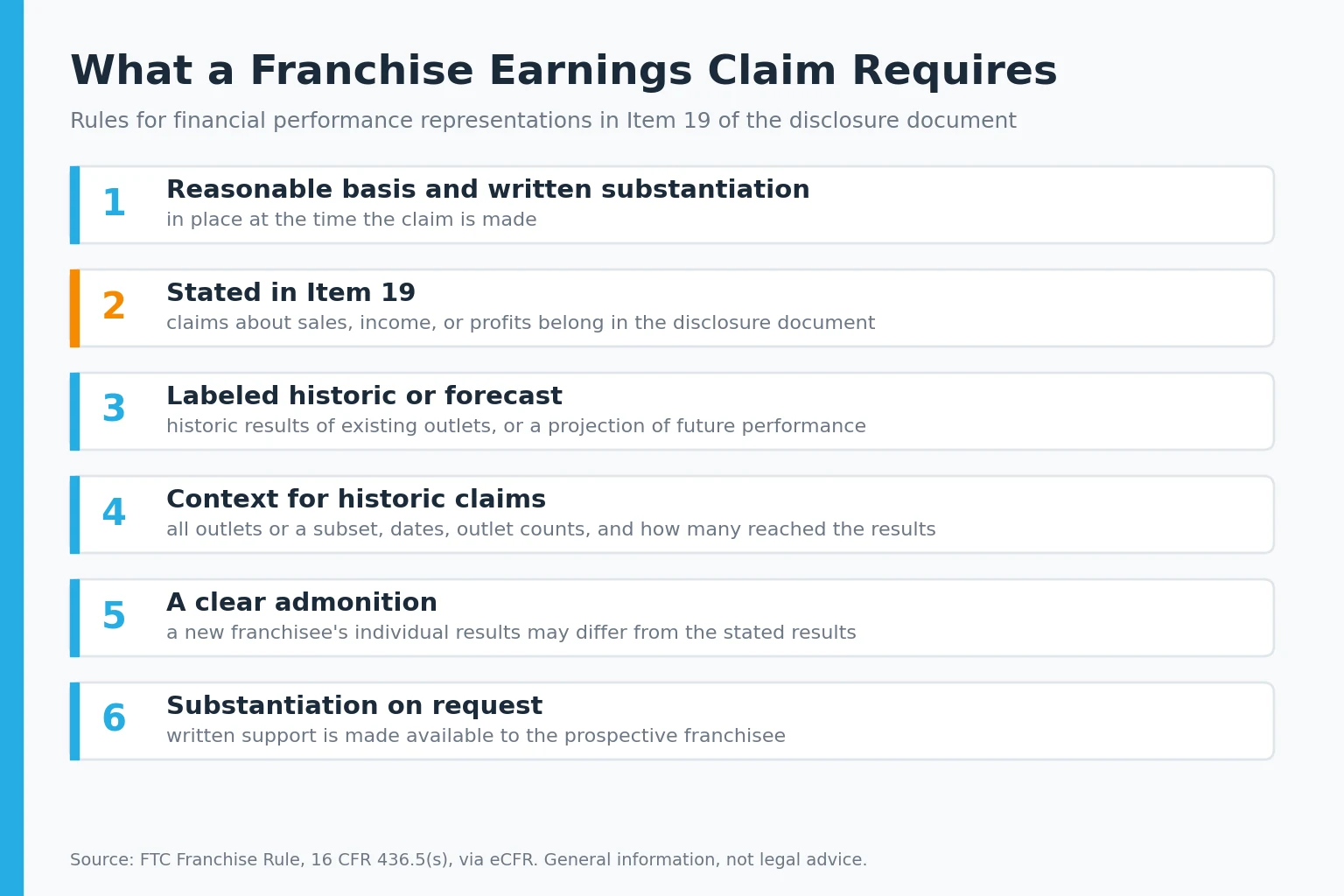
In practice, that means ads, case studies, videos, and emails should not promise or imply earnings that are not supported by Item 19. If any part of a mandatory advertising fund is used to sell franchises, Item 11 also requires the franchisor to disclose what percentage. This is general information, not legal advice, so have franchise counsel review development marketing before it launches. Some states also have their own registration and disclosure laws.
Core Channels for Franchise Lead Generation

Successful programs combine channels to capture demand at different stages of the decision. The goal is a repeatable system that moves a prospect from awareness to application and delivers qualified conversations to your development team.
Paid Search and Intent Targeting
Search advertising is one of the clearest ways to reach people who are already looking for a business to own. Campaigns can target specific phrases that signal investment intent, such as a franchise type combined with a budget range, instead of broad terms that attract job seekers and casual researchers.
Well-run paid search advertising pairs those keywords with ads and forms that reflect the qualification standards you set, so budget goes toward people who can realistically move forward.
Content Marketing and Franchise SEO
Serious buyers research before they submit their information. They want to understand the investment, the support structure, the training, and the culture. Content that answers those questions openly builds trust: owner interviews, day-in-the-life videos, explanations of the training program, and clear descriptions of how the franchise model works.
Earnings content needs extra care. Share verified information from your disclosure document and let prospects hear directly from current owners, without adding performance claims that are not in Item 19. A strong content marketing program gives your paid campaigns a credible place to send traffic.
Search visibility matters here too. Organic traffic from people researching ownership compounds over time, and the basics of franchise SEO help your development content show up when buyers start comparing brands.
Franchise Portals, Brokers, and Your Own Website
Many brands use third-party franchise portals and brokers for reach. The FTC notes that brokers often work for franchisors and are paid only if a sale is made, and it cautions buyers about high-pressure tactics at promotional meetings. Prospects know this, so sources you do not control can bring a different level of trust.
Your own website gives you control over messaging, tracking, and follow-up. Keep franchise development traffic separate from customer traffic in your analytics and advertising audiences so that retargeting and reporting stay accurate. Compare every source by what it costs to produce a signed agreement, not by how many inquiries it generates.

Build Franchise Authority That Attracts Better Leads
See how your brand shows up when prospective owners search, and where the biggest opportunities are.
How to Evaluate Franchise Lead Generation Services

The right partner has to understand the difference between selling a business opportunity and selling a product. General marketing firms often optimize for form fills. You need a team that understands qualification, regulated messaging, and the long sales cycle that follows a first inquiry.
Questions to Ask Before You Hire
Use the same questions with every finalist so the answers are easy to compare.
- What franchise experience do you have? Ask about brands in similar industries and what you can learn from their results.
- How do you qualify leads? Request a walkthrough of form fields, screening questions, and the definition of a qualified lead.
- How do you handle compliance? Ask how ads and content are reviewed against your disclosure document and by whom.
- What do you track? Confirm they connect ad clicks and forms to CRM stages through signed agreements.
- How are results reported? Look for reporting on qualified conversations and closed deals, not only clicks and form fills.
- What are the terms? Flexible arrangements, such as month-to-month agreements, reduce the risk of a poor fit.
Proof matters more than promises. Ask to see client case studies that show how a provider improved lead quality and pipeline results, and be cautious of anyone who cannot explain their numbers.
Tracking Franchise Lead Quality From Click to Signed Agreement
Many development teams optimize around cost per lead, which can reward cheap, low-quality inquiries. A campaign that produces inexpensive leads who never answer the phone wastes your team’s time, while a more expensive source that books discovery conversations at a high rate can be far more valuable.
| Metric | What It Tells You | What to Watch |
|---|---|---|
| Cost per lead | The cost of generating an inquiry | Can reward cheap, unqualified inquiries |
| Cost per qualified lead | Inquiries that meet your capital and territory criteria | Needs a written definition of “qualified” |
| Cost per scheduled call | Interest turning into a conversation | Track how many scheduled calls actually happen |
| Cost per application | Serious intent from a prospect | Compare by source and campaign |
| Cost per signed agreement | The true cost of adding a franchisee | Results lag, so measure over a full cycle |
To get these numbers, pass lead outcomes back to your ad platform. Google reports that advertisers who paired first-party data, such as email addresses and phone numbers, with click identifiers in offline imports saw a median 10% increase in conversions compared with standard offline conversion import.
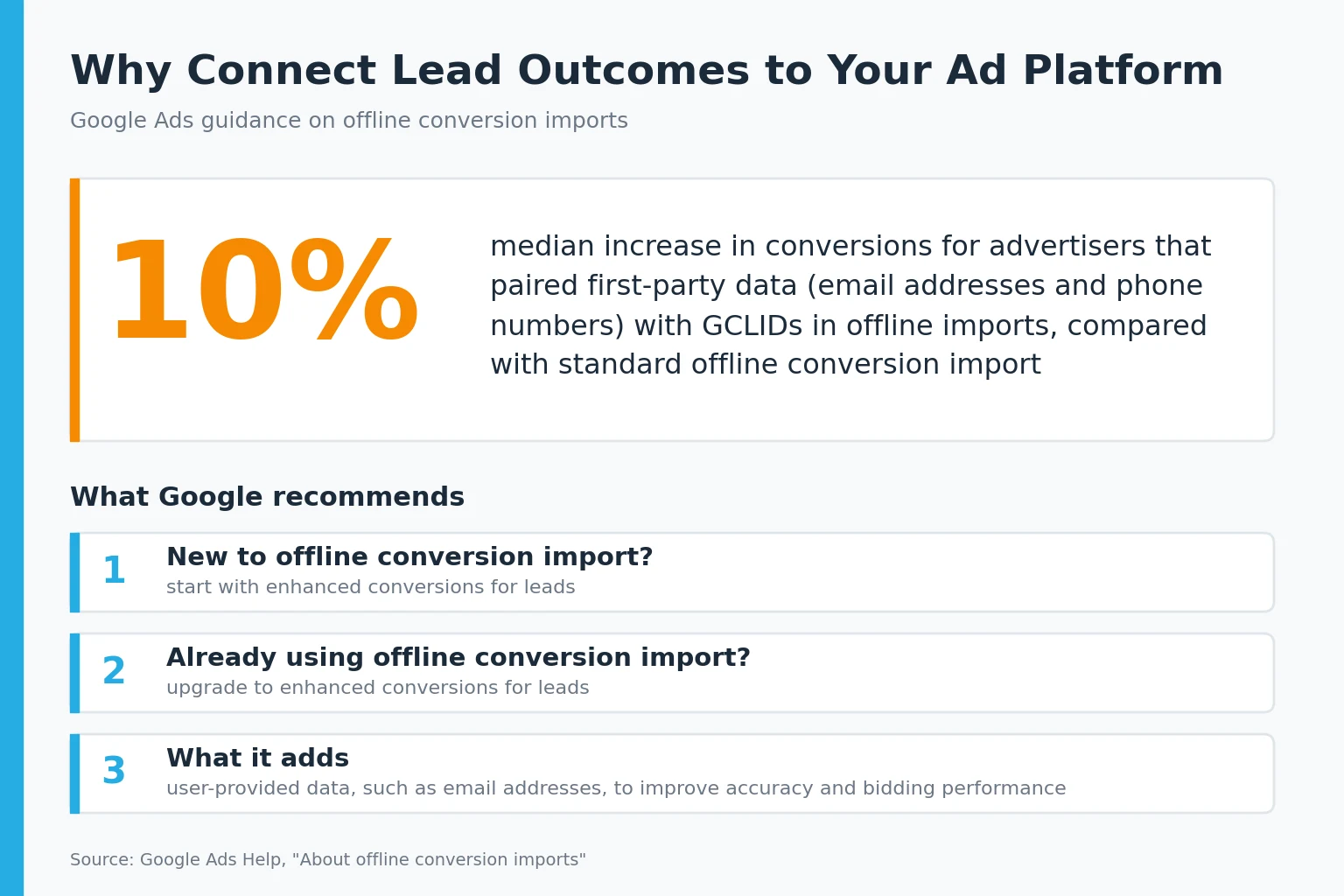
Professional Google Ads management includes setting this up, so bidding learns from qualified conversations instead of raw form fills.
Lead Nurturing and Automation for Long Sales Cycles
A qualified inquiry is only the first step. The FTC rule alone requires at least 14 days between receiving the disclosure document and signing, and most candidates also talk to current owners and advisors. That makes consistent, useful follow-up essential to staying in the conversation.
Automation handles the repetitive parts. If a prospect downloads your information kit but never books a call, a sequence can share owner stories, training details, and available territories. Thoughtful email marketing keeps candidates informed while your team focuses on active conversations.
Text messages can help with appointment reminders, but keep volume low, get clear consent before texting, and follow applicable messaging laws. Respect matters here: the FTC guide warns buyers about high-pressure sales tactics, so nurturing should help prospects decide, never rush them.
Budgeting for Franchise Development Marketing
Costs depend on your target markets, the channels you use, and how much support your team needs with qualification and reporting. Advertising budgets are paid to platforms and vary with competition and goals, so ask any provider for a written scope that separates agency fees from ad spend.
To see how SEO investment is structured for franchise brands, review franchise SEO packages and pricing. BizIQ organic SEO programs start at $1,500 per month.
Franchise Lead Generation Services FAQs
What are franchise lead generation services?
Franchise lead generation services are marketing programs that attract and qualify prospective franchise owners for a franchisor. They combine channels such as paid search, content, and email with qualification, CRM tracking, and nurturing.
How much do franchise lead generation services cost?
Cost depends on your markets, channels, and reporting needs, and advertising budgets are usually separate from agency fees. BizIQ organic SEO programs start at $1,500 per month, and a written scope should separate fees from ad spend.
What makes a franchise lead qualified?
A qualified lead meets criteria you define in advance, such as available capital, financing needs, target timeline, and preferred territory. Write the definition down so your agency and your sales team measure the same thing.
How long does it take to see results?
Inquiries can arrive soon after campaigns launch, but signed agreements take longer. Buyers must receive the disclosure document at least 14 days before signing, and most also research thoroughly, so measure results over a full sales cycle.
Can we advertise earnings or sales results to prospects?
Only within the Franchise Rule. Claims about sales, income, or profits need a reasonable basis and must appear in Item 19 of the disclosure document. This is general information, not legal advice, so have franchise counsel review your marketing.
Should we use franchise portals or generate our own leads?
Many brands use both. Your own website gives you control over messaging, tracking, and follow-up, while portals can add reach. Compare every source by cost per signed agreement rather than cost per lead.
Conclusion: Scaling With Franchise Lead Generation Services
Growing a franchise system takes a steady flow of financially qualified, motivated buyers. The strongest programs focus on intent, stay within the rules for earnings claims and disclosure, and measure success by signed agreements instead of raw inquiries.
Treat your marketing partner as an extension of your development team. Share data openly, define a qualified lead together, and keep refining your process as results come in. When you are ready to compare options, contact our team to talk through your growth goals.

Ready to Generate More Qualified Franchise Leads?
Talk with our team about marketing that improves lead quality, increases visibility, and supports franchise growth.