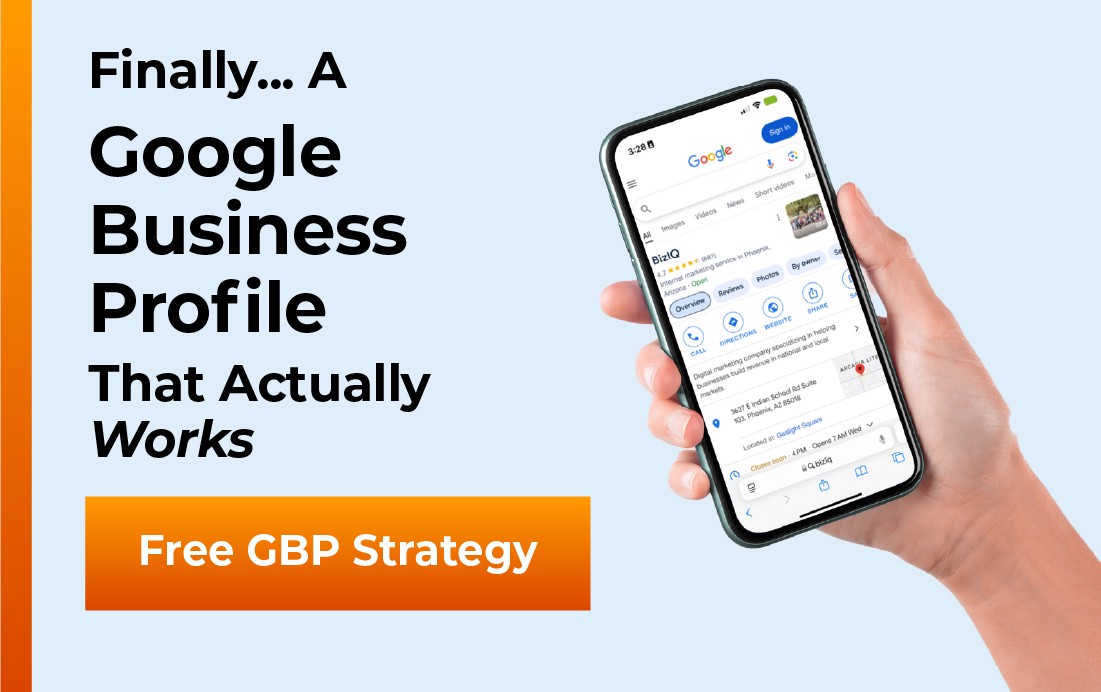
- Secure your spot in local search by claiming your place in the local 3-pack: the three firms that appear at the top of Google when someone searches for a CPA near them.
- Build deep trust by using client reviews and high-authority backlinks.
- Attract high-value clients with targeted, expert-led content that ranks.
Can a Small Accounting Firm Compete with the Massive National Networks to Land High-Value Local Clients?
The short answer is YES. While large firms dominate broad financial terms, small accounting firms win by dominating local search. Small accounting firms can rank higher on Google and secure a steady stream of new clients in 2026 by focusing on local search engine optimization, creating hyper-local service pages, publishing content that directly answers the ideal client’s financial questions and optimizing their Google Business Profile. While local SEO can feel complex, focusing on a few core ranking factors will help your firm stand out.
Many firm owners assume they are outgunned. National accounting brands have massive marketing departments, agency retainers, and budgets that dwarf anything a five-person practice can justify. What that assumption misses is how Google’s local search algorithm works: it rewards geographic proximity and local relevance, not corporate scale. A well-optimized independent firm in Denver can outrank a national franchise for every high-intent search in that city. Independent local firms are the heartbeat of our communities, and Google’s algorithm respects that. By building this presence, you can turn your website into a reliable client acquisition engine.
Securing Your Spot in the Google Local 3-Pack
Understanding the Local 3-Pack and Google Maps
The Google local 3-pack is the map-based block showing the three firms that appear at the top of Google when someone searches for a CPA near them. It appears above organic listings, above paid ads in many cases, and directly in front of people searching for a CPA right now. Businesses ranked inside it receive 126% more website traffic and generate 93% more user actions: calls, clicks, and direction requests: than those ranked in organic positions four through ten (SOCi, 2022 Localized Marketing Benchmark Report). Those are not marginal gains; they represent a structural advantage that compounds over time.
To rank in this space, you need a clear strategy for local search marketing. The local 3-pack is not a lottery. It is an algorithm with identifiable inputs, and optimizing those inputs is a learnable, repeatable process.
Optimizing Your Google Business Profile
Google Business Profile signals carry a 32% weight in the local search ranking algorithm, making them the single heaviest factor in the entire ranking model. That weight demands precision, not approximation.
Select “Certified Public Accountant” or “Accountant” as your primary category. Secondary categories, such as “Tax Preparation Service,” “Bookkeeping Service,” or “Business Management Consultant,” should reflect the services you currently deliver. Irrelevant categories weaken your ranking signal and can trigger guideline violations. Your Name, Address, and Phone number (NAP) must match your legal trading name exactly as it appears on your lease and across every external directory. Keyword-stuffing your business name, like writing “Smith CPA | Best Tax Prep Dallas”, is a direct path to a spam suspension. Use real photos of your office and team. Descriptively named image files like cpa-office-austin.jpg carry more indexing value than generic stock imagery. Build out your service menus with unique, localized descriptions rather than relying on Google’s pre-populated defaults.
You can find more guidance in our guide on 10 tips for optimizing your local business for search engines.
Securing a spot in the local 3-pack is the fastest way a small firm can build immediate trust and capture local market share. Think of your Google Business Profile as your firm’s digital storefront: it is what people see before they even visit your website. It positions you directly in front of people searching for a CPA who are ready to hire.

A CPA team reviews business documents and planning materials to strengthen their Google Business Profile and local visibility.
Using Client Reviews to Build Trust and Authority
The Impact of Review Signals on Local Rankings
Review signals now account for 20% of the local 3-pack ranking weight, up from 16% in 2023 (Whitespark, 2026 Local Search Ranking Factors Report). That four-point shift reflects a broader algorithmic trend: Google is increasingly treating peer validation as a proxy for service quality in professional verticals. According to recent industry data, accounting firms with 50 or more Google reviews are 266% more likely to appear in the local 3-pack than competitors with fewer than 10 reviews, proving that a consistent stream of feedback is critical for local visibility (BrightLocal, 2026 Local Search Data).
Volume matters, but recency matters more. A firm receiving two reviews per month consistently will outperform a competitor sitting on 100 stale reviews from three years ago. Steady velocity signals an active, trusted practice. A star rating of 4.0 or higher increases local 3-pack visibility by 58%, so the quality of each review carries real algorithmic weight, not just social proof.
To track your progress, refer to our complete local SEO checklist for small businesses.
Implementing a Direct Review Acquisition and Response Strategy
The most reliable review acquisition workflow is also the simplest: send a direct Google review link to every client immediately after delivering a tax return, completing a successful engagement, or finishing a monthly bookkeeping cycle. That moment, when the work is done and the client is satisfied, is when the ask lands best. Do not batch it. Do not automate it into oblivion. A brief, personal message with a direct link converts far better than a generic follow-up sequence.
Respond to every review. Every single one, within 24 hours. When responding to positive reviews, weave in natural service language: “Thank you for trusting us with your small business tax planning,” which reinforces your profile’s association with those services in Google’s eyes. Negative reviews require a professional, prompt response that moves the resolution offline. Ignoring them is not a neutral act.
- Collect reviews consistently by sending a direct Google review link to clients immediately after delivering tax returns, completing a successful audit, or finishing a monthly bookkeeping cycle.
- Respond to every review within 24 hours, thanking clients for their feedback and using natural, professional language that reinforces your firm’s expertise.
- Incorporate keywords naturally in your responses, such as mentioning “tax planning” or “small business accounting,” to help Google associate your profile with those services.
Designing High-Converting Location Pages
Structure of a High-Performing Location Page
If your firm serves clients across multiple suburbs or neighborhoods, dedicated location pages are non-negotiable. Do not skip this. Each page needs a clean, localized URL like /locations/plano, a targeted H1 (“Plano Accountant & CPA Services”), and copy that is genuinely unique to that community, not a city-swapped duplicate of your main service page. Thin content penalties are real, and Google’s quality reviewers are particularly attentive to professional services pages that recycle boilerplate across locations. Avoid duplicate copy.
Include local client testimonials, an embedded Google Map of your physical office, and structured schema markup. These are not decorative additions; they are verifiable trust signals that both search crawlers and people searching for a CPA use to assess legitimacy.
Hyperlocal Content and Schema Implementation
The distinction between a location page that ranks and one that does not often comes down to local economic specificity. Specificity wins. An Austin page that speaks to R&D tax credits for tech startups reads differently, and ranks differently, than a Houston page addressing accounting compliance for energy sector businesses. That kind of contextual precision signals to Google that your content was written by someone with genuine local knowledge, not assembled from a template. Templates fail.
Implement LocalBusiness and AccountingService structured data in your page HTML. Schema markup functions as a direct translation layer for search engines and AI crawlers, allowing them to verify your address, service areas, and professional credentials without having to infer them from prose.
- Maintain strict NAP consistency by ensuring your Name, Address, and Phone number are identical across your website, Google Business Profile, and all online directories.
- Embed a Google Map directly onto your location page to verify your physical office location and make it easy for clients to find driving directions.
- Add local schema markup to your website’s HTML, which acts as a translator for search engines to understand your exact geographic service area.
Ready to see where your firm stands in local search?
Book a free local visibility audit with our team today to uncover hidden ranking opportunities and start outperforming your competitors.
Creating Strategic Content That Attracts High-Value Clients
Content Marketing ROI for Small Firms
Accounting firms that publish targeted, expert-led content achieve an average 593% ROI and a 43% reduction in client acquisition costs compared to firms relying solely on referrals and directory listings. Referrals are not enough. Those numbers are striking, but the mechanism behind them is clear: a well-researched guide on a specific client pain point keeps generating qualified traffic for years after publication, while a paid ad stops the moment the budget runs out.
The strategic shift is away from generic tax explainers, content that any firm could publish, toward in-depth guides that address the specific pressures facing your ideal client. Avoid generic topics. “The Ultimate Guide to Tax Planning for E-commerce Businesses” serves a far more qualified audience than “What Is a W-2?” and it positions your firm as the specialist, not just another generalist. You can learn more about these foundational principles in our guide on small business SEO.
Demonstrating EEAT (Experience, Expertise, Authoritativeness, Trustworthiness)
Accounting sits squarely within Google’s YMYL (Your Money or Your Life) category, which means your content is held to a stricter standard than a lifestyle blog. Google’s quality raters are specifically looking for demonstrated real-world experience, not just well-structured prose. Share case studies. Explain complex tax provisions in plain English. Cite your credentials without burying them in a footer bio that no one reads.
The practical implication is that every piece of content your firm publishes should answer the implicit question a person searching for a CPA is asking: why should I trust this firm with my financial life? When your content genuinely answers that question, through specificity, transparency, and demonstrated competence, you earn both the reader’s trust and Google’s algorithmic confidence.
“SEO is a compounding asset. While paid ads stop delivering client inquiries the second you stop paying, a single high-quality guide can attract qualified clients for years.”
Optimizing Technical SEO and Site Speed
Mobile-First Indexing and Performance Benchmarks
According to search performance data, mobile-optimized, fast-loading websites see an average 215% increase in organic traffic compared to slow, non-responsive platforms that frustrate users and trigger search engine penalties. That gap is not closing; it is widening as mobile search share continues to grow and Google’s Core Web Vitals become more granular in their performance demands. Speed is critical.
Technical SEO is the infrastructure layer. It does not generate content or build authority on its own, but without it, everything else you build sits on an unstable foundation.
Technical Optimization Workflow
Google’s mobile-first indexing means your site is evaluated as a mobile experience first, with desktop performance treated as secondary. Compress large images before uploading; unoptimized image files are the most common cause of slow load times on accounting firm websites. Eliminate broken links, which signal neglect to both crawlers and human visitors. Broken links hurt rankings. Run your site through Google PageSpeed Insights regularly and treat any load time above two seconds as an urgent technical issue that requires immediate resolution rather than a minor inconvenience.
These are not complex interventions. They are maintenance tasks that most firms defer because no one owns them, and that deferral has a measurable cost in rankings and lost client inquiries.
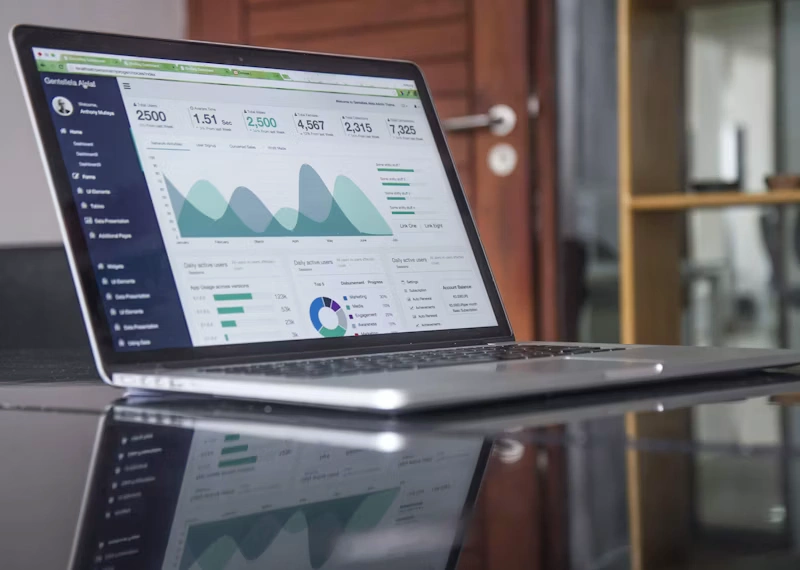
A website analytics dashboard helps monitor site speed, performance, and technical SEO to improve search visibility.
Schedule Discovery Call
Building a Strong Backlink Profile
The Role of Link Building in Domain Authority
Backlinks are referrals in the algorithmic sense: each one tells Google that another credible source considers your site worth citing. The quality of those referrals matters far more than their quantity. Focus on quality. A single link from your state CPA society carries significantly more ranking weight than fifty low-quality links from spammy, low-authority directories that are often assembled by a link farm. Chasing volume over relevance is how firms end up with backlink profiles that actively suppress their rankings.
You can explore the relationship between authority signals and geographic relevance in our guide on SEO local search strategies.
Local and Professional Link Acquisition Strategies
The most durable backlinks for accounting firms come from professional associations and local civic organizations, which are sources that Google already treats as highly authoritative and geographically relevant to your practice. State CPA societies, the AICPA, and local chambers of commerce are the obvious starting points. Guest blogging on respected business publications, contributing a bylined piece on tax strategy or financial planning, earns both a backlink and direct audience exposure to people searching for a CPA.
These are not quick wins. They require relationship-building and consistent output. But the links they produce are stable, relevant, and difficult for competitors to replicate.
- Register with professional associations like your state CPA society or the AICPA, which provide high-authority links back to your website.
- Join your local chamber of commerce to secure a highly trusted local backlink that reinforces your geographic relevance to Google.
- Publish guest blog posts on respected business publications, sharing your financial expertise in exchange for a link back to your firm’s site.
Preparing Your Firm for AI Search and Generative Answers
The Rise of AI Overviews and GEO
AI Overviews now appear in approximately 47% of accounting-related search queries. That penetration rate has a direct consequence for organic traffic: traditional click-through rates have declined by 30% to 50% in affected query categories because AI summaries answer the user’s question before they ever reach a website. Ignoring this shift is not a viable strategy. Adapt now.
Generative Engine Optimization (GEO) and Answer Engine Optimization (AEO) are the emerging disciplines that address this new reality. Where traditional SEO optimizes for ranking position, GEO optimizes for citation: getting your content pulled into AI-generated summaries as a named, trusted source. Citations are key.
Formatting Content for AI Citations
The structural requirements for AI citation are more demanding than those for traditional organic ranking. Format matters. AI engines favor content that is authoritative, well-organized, and directly responsive to specific questions, not content that buries its answers in long preambles or hedges every claim into vagueness.
Shift your content calendar toward conversational, long-tail questions: “How should a Texas LLC structure equity compensation for early employees?” or “When does a growing e-commerce business need to move from bookkeeping to a fractional CFO?” Write direct answers at the top of each section. Use clear, citation-ready language. Structure your pages so that a language model can extract a precise, accurate answer without needing to interpret ambiguous prose. Firms that build this kind of content architecture now will hold a compounding advantage as AI search adoption accelerates through 2026 and beyond.
With the rise of Google AI Overviews and tools like ChatGPT, optimizing for Generative Engine Optimization ensures your firm surfaces when users ask AI for the best local accountants. AI search engines pull answers from authoritative, well-structured websites that cover topics with genuine depth, which means the same content investments that improve your traditional rankings also improve your AI visibility. The two strategies are not in tension; they reinforce each other.
Frequently Asked Questions About Accounting SEO
Understanding the detailed mechanics of local search engine optimization can help you set highly realistic expectations, budget effectively, and make informed decisions for your firm’s long-term digital growth. Get clear answers.
Answers to Your Top Accounting SEO Questions
How long does it take for a CPA firm to improve its Google rankings?
Most accounting firms see highly encouraging, meaningful movement in their search rankings within 3-6 months when core ranking factors like website structure, local SEO, and Google Business Profile optimization are addressed simultaneously by an experienced team. SEO is a long-term strategy, and the most significant compounding results typically occur between six and twelve months of consistent effort.
Why is a newer, smaller firm outranking my established CPA practice on Google?
Google’s algorithm does not measure offline reputation or years in business directly; instead, it evaluates digital signals. A newer firm can outrank an established practice if they have invested in consistent content publishing, optimized their Google Business Profile, and built a stronger backlink profile. These digital signals are entirely fixable, and the gap closes faster than most firm owners expect once the right work begins.
Does my accounting firm need to be on the first page of Google to get inbound clients?
Yes, absolutely. The first page of Google captures over 90% of all search traffic, and the top three local pack positions capture more than half of those clicks. If your firm is on page two or lower, you are virtually invisible to the hundreds of local business owners actively searching for accounting services each month. Page one is vital.
What is the difference between regular SEO and local SEO for CPA firms?
Regular SEO focuses on improving your website’s overall authority and relevance for keyword searches across any geography. Local SEO specifically targets geographically qualified searches, such as “CPA firm Dallas” or “accountant near me.” For small firms, local SEO is the highest priority because it connects you directly with nearby clients who are ready to hire.
Does SEO still matter now that AI tools like ChatGPT are answering search queries?
SEO matters more than ever in the age of AI. Generative search engines and AI tools pull their recommendations directly from the most authoritative, well-structured, and highly ranked websites on the web. By building a strong traditional SEO foundation, you automatically optimize your firm’s visibility in AI-powered search results. The firms investing in SEO now are building the exact digital infrastructure that AI engines will cite tomorrow. For context on what affordable SEO services look like at different investment levels, that resource breaks down cost expectations across firm sizes and market competitiveness.
Reaching the top of Google’s search results is not a matter of luck; it is the result of a deliberate, coordinated strategy. By optimizing your Google Business Profile, collecting client reviews consistently, and publishing high-quality content that demonstrates genuine expertise, you can establish your firm as the leading local authority and secure a steady stream of high-value clients. Explore our digital marketing services for accounting businesses to see how we can partner with you to make this growth a reality.
Ready to transform your firm’s online visibility and land more clients?
Book a free local visibility audit with BizIQ today to get a customized local SEO strategy tailored specifically for your accounting practice.