
Enterprise local SEO is how a brand keeps every storefront visible in local search without letting its own locations compete against each other. Managing one store takes steady attention to local ranking factors and reviews. Scaling that across fifty or five hundred branches is a different logistical problem, and the multi-location SEO services that solve it centralize your strategy while keeping each branch locally relevant.
- Consistent visibility: multi-location SEO services keep enterprise brands and franchises visible across many locations and avoid ranking conflicts between branches.
- Central data: accurate business information across Google Business Profiles, directories, and social platforms builds trust with search engines and customers.
- Local relevance: dedicated location content, schema markup, and review management improve map pack rankings and foot traffic.
- Real ROI: reporting by location tracks rankings, calls, direction requests, and offline conversions.
Search engines look for specific signals to decide which businesses deserve top placement in local results, and you have to replicate those signals in every city and neighborhood you serve. A well-built program prevents branches from cannibalizing each other, and it fixes the data fragmentation that confuses crawlers and weakens local rankings. The specialists at BizIQ standardize that footprint so every storefront gets consistent traffic.
How Enterprise Local SEO Works Across Hundreds of Locations
Dominating local results across regions takes a systematic approach and the tooling to manage hundreds of Business Profile tasks at once. That centralized method keeps every branch on brand while it targets neighborhood-specific searches.
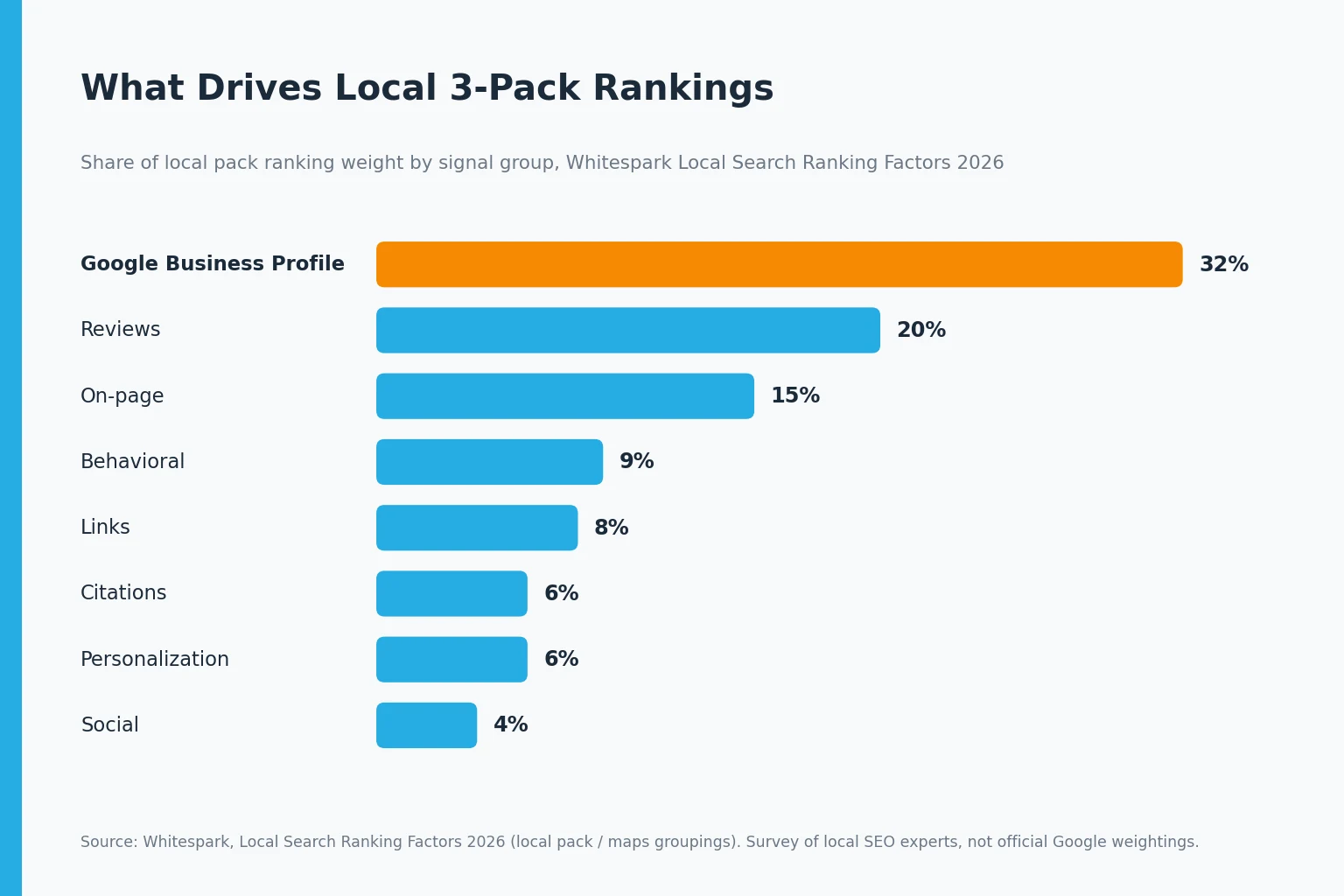
The weighting shows why profiles come first. In Whitespark’s 2026 survey of local SEO experts, Business Profile signals carry 32% of local pack ranking weight, the largest single group, ahead of reviews at 20%. Managing those profiles by hand stops working after a handful of locations, so enterprise programs rely on bulk management tools and integrations to push updates quickly.
A single corporate website can no longer rank for every localized query. Searchers expect detailed information for their own area, including accurate hours, and dedicated content for each branch captures that high-intent traffic and improves local conversion.
Centralized Data Management for Effective Enterprise Local SEO
Data accuracy is the foundation of any enterprise campaign. Search engines cross-reference your information across data aggregators, social platforms, and local directories, and if your Dallas branch lists one phone number on Yelp and another on your website, trust in that location erodes.
Specialized listing software locks down your business data across the web. It also guards against user-suggested edits that can overwrite correct hours and contact details, because Business Profiles accept suggestions from the public. Ongoing local citation management keeps that data pristine, which protects rankings and gives local shoppers a smooth experience.

Simplify Multi-Location SEO for Your Brand
Keep every location optimized with centralized data management, consistent local listings, and scalable SEO strategies built for growing brands.
Localized Content at Scale Using Multi-Location SEO Services
Producing relevant content for every market takes planning and smart allocation of resources. You cannot copy one service description and swap the city name for a new branch. Google’s documentation on canonicalization explains that when URLs are very similar, Google groups them and shows one, so every location needs genuinely localized copy to be shown.
Your team should include local landmarks, regional terminology, and branch-specific staff details, along with driving directions from nearby highways. That demonstrates real local authority instead of a superficial presence, and strong on-site optimization builds those elements into every template.
Building a Scalable Infrastructure to Improve Local Search Rankings

Scaling local presence needs a technical foundation that supports rapid expansion. If your site architecture cannot handle hundreds of localized sections, visibility suffers. Multi-location programs restructure the hierarchy so local SEO for many locations does not dilute your primary domain authority.
Many large systems use a parent-child folder structure, such as a URL path of domain.com/locations/state/city, which shows search engines how branches relate geographically and passes link equity down from the main domain. Structured data helps too. LocalBusiness markup gives crawlers machine-readable details about each branch, such as address, hours, and phone number.
How to Deploy a Scalable Local Architecture
- Audit existing local listings. Scan the major data aggregators for duplicate profiles and incorrect information, and monitor continuously for unauthorized edits.
- Build dedicated location content. Give every storefront its own optimized content on your website, with an embedded map and specific driving directions.
- Implement local business schema. Add structured data to each location with exact coordinates and operating hours.
For networks with ten or more locations, Google’s bulk verification speeds up verification, though the requirements are specific.
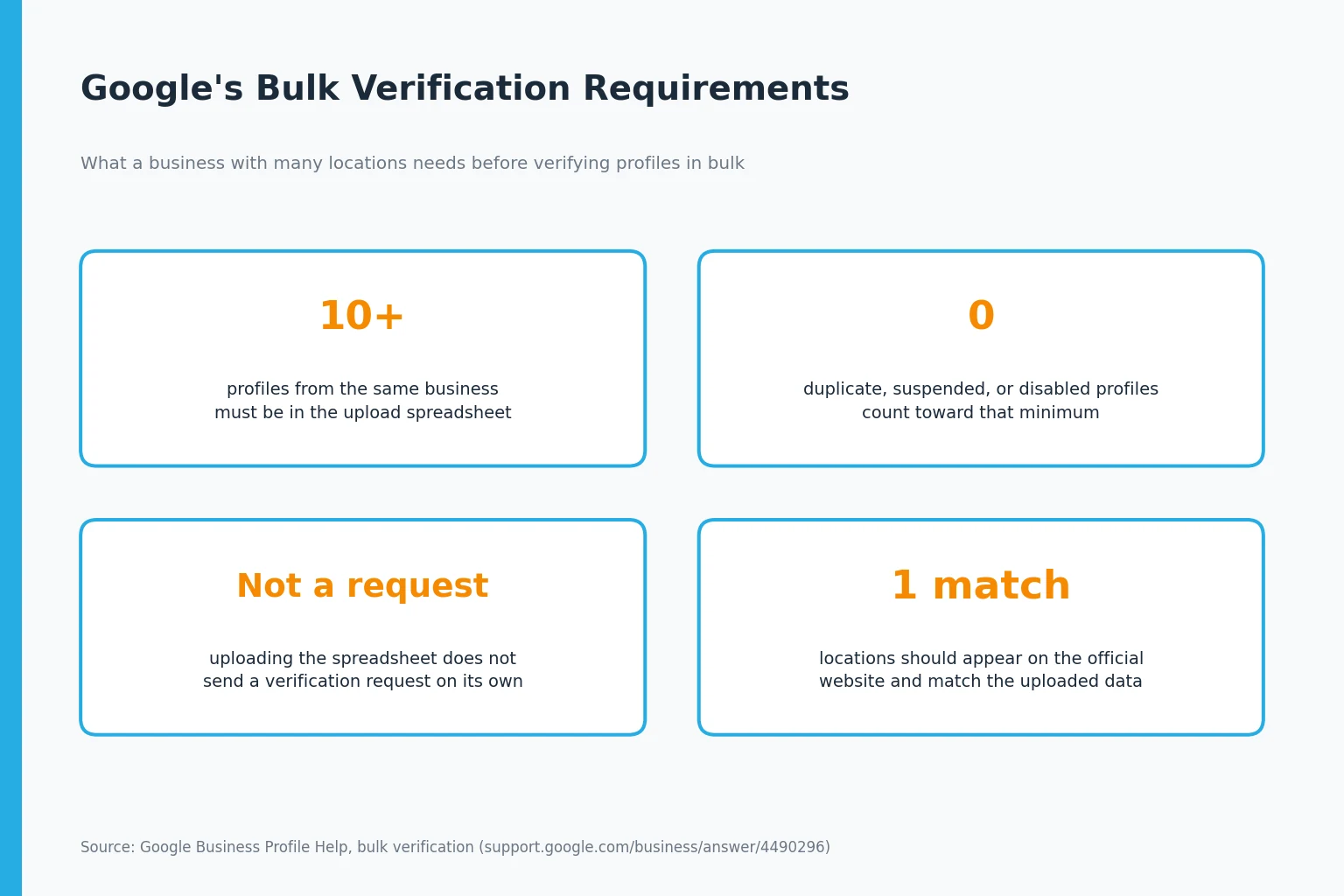
A Google Business Profile setup and verification service prepares the upload and handles verification for every location.
Managing Citations and Reviews at Enterprise Scale

Customer feedback affects both local rankings and brand reputation. A sudden run of negative reviews at one branch can drag down regional performance, so enterprise programs add central review monitoring that alerts your team to complaints right away.
The consumer side is clear. BrightLocal’s 2026 Local Consumer Review Survey found that 74% of consumers only care about reviews from the last three months, that 89% expect owners to reply, and that 81% expect a reply within a week.
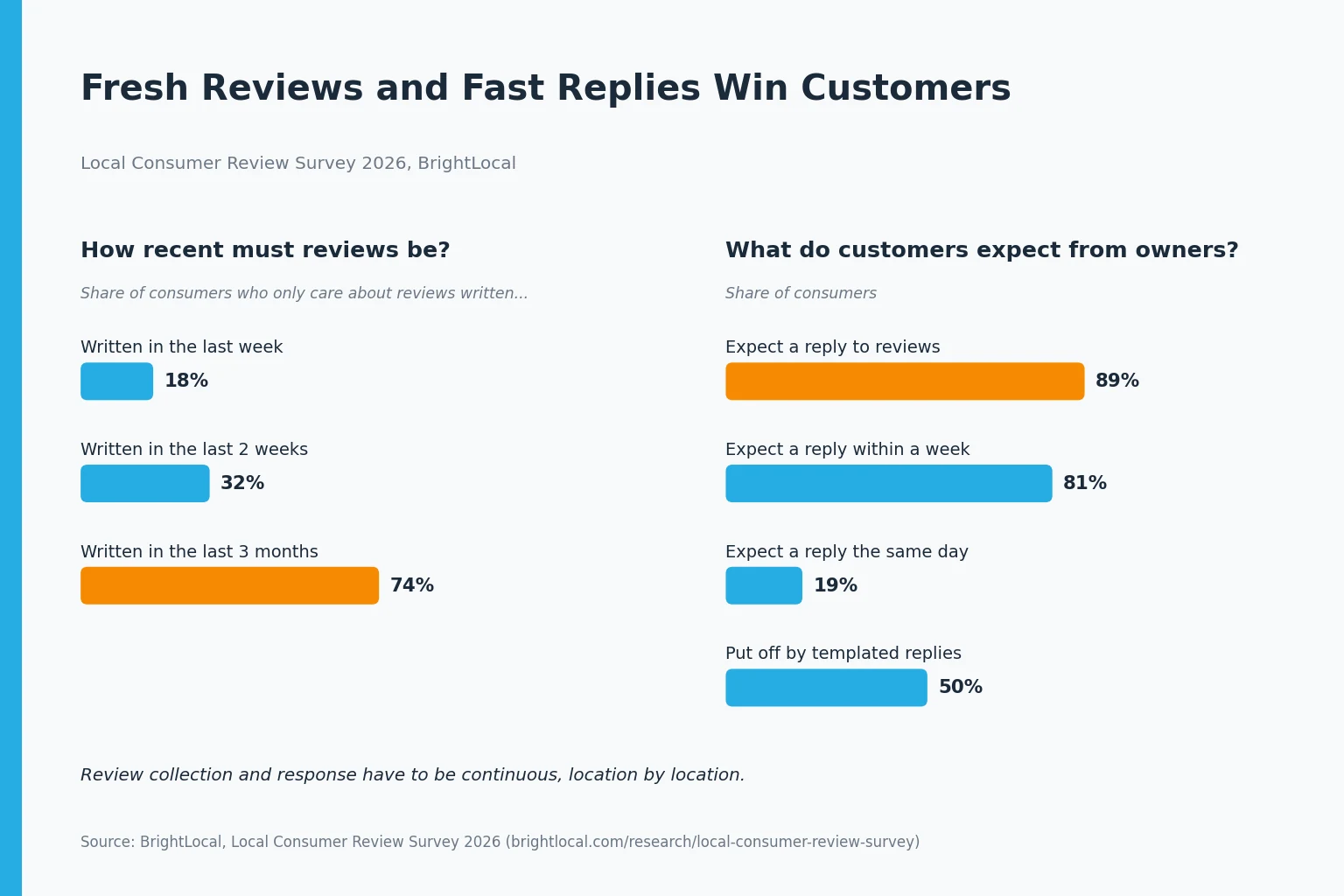
Train branch managers to ask satisfied customers for reviews at the point of sale, and connect point-of-sale systems to review request tools so requests go out automatically while following Google’s review policies. A managed reputation management program keeps replies timely and personal across hundreds of locations.
Citations also establish regional authority for new branch openings. Submitting accurate details to industry directories and local chambers of commerce builds localized trust, and coordinated local SEO services tie that work together.
Measuring Success and ROI via Enterprise Local SEO
Tracking performance across a large footprint takes local SEO reporting that breaks results out by branch. A blended national average hides the problems of individual locations, so segment your data to see which markets need attention first.
Set baselines for every storefront before a new campaign starts, then compare against history to see the real return on your investment. Local reporting typically draws on a few sources.
| Metric | What it shows | Typical source |
|---|---|---|
| Map pack and local organic rankings | Visibility by neighborhood and keyword | Local rank tracking or grid tools |
| Calls, direction requests, website clicks | Customer actions from each profile | Business Profile performance data |
| Organic visits to location content | Traffic to each branch on your site | Web analytics |
| Review count, rating, and response time | Reputation and engagement by branch | Review management tools |
| Conversions and sales | Leads, orders, and store visits tied to local search | Call tracking, CRM, and point of sale |
Tracking Local Rankings and Map Pack Visibility
Standard rank trackers often miss hyper-local differences. A person searching downtown sees different results than someone in the suburbs, so grid tracking software that visualizes rankings across specific neighborhood coordinates is more accurate. Those reports show exactly where competitors outrank a branch, so you can deploy targeted citation or content updates to win that territory back without spending resources where you already lead.
Analyzing Foot Traffic and Conversions From Location Content
Ranking well means little if clicks do not become revenue. Enterprise campaigns should connect visibility to store visits and sales, using direction requests and tracked phone calls from each profile as tangible evidence. Add UTM parameters to the website link on every profile to separate local search traffic from general organic visits, and tie call and form data into your CRM to close the attribution loop.
A free SEO audit is a practical way to baseline those numbers.
Franchise systems can also review franchise SEO pricing to see how program costs scale.
Enterprise Local SEO FAQs
How long does it take to see results from multi-location SEO services?
It varies by market, competition, and starting point. Profile and listing fixes can help within weeks, while rankings and content growth in competitive metro areas build over several months and can take longer.
Should each location have its own website or just location content?
Use one authoritative domain with dedicated content for each branch. That consolidates domain authority while still giving each location the local relevance search engines need.
How do we handle overlapping service areas for multiple branches?
Define distinct territories for each branch using specific zip codes and neighborhoods. Optimizing overlapping locations for the same keywords splits signals between them, so give each branch its own keyword targets.
Can we use the same content for all our locations?
No. Google groups very similar URLs and shows one version, so duplicated content keeps most locations out of results. Write localized copy with regional landmarks, local team details, and neighborhood specifics.
What is the most important ranking factor for map results?
Business Profile signals are the largest group in Whitespark’s 2026 survey at 32% of local pack weight, led by the primary category. Accurate information and a steady flow of reviews support that foundation.
What should enterprise local SEO reporting include?
Rankings by neighborhood, calls and direction requests per location, organic visits to location content, review and response metrics, and conversions tied to each branch. Segmenting by location keeps national averages from hiding local problems.
Managing a large-scale local search strategy takes technical precision and consistent execution in every market. Multi-location SEO services supply the infrastructure to compete for map results and drive foot traffic, and each storefront should be treated as its own digital entity for maximum visibility.
Ignoring local presence lets smaller regional competitors take market share from your brand. Centralized data management and localized content protect your territory and support growth, and rolling these strategies out systematically should increase offline conversions across the network. To discuss your own locations, talk with a multi-location SEO specialist about where to start.

Ready to Grow Your Franchise Locations Faster?
We help franchise and enterprise brands improve local rankings, increase foot traffic, and scale SEO performance across every market you serve.