
Understanding why franchise locations struggle with SEO starts with the relationship between corporate headquarters and local operators. You probably see independent competitors outrank your established brand in regional results every day. Corporate teams prioritize strict brand consistency across every digital asset, which makes sense from a broad view, but that uniformity often strips out the hyper-local signals regional search systems rely on. The result is branch locations that vanish from neighborhood results while smaller independents capture the local traffic.
- Brand rules vs. local signals: strict corporate branding limits the hyper-local content and community signals search engines use for regional rankings.
- Duplicate content: near-identical location content keeps individual branches out of local results and map packs.
- Structure and data: subfolder site structures, accurate listings, localized content, and review management lift local performance.
- The balance: brand consistency with local flexibility strengthens visibility, reputation, and engagement in competitive markets.
The franchise model builds in a conflict between national brand authority and local search visibility. A large corporate website carries real domain authority, but that strength rarely flows to individual neighborhood locations. Local operators watch their branches fail to appear on maps or in localized organic searches, and fixing it means finding the structural failures between headquarters and each franchisee. The team at BizIQ sees this clash in nearly every franchise system we review.
Why Franchise Locations Struggle With SEO: The Corporate vs. Local Clash
Headquarters must protect the brand, which naturally produces tightly controlled digital environments. Executives dictate the wording, imagery, and layout of every location on the main website. That control removes the authentic local characteristics search systems use to judge geographic relevance.
Duplicate Content Issues in Multi-Location SEO
Search systems filter redundant information to give users a better experience. When corporate pushes identical service descriptions to hundreds of locations, the filter applies. Google’s documentation on canonicalization explains that when URLs are very similar, Google groups them and shows one version. That saves time for corporate developers, but it can erase the organic visibility of an individual franchise owner.
The fix is replacing generic corporate text with specific details about the immediate service area. Many franchise agreements prohibit local managers from editing the content for their assigned location, so operators cannot add neighborhood references or regional terms, and their locations stay invisible to nearby customers.

Stop Duplicate Content From Hurting Your Franchise SEO
We help franchise brands create scalable local SEO strategies with optimized location content, localized writing, and stronger regional search visibility.
Brand Guidelines Restricting Local Search Visibility
Search systems want to connect users with businesses that take part in their own communities. Regional managers need to mention nearby landmarks, local charity partnerships, and neighborhood services to establish relevance, yet strict guidelines often block them from uploading custom photos or writing community content for the official site.
Independents have an edge because they publish real photos of their storefront and local team. Franchise locations often use polished stock photography approved by headquarters, which gives readers no sense of the neighborhood. Real photos, real staff, and real local details make a location more useful to customers, and strong on-site optimization builds editable local sections into corporate templates.
Franchise Marketing Challenges: Website Structure and Business Data

Website architecture determines how well crawlers index individual franchise locations. Poor structural choices made at headquarters multiply across hundreds of branches, so managing this infrastructure takes constant coordination between corporate IT and franchise owners.
Subdomain vs. Subfolder Cannibalization
Many corporate sites put local branches on isolated subdomains instead of subfolders. Google’s crawl documentation notes that a subdomain such as code.example.com is treated as a separate site with its own crawl budget, which means each branch has to earn trust on its own. Consolidating locations into subfolders on one domain lets shared authority support every location and keeps governance simple.
Migrating hundreds of existing subdomains takes real technical resources, which is why corporations rarely approve it, but the cost of staying put is paid in lost visibility every month.
Why Franchise Locations Struggle With SEO When NAP Data Drifts
Inconsistent business information spreads across the internet over time. Old addresses, disconnected phone numbers, and wrong hours confuse customers and search systems. In Whitespark’s 2026 survey of local SEO experts, website NAP that matches the Business Profile ranks among the top 15 local pack factors, so drift has a real ranking cost.
Headquarters often lacks the visibility to track every address or phone change. A local manager may update a Business Profile and never tell the corporate webmaster, which creates conflicting data across directories and weakens trust in the location. Ongoing local citation management closes that gap by correcting listings across the web.
Ownership is part of the answer. Google’s owner and manager roles let corporate keep control while local operators handle daily activity, but managers can still edit business information.
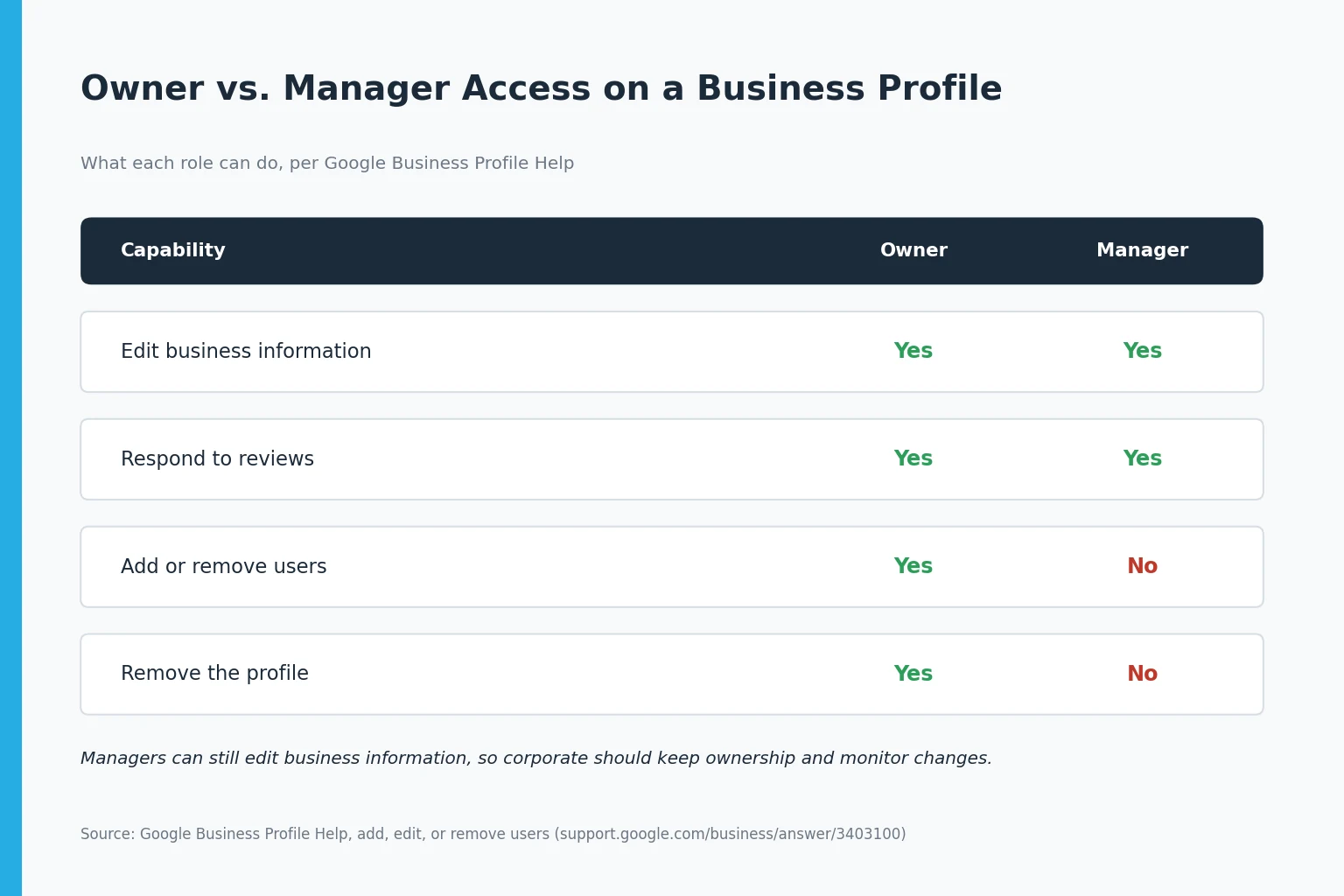
Corporate should own every profile and monitor changes on a schedule, and a Google Business Profile setup and verification service can put that structure in place. Whether franchisees may build separate websites depends on your franchise agreement, and independent sites that compete with the corporate domain fragment authority, so set that rule clearly at onboarding.
Disconnected Local SEO and Content Strategies

Strong regional visibility needs a steady flow of relevant content written from inside the target market. A corporate team cannot produce authentic community updates for five hundred cities at once, and stagnant location content can signal an inactive business.
Lack of Localized Link Building
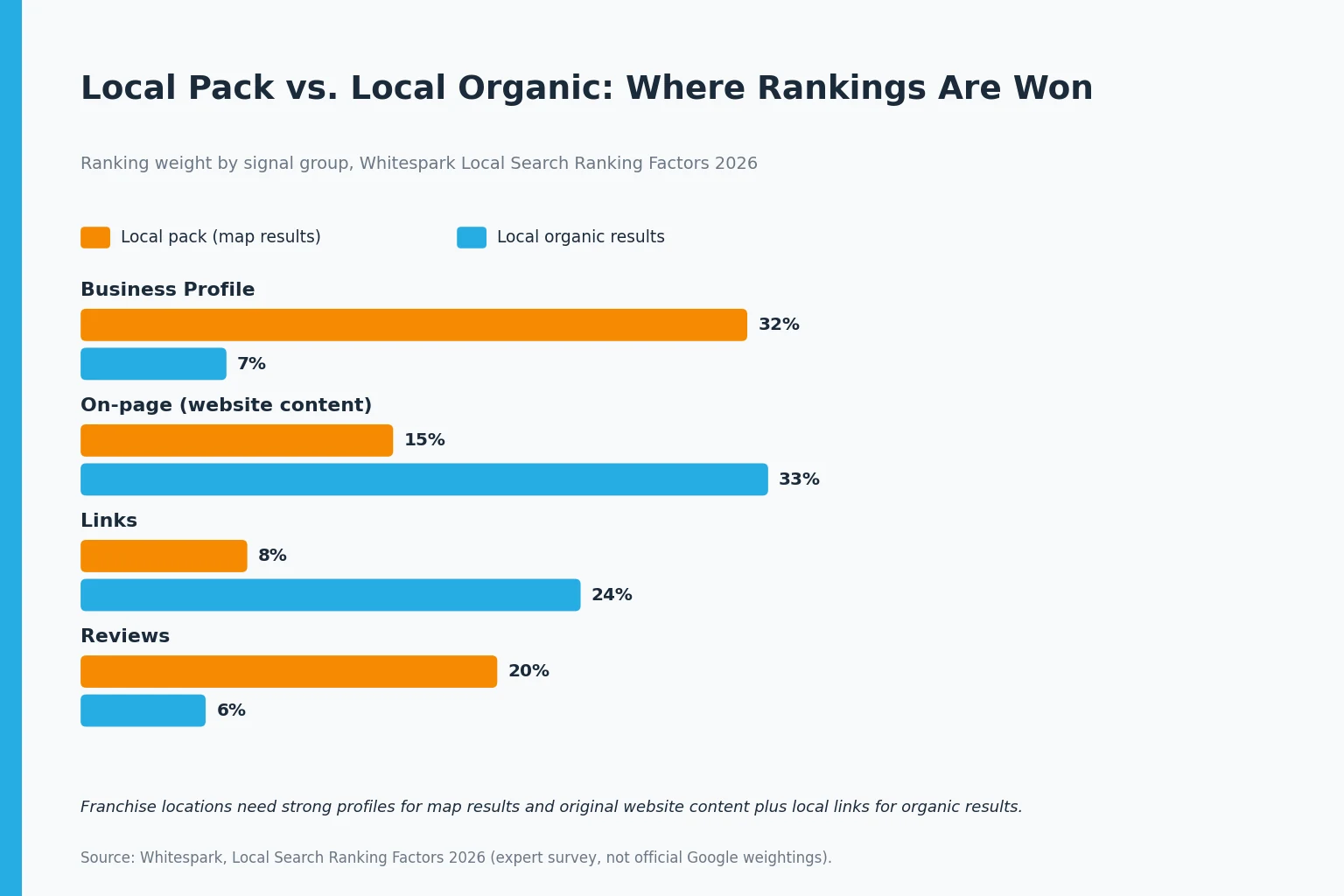
Local backlinks come from real relationships in the local business community, and a headquarters several states away cannot manufacture them. In Whitespark’s survey, links carry 24% of local organic ranking weight but only 8% of local pack weight, which shows why a location with no local links of its own struggles in organic results.
Local managers can earn those links by sponsoring neighborhood events and partnering with nearby charities. Operators rarely realize they should ask for a link when they sponsor a youth team, and community groups often link to the corporate root instead of the local branch. That strengthens the national brand while giving the specific location no ranking benefit, so corporate should give franchisees a simple playbook that includes the exact URL to request.
Ignored Customer Reviews and Reputation Management
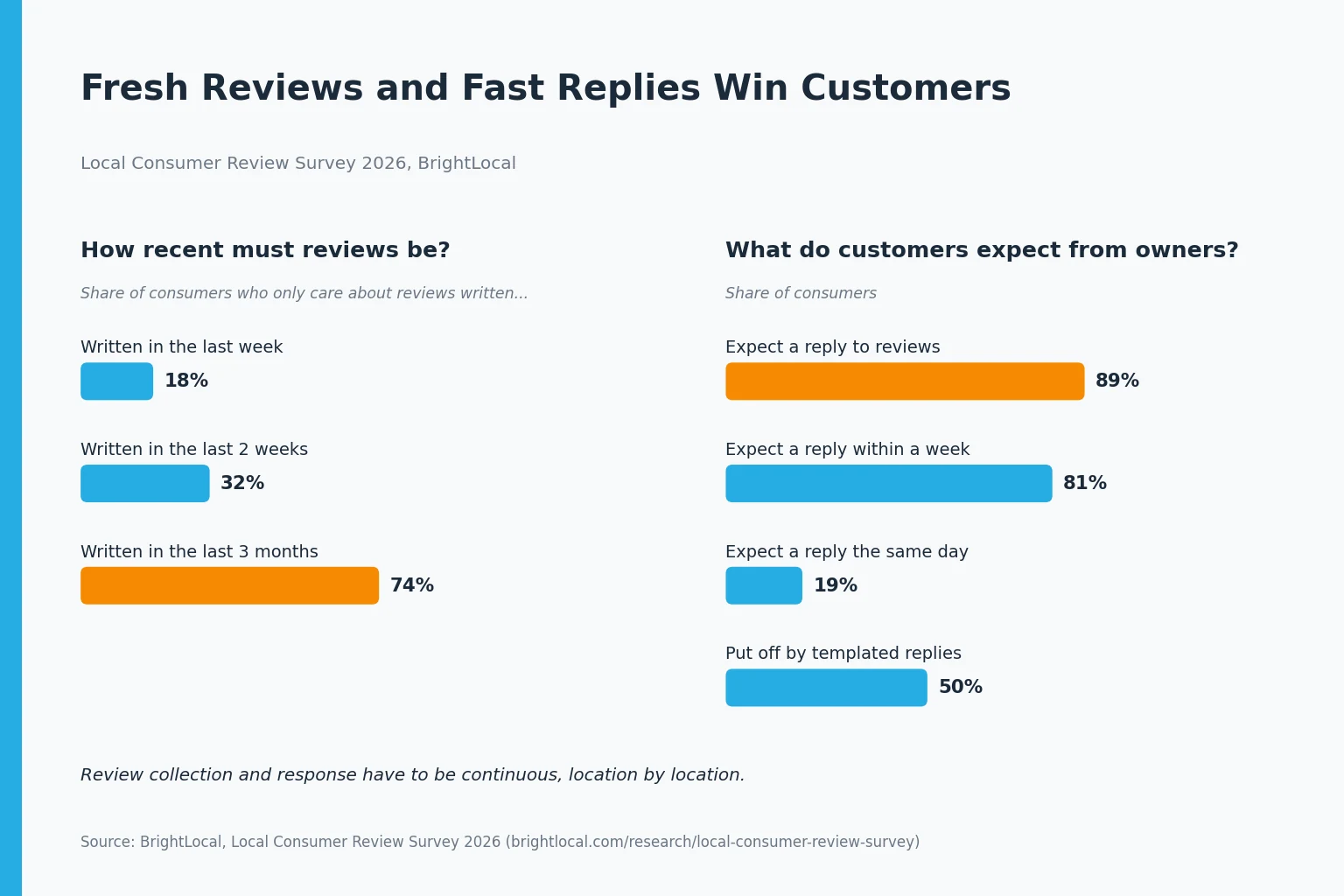
Reviews influence both visibility and buying decisions. BrightLocal’s 2026 Local Consumer Review Survey found that 74% of consumers only care about reviews from the last three months and 89% expect owners to reply, with 81% expecting a reply within a week.
Many systems lack a central way to monitor and answer reviews, and policies that route every negative review through a public relations team leave unhappy customers waiting weeks. Local locations lose ground to highly rated independents, so a managed reputation management program that keeps replies fast, personal, and within brand guidelines is a direct ranking and trust investment.
Improving Local Rankings: How to Bridge the Franchise SEO Gap
Repairing the relationship between corporate control and local visibility takes structured processes across the whole organization. You need workflows that protect the national brand while letting local operators optimize their own regions. A clear division of responsibility is the foundation.
| Area | Corporate owns | Local operator owns |
|---|---|---|
| Website structure and templates | Subfolder architecture, templates, technical SEO | Requests for template changes |
| Location content | Approved content zones and brand rules | Community text, real photos, staff details |
| Business Profiles | Ownership and change monitoring | Replies, photos, and local updates |
| Citations | One central record and listing sync | Reporting changes in hours or contact details |
| Local links | Playbook and target URLs | Sponsorships and community partnerships |
| Reviews | Templates, tools, and escalation rules | Personal replies and requests |
How to Optimize Franchise Locations for Local Search
- Audit and consolidate citations. Scan the listings for every branch, remove duplicates, correct outdated addresses, and standardize the format of your business name. Listing tools can push corrected data to major aggregators together.
- Implement dynamic content blocks. Rebuild corporate templates with editable local content zones. Lock the primary brand messaging, and let local managers update community paragraphs and staff photos through an internal approval process.
- Establish a review management protocol. Give regional managers response guidelines for common complaints and praise, and set a response target of one to two business days, because most customers expect a reply within a week.
A free SEO audit is a practical way to see where each location stands before you start.
Coordinated local SEO services carry these steps across every territory.
Our franchise SEO pricing overview explains what network programs involve.
Why Franchise Locations Struggle With SEO FAQs
Why do independent businesses outrank my established franchise locations?
Independents naturally produce the hyper-local signals search systems prefer: original content about their neighborhood, real photos, and relationships with nearby businesses. Franchise locations often rely on generic corporate templates that lack that local relevance.
Should each franchise location build its own separate website?
Usually not. One corporate domain with a subfolder structure shares authority and avoids competing sites. Whether a franchisee may build a separate site depends on the franchise agreement, so corporate should set the policy clearly.
How does duplicate content affect multi-location brands?
Google groups very similar URLs and shows one version. When corporate publishes identical descriptions for every branch, most locations are treated as duplicates and can drop out of regional results.
What is the most important local SEO factor for a franchise?
For map results, Business Profile signals are the largest group in Whitespark’s 2026 survey, led by the primary category, and website NAP that matches the profile is a top 15 factor. For organic results, original content and links carry more weight, so locations need both.
How can corporate teams empower local operators?
Use templates with editable local content zones, lock critical brand messaging, and approve changes through a simple internal process. Give operators review response guidelines and a link-building playbook so they can contribute within brand rules.
Who should own a franchise location’s Google Business Profile?
Corporate should hold ownership so a location is never lost when an operator leaves, while local managers handle replies, photos, and updates. Managers can still edit business information, so scheduled monitoring of changes is important.
Balancing national brand authority with regional visibility takes deliberate structure and good internal communication. Corporate cannot force generic templates across hundreds of markets and expect to win local search, because rigid uniformity actively hurts the digital performance of the operators it is meant to support.
Fixing these problems calls for compromise between corporate control and local flexibility. Give regional managers the tools to publish authentic community content within a subfolder structure, remove duplicate content, and manage citation data properly, and you will start to capture the local traffic your brand deserves. Our franchise marketing resources cover the strategy in more depth.
To talk through your own network, talk with a franchise SEO specialist about your network.

Strengthen Local Rankings Across Every Franchise Location
From local SEO and Business Profile optimization to scalable franchise marketing, we help multi-location brands compete more effectively in every market.